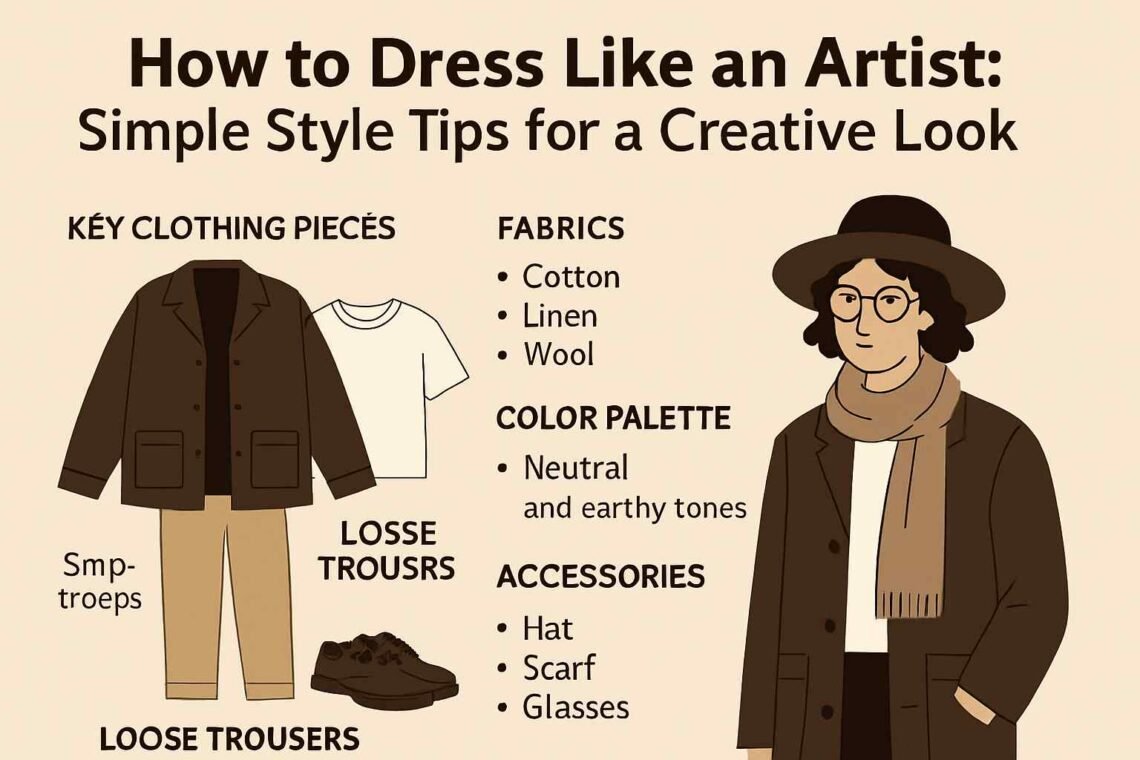
Dressing like an artist is not about wearing a costume. It is not about looking strange or copying famous painters. It is about dressing in a way that feels natural, creative, and comfortable. Artist style is simple, thoughtful, and personal. Artists choose clothes that help them think, move, and express themselves. Their clothes usually feel relaxed, useful, and real.
This guide will show you how to dress like an artist using clear ideas, simple rules, and easy examples.
What Does It Mean to Dress Like an Artist?
Dressing like an artist means dressing with purpose.
Artists dress based on:
-
Who they are
-
What they do
-
How they live and work
There is no single artist look. Some artists wear black every day. Some love color. Some dress very simply. Others mix styles.
The key idea is this:
Artist style is about expression, not perfection.
Main Ideas Behind Artist Style
Before choosing clothes, you need to understand the basic ideas behind artist fashion.
1. Be Yourself, Not Trendy
Artists usually do not follow fashion trends. They wear what feels right to them.
Artist style focuses on:
-
Personal taste
-
Long-term style
-
Clothes you enjoy wearing again and again
Artists often avoid:
-
Fast fashion
-
Big logos
-
Clothes that only work for one season
2. Comfort Is Very Important
Artists need to feel comfortable to think and create.
Artist clothes should:
-
Allow easy movement
-
Feel good all day
-
Not feel tight or heavy
Comfort does not mean boring. It means practical and wearable.
3. Function Comes First
Artist clothes are often useful.
They may have:
-
Big pockets
-
Strong fabric
-
Layers for different weather
-
Clothes that can get dirty
Artists do not worry too much about keeping clothes perfect. Wear and tear is normal.
Artist Clothing Shapes (Silhouettes)
Artists usually prefer loose and relaxed shapes.
Common artist clothing shapes:
-
Oversized tops
-
Loose trousers
-
Straight or wide legs
-
Soft jackets without sharp lines
These shapes feel easy and natural. They also make layering simple.
Basic Artist Wardrobe Pieces
You do not need many clothes to dress like an artist. You just need the right basics.
Common Artist Clothing Items
-
Simple t-shirts
-
Linen or cotton shirts
-
Loose trousers or wide pants
-
Cardigans or knit sweaters
-
Chore coats or relaxed jackets
-
Simple outerwear
These pieces are easy to mix and match.
Fabrics Artists Like
Fabric choice is very important in artist style. Artists usually prefer natural fabrics.
Best Fabric Choices
-
Cotton
-
Linen
-
Wool
-
Natural blends
These fabrics:
-
Feel comfortable
-
Last longer
-
Age well
-
Look better over time
Second-hand and vintage clothes also work well. They feel unique and personal.
Read also: How to Dress Like an Adult
Color Choices in Artist Style
Artists use color with care.
Many artists start with neutral colors and add color slowly.
Common Artist Color Styles
-
Mostly black or white
-
Neutral colors (beige, gray, navy)
-
One favorite color used often
-
Soft or earthy tones
Bright colors are used on purpose, not randomly.
Layering: A Big Part of Artist Style
Layering means wearing more than one piece at the same time. Artists use layering a lot.
Why Artists Layer Clothes
-
Easy to change with weather
-
Adds interest to simple outfits
-
Makes clothes more useful
-
Helps reuse the same items
Simple Layering Ideas
-
T-shirt + shirt + jacket
-
Long top under short jacket
-
Light sweater over shirt
Layering does not need to be complicated.
Accessories: Simple but Personal
Artist accessories are usually small but meaningful. They often wear the same accessories every day.
Common Artist Accessories
-
Scarves
-
Glasses
-
Simple jewelry
-
Tote bags or backpacks
-
Hats
Accessories should:
-
Be useful
-
Feel personal
-
Not feel too flashy
Shoes Artists Wear
Artists walk a lot and stand a lot. Shoes must be comfortable.
Good Shoe Choices for Artist Style
-
Flat boots
-
Simple sneakers
-
Loafers
-
Clogs
-
Comfortable flats
Shoes should:
-
Feel good all day
-
Look better with wear
-
Match many outfits
Learn from Artists, But Don’t Copy
Looking at famous artists can be helpful. But copying them exactly can feel fake.
Better Way to Get Inspiration
-
Look at ideas, not full outfits
-
Ask why a look works
-
Change it to fit your life
-
Avoid stereotypes
Your style should fit you, not someone else.
Dressing Like an Artist in Different Situations
1. Working or Studio Time
When working, comfort comes first.
Wear:
-
Old clothes
-
Soft fabrics
-
Easy layers
-
Shoes you can stand in
Do not worry about stains or mess.
2. Everyday Life
Artist style works well for daily life.
Focus on:
-
Simple outfits
-
Neutral colors
-
Repeating clothes
-
Easy choices
This makes dressing less stressful.
3. Art Shows or Professional Events
For events, artist style becomes a bit more polished.
Simple changes help:
-
Cleaner clothes
-
Better fabric
-
Well-fitted jacket
-
Neat shoes
You can still be creative and look professional.
Artist Style Do’s and Don’ts Table
| Do | Don’t |
|---|---|
| Dress comfortably | Wear tight or stiff clothes |
| Wear what feels natural | Copy stereotypes |
| Use simple colors | Mix random colors |
| Repeat outfits | Buy too many clothes |
| Let clothes age | Worry about perfection |
Building an Artist Wardrobe Slowly
Artist wardrobes grow over time.
They are not built in one shopping trip.
Simple Tips to Build Your Wardrobe
-
Buy second-hand when possible
-
Choose quality over quantity
-
Wear clothes many times
-
Repair instead of replacing
-
Remove items you never wear
A small wardrobe with meaning is better than a large one without purpose.
Common Mistakes to Avoid
Many people misunderstand artist style.
Avoid these mistakes:
-
Dressing like a costume
-
Wearing too many accessories
-
Choosing style over comfort
-
Trying too hard to look “artistic”
Artist style should feel easy, not forced.
Final Thoughts: Dressing Like an Artist Is About Feeling Right
Dressing like an artist is not about looking special. It is about feeling comfortable, confident, and creative.
When your clothes:
-
Support your work
-
Match your personality
-
Feel good to wear
Your style becomes natural. Artist style is quiet, honest, and personal. And that is what makes it powerful.


