Syrian clothing shows the long history, culture, and daily life of the Syrian people. Syria is one of the oldest countries in the world, and many civilizations have lived there. Because of this, Syrian clothing has changed over time and has been influenced by different cultures. Today, people in Syria wear both modern and traditional clothes. Traditional clothing is still important for special events, religion, and cultural identity.
This guide explains Syrian clothing in a simple way. It covers history, men’s and women’s clothing, fabrics, regional styles, and what visitors should wear.
1. Introduction to Syrian Clothing
Clothing in Syria is important for many reasons:
-
It shows culture and tradition
-
It follows social and religious rules
-
It is made for hot summers and cold winters
-
It helps people show regional identity
Traditional clothing is often worn during:
-
Weddings
-
Religious holidays
-
Cultural festivals
-
Family celebrations
-
Daily life in rural areas
2. History of Syrian Clothing
Syrian clothing has changed over many years.
Main Historical Periods
-
Ancient times: People wore simple, loose clothes because of the hot weather.
-
Roman and Byzantine times: Clothes became more layered and decorated.
-
Islamic period: Modest clothing became more important.
-
Ottoman period: Embroidery, vests, and headwear became popular.
-
Modern times: Western clothes became common, especially in cities.
Today, Syrian clothing mixes old traditions with modern styles.
Read also: Complete Guide to French Clothing
3. Main Features of Syrian Clothing
Syrian clothing usually has these features:
-
Loose and comfortable
-
Covers the body in public places
-
Made from natural fabrics
-
Different styles for men and women
-
Different clothes for daily use and special events
Clothing choices depend on:
-
Gender
-
Region
-
Religion
-
Weather
-
Occasion
4. Traditional Syrian Clothing for Men
4.1 Everyday Men’s Clothing
Men’s traditional clothing is simple and practical.
Common items include:
-
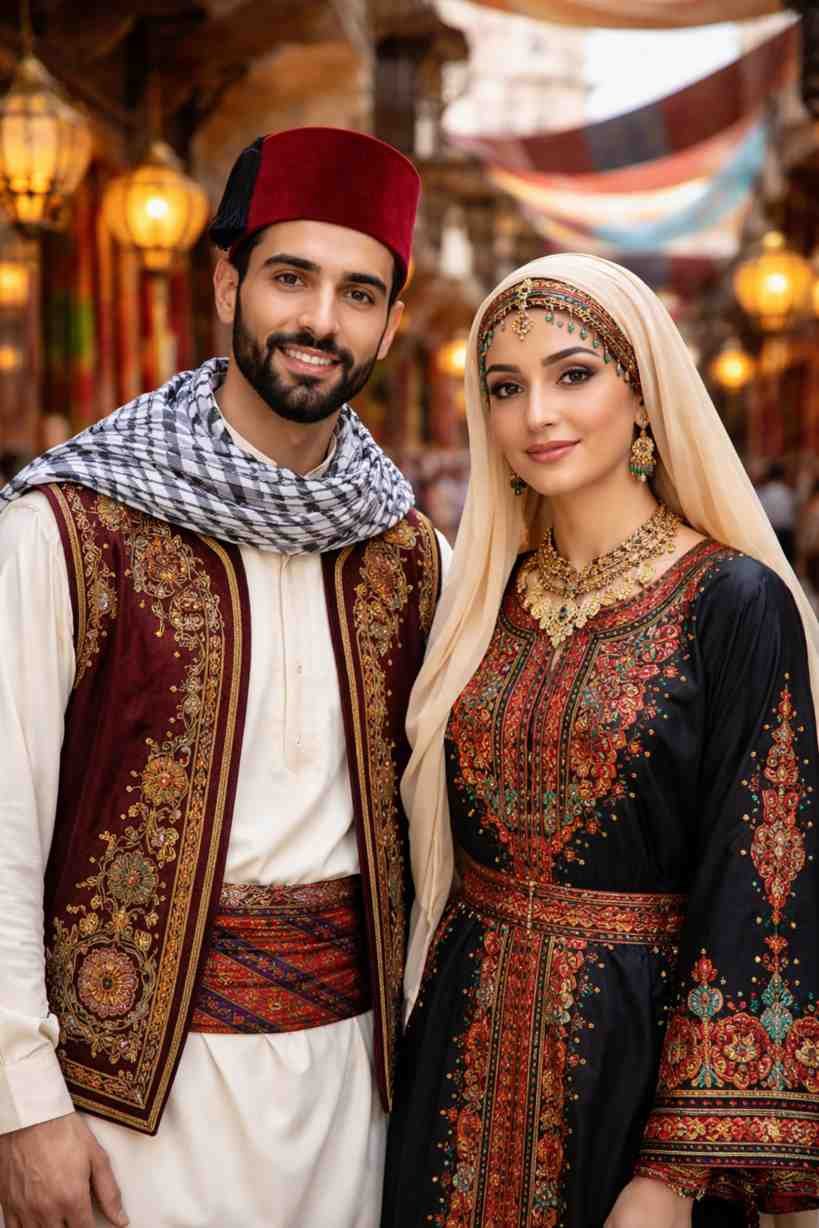
Thawb (Thobe): A long shirt or robe
-
Shirwal: Loose pants
-
Vest or jacket: Worn in cooler weather
-
Waist sash: Used for comfort and style
Men often wear light colors in summer and darker colors in winter.
4.2 Men’s Headwear
Headwear is common in traditional men’s clothing.
| Headwear | Description | When Worn |
|---|---|---|
| Taqiyah | Small cap | Daily use |
| Ghutra / Kufiya | Square scarf | Sun and cold protection |
| Agal | Black cord | Formal wear |
| Tarboush (Fez) | Red hat | Special occasions |
4.3 Men’s Clothing by Occasion
-
Daily life: Simple cotton clothes
-
Religious events: Clean and modest clothes
-
Weddings: Decorated clothing with fine fabric
5. Traditional Syrian Clothing for Women
5.1 Everyday Women’s Clothing
Women’s clothing is usually layered and loose.
Common items include:
-
Thobe: Long dress
-
Abaya: Loose outer coat
-
Inner dress: Worn at home or family events
At home, women may wear brighter colors.
5.2 Head Coverings and Jewelry
Head coverings and accessories are important.
| Item | Purpose |
|---|---|
| Hijab | Covers hair in public |
| Mandil | Traditional scarf |
| Jewelry | Decoration and celebration |
5.3 Women’s Clothing for Special Events
-
Home wear: Comfortable and colorful
-
Public places: Modest clothing
-
Weddings: Heavy embroidery and bright colors
6. Regional Differences in Syrian Clothing
Clothing changes from one area to another.
| Region | Clothing Style |
|---|---|
| Damascus | Simple and elegant |
| Aleppo & North | Thick fabric, strong embroidery |
| Coastal areas | Light clothes, bright colors |
| Desert areas | Practical clothes, earth colors |
Weather and lifestyle affect clothing styles.
7. Fabrics and Materials
Traditional Syrian clothes are made from natural materials.
| Fabric | Use |
|---|---|
| Cotton | Daily clothing |
| Linen | Summer wear |
| Wool | Cold weather |
| Silk | Special events |
| Velvet | Weddings and ceremonies |
Many traditional clothes are handmade.
8. Syrian Embroidery and Decoration
Embroidery is very important in Syrian clothing.
Common Designs and Meanings
| Design or Color | Meaning |
|---|---|
| Geometric shapes | Protection |
| Flower designs | Nature and life |
| Red color | Strength and life |
| Blue color | Protection from harm |
Different regions have different embroidery styles.
9. Traditional Syrian Footwear
Traditional shoes are simple and comfortable.
-
Leather sandals for daily use
-
Slippers for home
-
Decorated shoes for weddings
10. Clothing for Special Occasions
Weddings
-
Beautiful dresses and suits
-
Rich fabrics
-
Jewelry and embroidery
Religious Holidays
-
New or clean clothes
-
Modest and respectful style
Festivals
-
Traditional clothing showing regional culture
11. Modern Syrian Clothing Today
Today, many Syrians wear modern clothes like:
-
Jeans
-
Shirts
-
Dresses
However:
-
Traditional clothing is still used for events
-
Rural areas keep more traditional styles
-
Syrians abroad wear traditional clothes to keep their culture
12. Religion and Clothing in Syria
Religion affects how people dress.
Islamic Traditions
-
Modest clothing for men and women
-
Women cover hair in mosques
Other Religious Groups
-
Christian and minority groups have their own styles
-
Clothing rules are usually flexible
13. What Visitors Should Wear in Syria
Visitors should dress respectfully.
For Women
-
Long pants or long skirts
-
Loose tops
-
Scarf for mosques
For Men
-
Long trousers
-
Shirts with sleeves
-
Avoid shorts in public
Seasonal Tips
| Season | What to Wear |
|---|---|
| Summer | Light cotton clothes |
| Winter | Warm layers |
| Rural areas | More modest clothing |
| Mosques | Covered arms and legs |
14. Common Myths About Syrian Clothing
-
❌ Everyone dresses the same
-
❌ All women wear black abayas
-
❌ There is a strict dress law
✔ In reality, people dress differently based on choice and region.
15. Simple Clothing Terms
| Word | Meaning |
|---|---|
| Thawb | Long shirt or dress |
| Abaya | Loose outer coat |
| Shirwal | Loose pants |
| Ghutra | Head scarf |
| Taqiyah | Cap |
16. Keeping Syrian Clothing Traditions Alive
Traditional clothing is at risk because of:
-
Modern fashion
-
Fewer artisans
-
War and migration
People help protect these traditions by:
-
Teaching young people
-
Supporting local makers
-
Wearing traditional clothes at events
17. Conclusion
Syrian clothing is a beautiful mix of history, culture, and daily life. It shows respect, tradition, and identity. Even as modern fashion grows, traditional Syrian clothing continues to be important for culture and heritage. Learning about Syrian clothing helps us understand Syrian people and their way of life better.