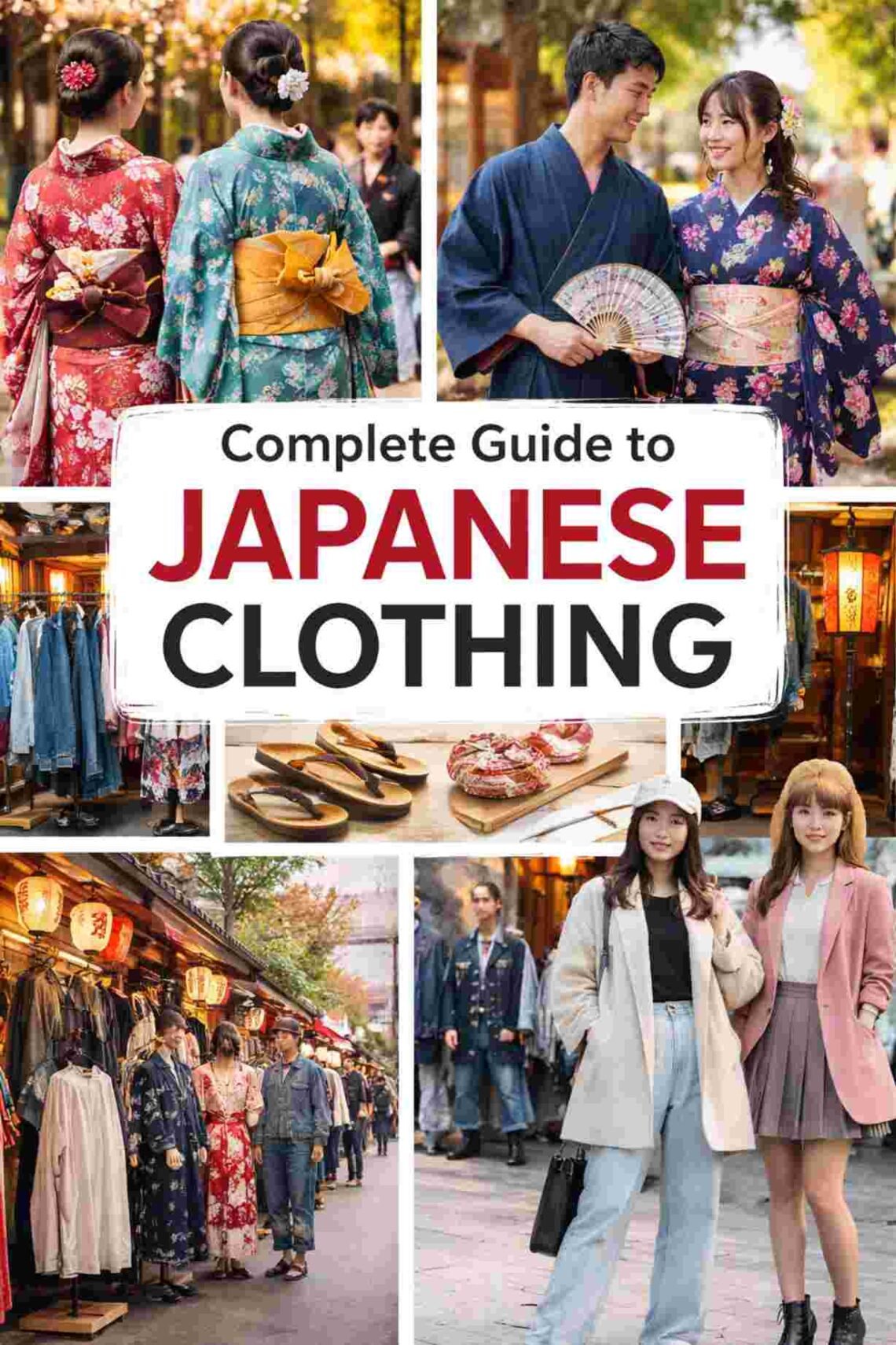
Japanese clothing is special because it mixes old traditions with modern fashion. People in Japan care a lot about when, where, and how clothes are worn. Clothing is not only about style, but also about respect, season, and situation.
This guide explains Japanese clothing in a simple way. You will learn about traditional clothes, modern fashion, sizes, shopping, rules, and daily life.
1. What Is Special About Japanese Clothing?
Japanese clothing follows a few simple ideas:
-
Clothes change with the season
-
People dress for the occasion
-
Simple designs are common
-
Quality is more important than quantity
-
Clothes should fit the place and situation
These ideas are used in both traditional and modern clothing.
2. Traditional Japanese Clothing
2.1 Main Traditional Clothes
| Clothing | What It Is | When It Is Worn |
|---|---|---|
| Kimono | Long robe with wide sleeves | Weddings, ceremonies |
| Yukata | Light cotton kimono | Summer festivals, inns |
| Hakama | Wide pants or skirt | Graduations, martial arts |
| Haori | Short jacket | Over kimono |
| Jinbei | Casual home wear | Summer, at home |
2.2 Kimono Basics (Simple List)
A full kimono outfit includes:
-
Kimono robe
-
Obi (belt)
-
Socks (tabi)
-
Wooden or straw sandals
Kimono styles change by:
-
Age
-
Event
-
Season
-
Pattern and color
3. When Do People Wear Traditional Clothes?
Traditional clothes are not worn every day. People wear them only for special events.
| Event | Clothing |
|---|---|
| Coming-of-Age Day | Formal kimono |
| Wedding | Very formal kimono |
| Funeral | Black kimono |
| Summer festival | Yukata |
| Hot spring inn | Yukata (provided) |
Wearing the wrong clothing for an event is seen as rude.
4. Modern Japanese Fashion
4.1 Everyday Clothing in Japan
Most people wear:
-
Simple colors (black, white, beige)
-
Loose or oversized clothes
-
Layered outfits
-
Comfortable but clean styles
Clothes are chosen carefully, even if they look simple.
4.2 Street Fashion Areas
Different areas in Tokyo have different styles.
| Area | Style |
|---|---|
| Harajuku | Colorful, creative fashion |
| Shibuya | Youth and casual fashion |
| Ginza | Luxury and clean style |
Popular street styles include:
-
Cute (kawaii) fashion
-
Lolita fashion
-
Punk and rock styles
-
Tech and futuristic clothing
Read also: Complete Guide to Argentinian Clothing
5. School and Work Clothing
School Clothing
-
Most schools have uniforms
-
Rules are strict
-
Students cannot change the uniform much
Work Clothing
-
Offices prefer simple and neat clothes
-
Dark colors are common
-
In summer, lighter clothes are allowed
6. Japanese Clothing Sizes
Japanese sizes are usually smaller than Western sizes.
Size Comparison (Simple)
| Japan Size | Western Size |
|---|---|
| S | XS |
| M | S |
| L | M |
| LL | L |
Important notes:
-
Clothes are often narrow
-
Pants are shorter
-
Shoes use centimeters
Always check size charts before buying.
7. Shopping for Clothes in Japan
7.1 Where to Buy Clothes
-
Department stores
-
Shopping streets
-
Thrift (second-hand) stores
-
Online Japanese shops
7.2 Shopping Rules to Know
-
Take off shoes in fitting rooms
-
Returns are often not allowed
-
Staff are polite and helpful
-
Tourists can shop tax-free
8. Useful Japanese Clothing Words
| Japanese Word | English Meaning |
|---|---|
| Fuku | Clothes |
| Kutsu | Shoes |
| Uwag i | Jacket |
| Pantsu | Pants |
| Saizu | Size |
| Kitemo ii desu ka? | Can I try this on? |
9. Clothing Rules and Manners
Some simple rules to remember:
-
Do not wear very revealing clothes
-
Dress for the season
-
Tattoos may be sensitive in some places
-
Do not wear pajamas outside
-
Always remove shoes indoors
10. Clothing at Home vs Outside
| Place | Clothing |
|---|---|
| At home | Comfortable clothes |
| Outside | Clean and planned outfits |
| Indoors | No outdoor shoes |
| Pajamas | Only at home |
11. Sustainability and Craft Skills
In Japan, people respect clothes and try to make them last.
Common ideas:
-
Fix clothes instead of throwing them away
-
Use natural fabrics and dyes
-
Pass clothes down in families
This thinking is still important today.
12. Japanese Clothing Around the World
Japanese fashion influences:
-
Simple and clean design
-
Oversized clothing
-
Streetwear brands
-
Gender-neutral fashion
Many designers around the world are inspired by Japanese style.
Conclusion
Japanese clothing is not only about fashion. It shows culture, respect, and care. From traditional kimono to modern street fashion, clothes in Japan always have meaning. By understanding these ideas, anyone can better enjoy and respect Japanese clothing and style.