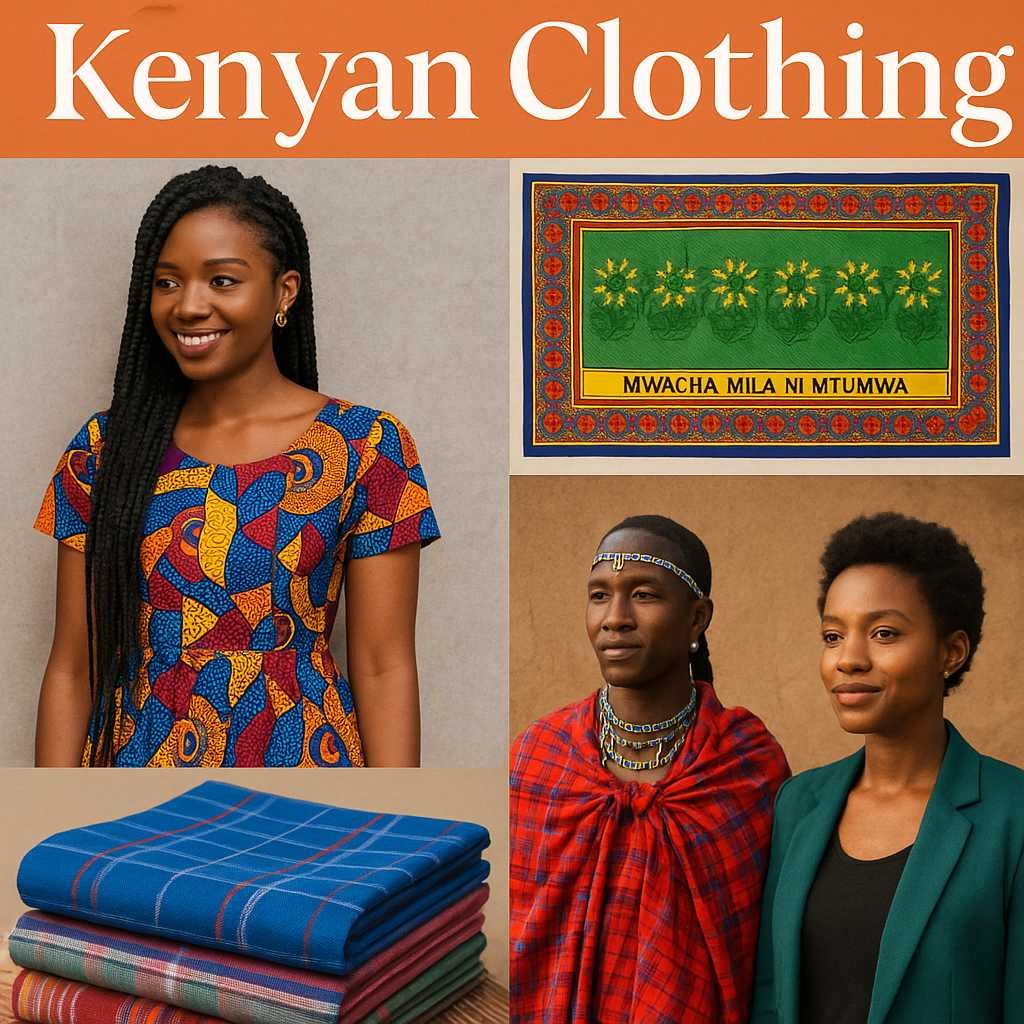
Kenya is a country with many cultures and traditions. Each community has its own way of dressing, which makes Kenyan clothing colorful and unique. There is no single national outfit, but there are popular clothes like the kitenge, kanga, kikoy, and the Maasai shuka that people all over the country wear.
This guide explains the history, types of clothing, regional styles, and modern trends in Kenyan fashion. It also gives tips for visitors on what to wear and how to take care of Kenyan clothes.
1. History of Kenyan Clothing
Long ago, Kenyan people made clothes from what they could find in nature.
-
Some used animal skins and leather.
-
Others used plant fibers or bark to make simple wraps.
-
Beads and shells were used for decoration and to show tribe or social position.
When traders and colonizers arrived, they brought new fabrics and styles. People started using cotton, tailoring shirts, and dresses. After independence, Kenyans mixed modern designs with traditional materials — a blend that continues today.
2. Main Types of Kenyan Traditional Clothes
Table: Common Traditional Fabrics
| Name | What It Is | Main Uses | Cultural Meaning |
|---|---|---|---|
| Kitenge | A cotton fabric with bright patterns printed using wax. | Dresses, skirts, suits, and accessories. | Worn for celebrations and daily life; designs often have meaning. |
| Kanga | A light cloth with sayings (proverbs) written in Swahili. | Wraps, headscarves, baby carriers. | Used to send messages or show emotion. |
| Kikoy | A soft striped cotton fabric from the coast. | Sarongs, towels, scarves. | Common among coastal communities. |
| Maasai Shuka | A colorful checked cloth (red, blue, purple). | Wraps, cloaks, and blankets. | Symbol of Maasai identity and strength. |
| Kanzu | A long white robe for men, mainly at the coast. | Religious or formal wear. | Reflects Islamic and Arabic influence. |
Kitenge
-
Comes in many colors and patterns.
-
Commonly worn by both men and women during ceremonies.
-
Often tailored into modern designs like jackets and dresses.
Kanga
-
Sold in pairs, one for the upper body and one for the lower.
-
Always has a proverb printed in Swahili, for example:
“Mwacha mila ni mtumwa” (He who abandons tradition is a slave). -
Easy to wash and very comfortable in warm weather.
Kikoy
-
Light and soft, perfect for the hot coastal climate.
-
Can be used as a beach wrap, scarf, or towel.
-
Originally worn by men but now popular with everyone.
Maasai Shuka
-
Usually red, symbolizing courage and unity.
-
Worn by the Maasai and Samburu people.
-
Also used as a blanket or protection against wind and cold.
Swahili Attire
-
Men: wear a kanzu with a small cap called kofia.
-
Women: wear long flowing dresses like buibui or dirac.
-
The clothes are modest and reflect Islamic culture on the coast.
3. Accessories and Decorations
Kenyan fashion is not only about clothes — beadwork and jewelry are very important.
-
Beads: show tribe, age, or marriage status.
-
Colors:
-
Red – bravery
-
White – peace and purity
-
Blue – sky and rain
-
-
Jewelry: made from recycled glass, brass, shells, or bone.
-
Sandals: many are handmade from recycled tires.
These accessories add meaning and beauty to every outfit.
Read also: Complete Guide to Taiwanese Clothing
4. Regional Clothing Styles
Different parts of Kenya have different clothing styles:
| Region / Tribe | Traditional Dress | Special Features |
|---|---|---|
| Maasai & Samburu | Shuka cloth and bead jewelry. | Bright red color, many necklaces. |
| Kikuyu | Leather or fabric cloaks. | Decorated with cowrie shells and beads. |
| Luo & Luhya | Tailored shirts and colorful prints. | Worn during dances and festivals. |
| Swahili Coast | Kanzu (men), Buibui/Dirac (women). | Modest, flowing, often embroidered. |
Each community’s clothing matches its climate, history, and beliefs.
5. Modern Kenyan Fashion
Today, Kenya’s fashion world is creative and fast-growing. Designers mix traditional fabrics with modern styles.
Some well-known Kenyan designers include:
-
KikoRomeo
-
Wambui Kibue
-
Adele Dejak
Modern Fashion Trends
-
African prints in suits, dresses, and handbags.
-
Eco-friendly designs using recycled materials.
-
Local artisans making handmade jewelry and shoes.
-
Fashion events like Nairobi Fashion Week show Kenyan creativity.
Modern Kenyan fashion celebrates both heritage and innovation.
6. What to Wear When Visiting Kenya
Cultural Tips
-
Dress modestly in rural or coastal areas (cover shoulders and knees).
-
In Nairobi and other cities, casual modern clothes are fine.
-
Remove shoes when entering someone’s home or a mosque.
Safari Clothing
When going on safari:
-
Wear light, breathable clothes in earth colors (khaki, beige, green).
-
Avoid camouflage prints (used by military).
-
Bring a hat, comfortable shoes, and layers for cool evenings.
Beach Clothing
-
At beach resorts, wear kikoys, light cotton dresses, or shorts.
-
In towns, cover up a little more out of respect for local culture.
Packing List
✅ Light cotton shirts
✅ Long pants or skirts
✅ A sweater or jacket
✅ Sun hat and sunglasses
✅ Sandals or walking shoes
✅ A scarf or wrap (for sun or modesty)
7. Clothing and Identity
Clothing in Kenya tells a story.
It can show:
-
Tribe or community
-
Age group
-
Marital status
-
Social role or ceremony (like weddings or coming-of-age rituals)
During festivals or national events, Kenyans proudly wear traditional dress.
Each pattern, color, and design is a reminder of who they are and where they come from.
8. Sustainability and the “Mitumba” Issue
Mitumba means secondhand clothes imported from other countries.
-
Advantages: cheap, easy to find, and provides jobs.
-
Problems: hurts local textile industries and brings waste.
The Change Happening Now
-
Kenyan designers now recycle and upcycle old clothes.
-
They create new designs from mitumba fabric.
-
This supports local talent and environment-friendly fashion.
9. Where to Buy Kenyan Clothing
You can find beautiful clothes and crafts in many places:
| Place | What You’ll Find | Tip |
|---|---|---|
| Maasai Market (Nairobi, Mombasa) | Handmade jewelry, kitenge, kikoy. | Bargain politely. |
| Toi Market | Secondhand clothes and tailoring services. | Check quality before buying. |
| Designer Boutiques | Modern Kenyan fashion. | Support local brands. |
| Online Shops | Global delivery for Kenyan-made fashion. | Read reviews for authenticity. |
10. Care and Styling Tips
How to Care for Your Clothes
-
Wash in cold or lukewarm water.
-
Use mild detergent.
-
Iron inside out to protect prints.
-
Dry in the shade to keep colors bright.
How to Style Them
-
Pair a kitenge skirt with a plain top.
-
Use a kikoy as a beach wrap or scarf.
-
Wrap a kanga around your waist or shoulders for a pop of color.
-
Mix modern jeans with a kitenge jacket for a casual African look.
Conclusion
Kenyan clothing is a mix of tradition, culture, and creativity. Every fabric, color, and design has a story — from the Maasai plains to the Swahili coast. Modern designers continue to blend old and new, making Kenyan fashion known around the world. By wearing or buying Kenyan-made clothes, you help support local artisans and keep the country’s culture alive.