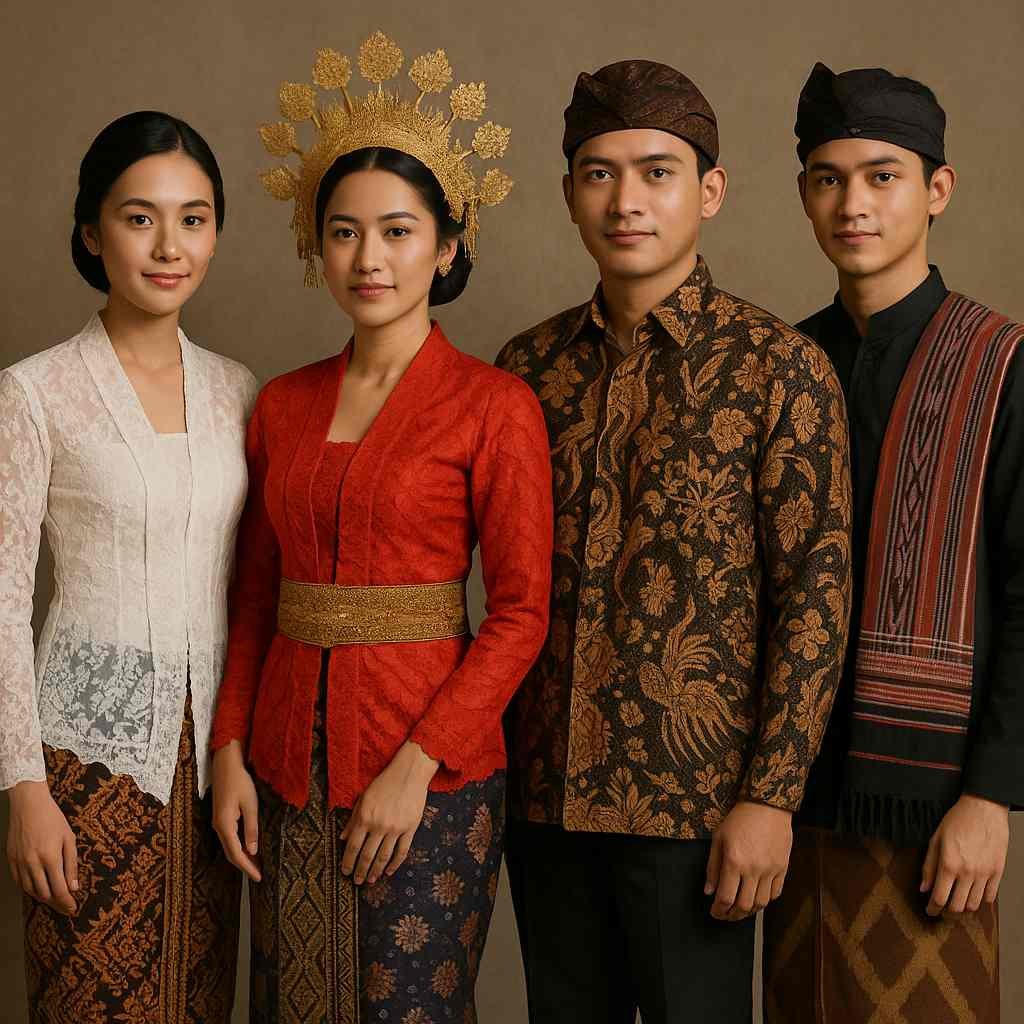
Indonesia is a country with thousands of islands and many different cultures. Because of this, Indonesian clothing is very rich and unique. Every region has its own traditional clothes, colors, patterns, and ways of wearing them. These clothes are not only for covering the body—they tell stories about history, beliefs, and identity.
This simple guide will help you understand the most important traditional clothes in Indonesia, where they come from, how people wear them, and how these clothes are used today.
1. History of Indonesian Clothing
Traditional Indonesian clothing has changed over many years. Several cultures have influenced how people dress.
Main Influences
-
Indigenous (local) culture: Early people used natural dyes and handwoven fabrics.
-
Hindu and Buddhist kingdoms: Added elegant styles, jewelry, and special patterns.
-
Islam: Encouraged modest clothing and the use of head coverings.
-
European colonial era: Brought new fabrics and tailoring styles.
-
Modern Indonesia: Traditional clothes like batik and kebaya became national symbols.
2. Important Traditional Clothing Items
2.1 Batik
Batik is one of Indonesia’s most famous textiles. It uses a wax-resist dye method to create patterns.
Why Batik Is Special
-
Many batik patterns have meanings related to life, nature, or good luck.
-
Different areas have different batik styles.
-
UNESCO recognizes Indonesian batik as world heritage.
2.2 Songket and Tenun (Handwoven Fabrics)
Songket
-
A shiny cloth woven with gold or silver threads.
-
Mostly used in Sumatra, Bali, and Lombok.
-
Worn for weddings and important ceremonies.
Tenun
-
Handwoven fabrics from different regions.
-
Includes ikat, Dayak weaves, and Sumba/Flores textiles.
-
Often used in rituals and cultural events.
2.3 Sarong / Kain Panjang
-
A simple cloth wrapped around the waist.
-
Worn by men and women.
-
Can be used at home, in ceremonies, or at places of worship.
2.4 Ulos
-
A special cloth from the Batak people of North Sumatra.
-
Given during weddings, births, and other important events.
-
Shows love, blessing, and family connection.
2.5 Headgear and Accessories
-
Blangkon — Javanese headpiece for men.
-
Udeng — Balinese headwrap for men.
-
Tanjak/Tengkolok — Malay headcloth.
-
Suntiang — Minangkabau golden bridal crown.
3. Quick Look at Indonesian Clothing Types
Table: Traditional Clothing and Their Origins
| Item | Region | Who Wears It | Meaning / Use |
|---|---|---|---|
| Batik | Java | Men & Women | Symbolic patterns, ceremonies |
| Songket | Sumatra, Bali | Mostly Women | Luxury, weddings, special events |
| Tenun Ikat | Flores, Sumba, Kalimantan | Men & Women | Rituals, cultural identity |
| Sarong | All regions | Unisex | Daily wear, prayers |
| Ulos | Batak (North Sumatra) | Men & Women | Blessings, family ties |
| Beskap | Java | Men | Weddings, ceremonies |
| Kebaya | Java, Bali | Women | Elegance, tradition |
| Blangkon | Java | Men | Cultural identity |
| Udeng | Bali | Men | Temple and ceremony wear |
4. Traditional Clothing for Women
Women’s clothes in Indonesia are known for their beauty and meaning.
4.1 Kebaya
The kebaya is a fitted blouse made from lace or sheer fabric. It is worn with a long skirt made of batik or songket.
Popular Kebaya Styles
-
Kebaya Kartini — Classic Javanese style.
-
Kebaya Encim — Light, colorful Peranakan style.
-
Balinese Kebaya — Worn with a sash and fitted skirt for ceremonies.
4.2 Women’s Clothing by Region
| Region | Women’s Clothing |
|---|---|
| Java | Kebaya + batik sarong; hair bun called sanggul |
| Bali | Kebaya, sash (selendang), kamben skirt |
| Sumatra | Songket dresses; Minangkabau brides wear suntiang |
| Sulawesi | Beaded clothing, colorful woven fabrics |
| Kalimantan | Dayak beadwork and ceremonial dresses |
| Papua | Woven skirts, bark cloth, bead accessories |
5. Traditional Clothing for Men
Men’s clothing in Indonesia is simple in daily life but very detailed during ceremonies.
5.1 Main Clothing Items for Men
-
Batik shirts — Everyday or formal clothing.
-
Beskap — Javanese formal jacket.
-
Baju Kurung / Melayu — Common in Malay areas.
-
Sarong — Used for prayer, ceremonies, or comfort at home.
5.2 Men’s Clothing by Region
| Region | Men’s Clothing |
|---|---|
| Java | Beskap, batik cloth, blangkon |
| Bali | Udeng, kamben, saput cloth |
| Sumatra | Songket jackets and hats |
| Sulawesi | Embroidered jackets, traditional outfits |
| Kalimantan | Dayak warrior-style clothes and beadwork |
| Papua | Traditional natural-material clothing for ceremonies |
6. Meaning and Beliefs Behind Clothing
Traditional Indonesian clothing has deep cultural and spiritual meaning.
Important Influences
-
Religion
-
Islam encourages modest dress and sometimes headscarves.
-
Hindu customs in Bali guide temple clothing rules.
-
Indigenous beliefs connect clothing to nature and ancestors.
-
Examples of Special Meanings
-
Sido Mukti batik — Symbolizes harmony and a good future.
-
Parang batik — Once used by nobility.
-
Ulos Ragidup — Represents life and blessings.
Read also: Complete Guide to Vietnamese Clothing
7. Indonesian Clothing in Modern Times
Traditional clothing is still popular today and is often mixed with modern fashion.
7.1 Modern Changes
-
Batik is used in shirts, dresses, bags, and even streetwear.
-
Designers create new kebaya styles with softer fabrics and new colors.
-
Songket is used in gowns and luxury outfits.
7.2 Clothing in Daily and National Life
-
Batik Fridays: Many offices ask employees to wear batik.
-
Government uniforms: Often include traditional patterns.
-
Schools: Some students wear batik on certain days.
7.3 Indonesian Fashion Abroad
Indonesian batik and ikat designs appear in international fashion shows and inspire global designers.
8. How to Wear Indonesian Traditional Clothes
Wearing traditional clothes correctly is important, especially for ceremonies.
Simple Tips
-
Sarong: Learn the correct way to fold and tie it.
-
Batik motifs: Some patterns are meant for weddings or special events only.
-
Bali temple rules: Wear a sash and proper skirt, and cover shoulders.
-
Accessories: Match headpieces or jewelry with the event.
Table: What to Wear for Different Occasions
| Occasion | Recommended Clothing |
|---|---|
| Javanese Wedding | Kebaya + batik jarik (women), beskap + blangkon (men) |
| Balinese Temple | Kebaya, sash, kamben; men wear udeng + kamben |
| National Events | Batik shirt or formal kebaya |
| Daily Home Wear | Simple sarong |
| Cultural Shows | Traditional outfits from the specific region |
9. Buying and Caring for Indonesian Clothing
How to Choose Real Traditional Textiles
-
Look for hand-drawn batik (batik tulis) rather than printed copies.
-
Real songket has raised metal threads, not flat print.
-
Buy from local artisans to support traditional craft.
How to Take Care of Your Clothes
-
Wash batik gently by hand and keep it away from strong sunlight.
-
Store songket flat to avoid damaging the threads.
-
Keep ulos or tenun in breathable bags so the fabric lasts longer.
Conclusion
Indonesian clothing is colorful, meaningful, and full of history. Each textile and outfit tells a unique story about the people who wear it. Even today, Indonesians proudly wear their traditional clothes in ceremonies, festivals, and modern fashion.
By learning about these clothes, we gain a deeper understanding of Indonesia’s culture and the beauty of its many traditions.