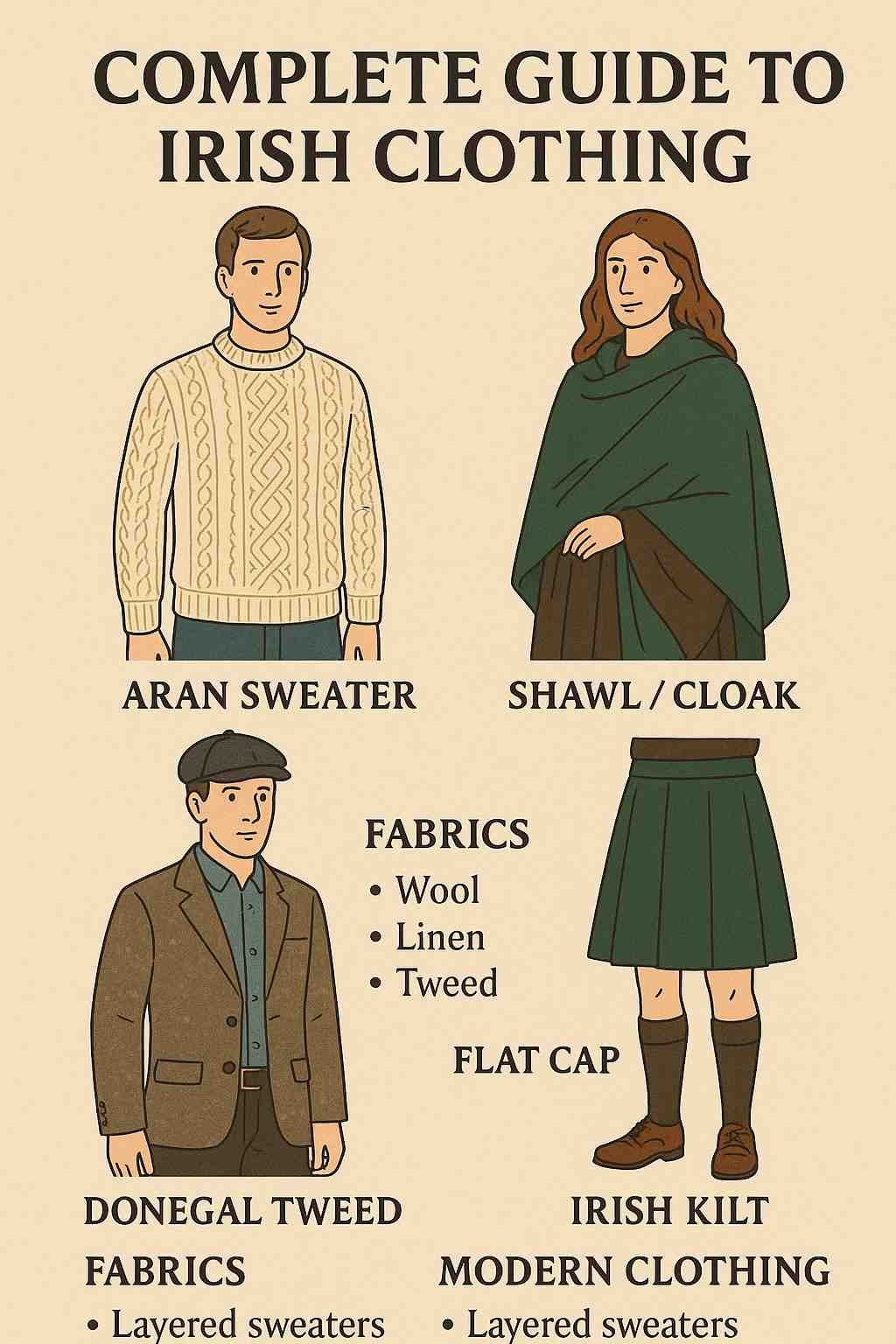
Irish clothing is known for warm fabrics, rich history, and strong cultural meaning. From old Celtic cloaks to modern streetwear, Irish style mixes tradition with practicality. This guide explains the history of Irish clothing, its famous garments, what people wear in Ireland today, and how to choose real Irish pieces.
1. A Short History of Irish Clothing
Irish clothing changed a lot over time, but some ideas stayed the same: warmth, comfort, and natural materials.
Early Irish Clothing
Early people in Ireland wore simple but useful clothes made from wool and linen.
Main early garments:
-
Léine – a long linen tunic worn by both men and women
-
Brat – a wool cloak worn over the shoulders
-
Simple leather shoes and belts
These clothes kept people warm and dry in Ireland’s windy, rainy climate.
Medieval to 19th Century Clothing
Clothing was still practical but started to show social status.
People used:
-
Thick wool cloaks
-
Shawls for women
-
Homespun linen shirts
-
Local plant dyes for brown, yellow, blue, and green colours
Gaelic Revival
In the 1800s, there was a strong movement to protect Irish culture. Clothing became a symbol of identity, and old styles and craft skills became popular again. This helped keep items like Aran sweaters and Donegal tweed alive.
2. Famous Traditional Irish Garments
Ireland has several garments that are known around the world. Each item has a story and special look.
A. Aran Sweater
The Aran sweater is one of Ireland’s most loved garments.
Features:
-
Made from thick wool
-
Warm and water-resistant
-
Hand-knitted with special stitches
Common stitch meanings:
| Stitch Name | Meaning |
|---|---|
| Cable | Fishermen’s ropes / strength |
| Diamond | Wealth and success |
| Basket | Good catch and hard work |
| Moss | Growth and nature |
B. Donegal Tweed
Donegal tweed is a traditional woven fabric from County Donegal.
What makes it special:
-
Made from wool
-
Small coloured flecks in the fabric
-
Warm and long-lasting
Common items:
-
Tweed jackets
-
Tweed waistcoats
-
Tweed skirts
-
Flat caps
C. Irish Kilt
The Irish kilt is different from the Scottish kilt.
Irish kilt features:
-
Usually one solid colour (often saffron, blue, or green)
-
Worn for festivals, ceremonies, weddings
-
Paired with hose, brogues, and a jacket
D. Shawls, Wraps and Cloaks
Shawls were very common, especially for women in rural areas.
Types:
-
Galway shawl – thick, warm wool shawl
-
Brat – old Celtic cloak
-
Modern wool wraps used today
These pieces gave warmth and protection against wind and rain.
E. Traditional Accessories
Irish accessories complete the outfit.
Popular items:
-
Flat cap (paddy cap)
-
Celtic brooches
-
Wool socks and scarves
-
Claddagh or Celtic knot jewellery
Read also: Complete Guide to Indonesian Clothing
3. Main Fabrics Used in Irish Clothing
Ireland has a strong tradition of textile making. The country is famous for using natural fibres.
| Fabric | Description | Clothing Examples |
|---|---|---|
| Wool | Warm, strong, water-resistant | Sweaters, shawls, cloaks |
| Linen | Light, breathable | Shirts, dresses, tunics |
| Tweed | Thick wool fabric with colour flecks | Jackets, caps, skirts |
| Modern mixes | Cotton, polyester blends | Everyday casual wear |
4. Irish Clothing and Culture
Clothing plays an important role in Irish identity.
Clothing is used to show:
-
Connection to the land (colours, materials)
-
Craft skills passed down for generations
-
Celtic symbols and designs
-
Pride during celebrations like St. Patrick’s Day
Traditional clothing is also used in:
-
Folk music and dance shows
-
Historical festivals
-
Cultural parades
5. What Irish People Wear Today
Modern Irish clothing is simple, comfortable, and practical. Because of the weather, people dress in layers.
Everyday Irish Style
Common items people wear today include:
-
Jeans or trousers
-
Jumpers or hoodies
-
Warm jackets or puffer coats
-
Boots or comfortable sneakers
-
Wool hats or scarves in winter
City vs. Countryside
| Location | Clothing Style |
|---|---|
| City (Dublin, Galway) | Trendy coats, clean sneakers, casual chic outfits |
| Countryside | More outdoor-friendly clothes, boots, warm layers |
Modern Irish Fashion Designers
Some well-known Irish brands are:
-
Magee
-
Ireland’s Eye Knitwear
-
Inis Meáin
-
Fisherman Out of Ireland
These brands often use traditional fabrics in modern styles.
Special Occasions
At weddings, graduations, or cultural events, people may wear:
-
Tweed jackets
-
Aran cardigans
-
Irish kilts
-
Celtic jewellery
6. What to Wear When Visiting Ireland
Ireland’s weather changes fast. A sunny morning can turn into a rainy afternoon. Because of this, layering is the best way to dress.
Layering System
Use three simple layers:
-
Base layer – cotton or merino shirt
-
Middle layer – fleece or wool sweater
-
Outer layer – waterproof coat or jacket
Season-by-Season Guide
Spring
-
Light sweater
-
Waterproof jacket
-
Comfortable shoes
Summer
-
T-shirts and light layers
-
Light jumper for evenings
-
Rain jacket (always needed)
Autumn
-
Wool sweaters
-
Boots
-
Warm socks
-
Scarf or hat
Winter
-
Thick coat
-
Gloves, hat, scarf
-
Warm layers underneath
Packing List for Visitors
Essentials:
-
Waterproof jacket
-
Wool sweater
-
Comfortable boots
-
Umbrella
-
Scarf and hat
-
Jeans or trousers
What Not to Wear:
-
Very thin clothes without layers
-
Slippery high heels on cobblestones
-
Clothes that cannot handle rain or wind
7. How to Choose Quality Irish Clothing
If you want to buy Irish clothing, look for signs of good quality.
How to Spot a Good Aran Sweater
-
100% wool
-
Clear, even stitches
-
Heavy, warm feel
-
Made in Ireland label
How to Choose Donegal Tweed
Good tweed should:
-
Have colourful flecks
-
Feel firm but soft
-
Be made in Donegal
-
Have a strong weave
Sizing Tips
-
Irish and European sizes may fit differently from U.S. sizes
-
Always check size charts
-
Sweaters may stretch slightly with wear
Avoiding Fake Items
Be careful with:
-
Very cheap “Irish” sweaters
-
Synthetic fabrics sold as “real wool”
-
Souvenir shops selling mass-produced items
8. Irish Clothing for Costumes and Reenactments
Many people want to dress in old Irish styles for events or festivals.
Authentic costume pieces include:
-
Léine (linen tunic)
-
Brat (wool cloak)
-
Leather belt
-
Simple boots or shoes
For a modern festival look:
-
Green clothing for St. Patrick’s Day
-
Celtic brooches
-
Aran sweaters or scarves
9. Sustainability in Irish Clothing
Ireland has a strong tradition of slow fashion, meaning clothes are made with care, not mass production.
Sustainable features:
-
Local wool
-
Hand-knitting
-
Small weaving mills
-
Natural dyes
-
Long-lasting materials
Buying Irish-made clothing supports local craftspeople and keeps old skills alive.
10. Best Places to Buy Irish Clothing
In Ireland:
-
Small local shops
-
Craft markets
-
Woollen mills
-
Gift shops in Galway, Dublin, Kerry, and Donegal
Online:
Look for stores that:
-
Use Irish wool
-
Show where the product is made
-
Include detailed product descriptions
Conclusion
Irish clothing is a beautiful mix of history, culture, and everyday comfort. Whether you are drawn to the strength of Donegal tweed, the warmth of the Aran sweater, or the charm of Celtic accessories, each item tells a story. Modern Ireland continues to blend old and new styles, creating clothing that is meaningful, practical, and timeless.
Irish clothing is not just fashion—it is a piece of Ireland’s heart, passed from one generation to the next.