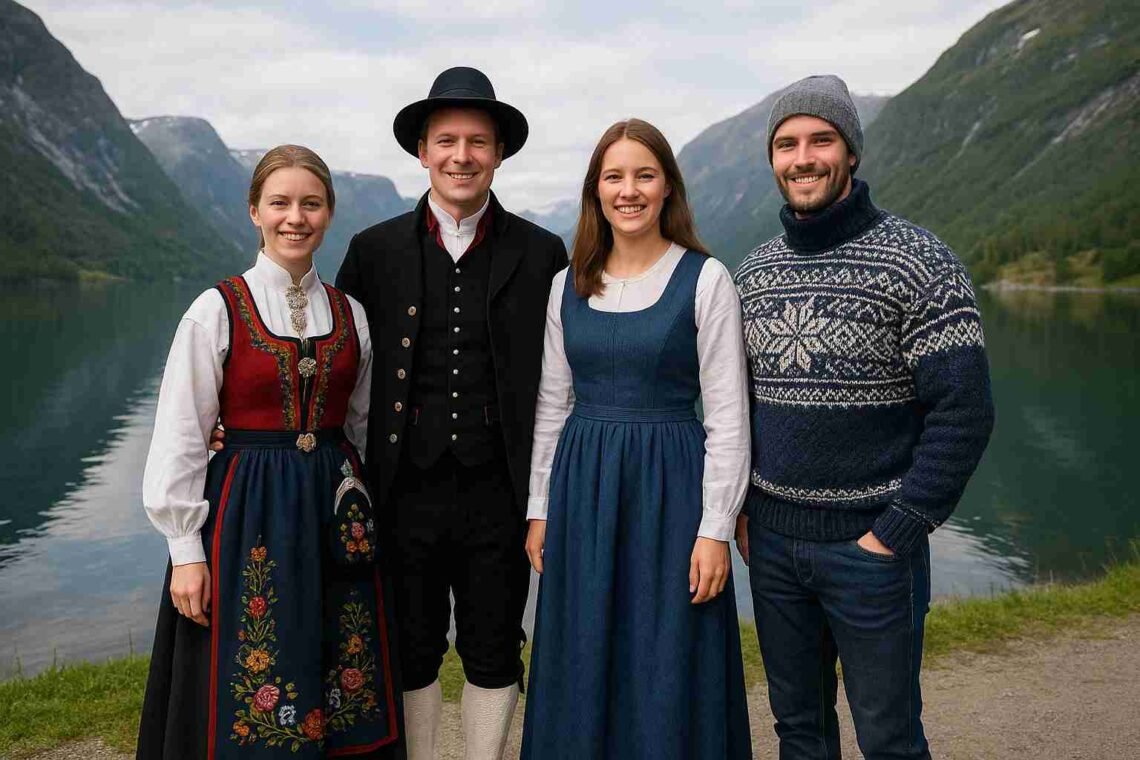
Norwegian clothing is special because it tells the story of Norway’s history, culture, and cold climate. Some clothes, like the bunad, are full of tradition. Others, like wool sweaters and winter jackets, help people stay warm in freezing weather.
This easy guide explains traditional clothing, modern clothing, and what to wear when you visit Norway.
1. The Bunad: Norway’s Traditional Costume
The bunad is the most famous traditional outfit in Norway. It comes from old village clothing and became popular again in the 1800s when people wanted to protect Norwegian culture.
When People Wear Bunads
-
17 May (Norway’s National Day)
-
Weddings
-
Confirmations
-
Baptisms
-
Special family events
-
Cultural festivals
Why Bunads Are Important
-
They show pride in a person’s region or hometown
-
They are handmade with very detailed work
-
They are often passed down in families
-
They can cost a lot because they take months to make
A. Women’s Bunad Parts (Table)
| Part | What It Is |
|---|---|
| Skirt & Bodice | Wool clothing with colorful embroidery |
| Blouse | White shirt made of linen or cotton |
| Apron (Forkle) | Worn over the skirt, often in a different color |
| Bringeduk | Decorative piece worn on the chest |
| Belt & Pocket | Belt with a small loose pocket (løslomme) |
| Shawl & Headwear | Embroidered or woven accessories |
| Sølje Jewelry | Silver pins and brooches used for decoration |
B. Men’s Bunad Parts (Table)
| Part | What It Is |
|---|---|
| Jacket & Vest | Wool or velvet with simple decoration |
| Shirt | White cotton or linen shirt |
| Breeches/Pants | Knee or full-length trousers, depending on region |
| Stockings | Wool socks with garters |
| Shoes | Traditional leather shoes |
| Hat | Regional caps |
| Silver Details | Buttons, belts, and accessories |
C. Regional Bunads
Different regions have bunads with their own colors and designs.
Here are a few examples:
| Region | Style |
|---|---|
| Telemark | Bright colors and bold embroidery |
| Hardanger | Red bodice and white apron |
| Nordland | Dark blue with simple decorations |
| Rogaland | Dark colors with colorful flower patterns |
| Trøndelag | Geometric shapes and strong colors |
Every region’s bunad tells a story about its history and traditions.
2. Festdrakt: A Modern Style
A festdrakt looks like a bunad but is more modern and flexible.
Why People Choose Festdrakt
-
Cheaper than a bunad
-
Easier to buy (ready-made)
-
No strict regional rules
-
Still looks festive for 17 May or celebrations
-
Many are now made from recycled or reused fabrics
Festdrakter are good for people who want traditional-style clothing without the high cost.
3. The Sámi Gákti: Indigenous Clothing
In northern Norway, the Indigenous Sámi people wear the gákti.
Features of the Gákti
-
Bright colors (red, blue, green, yellow)
-
Patterns that show family history or region
-
Reindeer-hide shoes
-
Embroidered belts
-
Silver jewelry
Important to Know
A gákti is a sign of Sámi identity. It should only be worn by Sámi people or those with direct cultural ties. It is not a costume for tourists.
Read also: Complete Guide to Canadian Clothing
4. Norwegian Knitwear: Warm and Traditional
Norway is famous for its warm wool sweaters.
Popular Types
-
Lusekofte (Setesdal Sweater)
-
Black and white pattern with “lice” dots
-
-
Kofte Cardigans
-
Wool cardigans with metal clasps
-
-
Snowflake or Reindeer Patterns
-
Now seen in many modern designs
-
Why Norwegians Love Wool
-
Stays warm even when wet
-
Breathable and long-lasting
-
Made from local sheep
-
Helps control body temperature
5. Materials, Craft, and Symbolism
A. Common Materials
-
Wool
-
Cotton
-
Linen
-
Reindeer hide (Sámi areas)
-
Silver for jewelry
B. Traditional Craft Techniques
-
Hand embroidery
-
Hand weaving
-
Making silver jewelry (sølje)
-
Tailoring by professionals
-
Using natural dyes
C. What Clothing Symbols Mean
-
Colors show regional identity
-
Patterns can tell cultural stories
-
Silver was once believed to protect from bad luck
-
Embroidery designs often come from nature
6. Modern Norwegian Clothing Style
Today, Norwegians prefer simple, practical, and high-quality clothing.
Everyday Clothing Traits
-
Neutral colors (black, grey, navy)
-
Warm layers
-
Outdoor brands worn even in cities
-
Focus on comfort
-
Clothing designed for cold weather
Popular Norwegian Brands
-
Norrøna
-
Helly Hansen
-
Bergans
-
Devold
-
Dale of Norway
-
Kari Traa
7. Sustainability in Clothing
Norway supports eco-friendly clothing choices.
Sustainable Trends
-
Reusing old fabrics
-
Buying fewer but better items
-
Upcycling old festdrakter
-
Repairing instead of replacing
-
Supporting local textile makers
8. What to Wear in Norway (Simple Guide for Visitors)
Norway’s weather changes fast. The best way to stay warm is to use layers.
A. The 3-Layer System
| Layer | Purpose | Material |
|---|---|---|
| Base Layer | Keeps sweat away | Merino wool |
| Middle Layer | Keeps you warm | Wool sweater/fleece |
| Outer Layer | Protects from wind and rain | Waterproof jacket |
B. What to Wear by Season
Winter (Very Cold)
-
Wool thermal underwear
-
Thick winter jacket
-
Warm boots
-
Wool socks
-
Gloves or mittens
-
Scarf or neck warmer
-
Hat
Spring
-
Light wool sweater
-
Rain jacket
-
Walking shoes
-
Light gloves (optional)
Summer
-
T-shirts and light layers
-
Rain jacket (always needed)
-
Hiking shoes
-
Light wool sweater for evenings
Autumn
-
Fleece or wool mid-layer
-
Waterproof boots
-
Windproof jacket
-
Hat and gloves for colder days
9. What to Wear for Different Activities
Hiking the Fjords
-
Wool base layer
-
Windproof jacket
-
Wool socks
-
Backpack with water and snacks
Northern Lights Trips
-
Several warm layers
-
Mittens (better than gloves)
-
Warm winter boots
-
Thermal hat
-
Very warm jacket
Skiing
-
Ski pants and ski jacket
-
Thermal underwear
-
Warm gloves
-
Neck warmer
-
Ski goggles
Exploring Cities
-
Comfortable boots
-
Warm coat
-
Wool scarf
-
Layers you can remove indoors
10. Buying and Caring for Traditional Clothing
A. Buying a Bunad or Festdrakt
-
Choose one that fits your heritage or taste
-
Expect a high price for bunads (they are handmade)
-
Festdrakter are cheaper and easier to buy
-
Custom bunads may take months to produce
B. How to Care for Norwegian Clothing
-
Store bunads in a protective bag
-
Polish silver jewelry from time to time
-
Air out wool instead of washing often
-
Wash wool gently with wool-safe detergent
-
Repair small damage to keep clothes lasting longer
Conclusion
Norwegian clothing mixes tradition, practicality, and beautiful craftsmanship. Traditional outfits like the bunad tell rich cultural stories, while modern Norwegian clothing focuses on warmth, comfort, and simple style. For visitors, dressing in layers and choosing wool is the best way to stay warm and enjoy the country.
Whether you are exploring Norwegian culture or preparing for your trip, the clothing of Norway shows how people have lived—and dressed—successfully in one of the world’s coldest and most beautiful places.