Turkey has a long and colourful clothing history. Over the centuries, many cultures—from Central Asian nomads to the Ottoman Empire and modern Europe—have shaped the way people dress in Turkey. Today, you can still see this mix of old traditions and modern style in both cities and small villages.
This guide explains traditional clothes, regional styles, modern fashion, Turkish fabrics, and helpful tips for visitors. It also includes lists and tables to make everything easy to understand.
1. How Turkish Clothing Changed Over Time
1.1 Early Nomadic Clothing
The first Turkish people came from Central Asia. They were travelers who moved from place to place, so their clothes needed to be:
-
Comfortable
-
Strong
-
Warm in winter and cool in summer
-
Good for riding horses
They usually wore:
-
Loose trousers
-
Long tunics
-
Leather boots
-
Thick coats for cold days
1.2 Clothing in the Ottoman Empire
When the Ottoman Empire grew, clothing became more stylish and beautiful. Clothes also showed a person’s status or job.
Common features of Ottoman clothing:
-
Rich fabrics like silk and velvet
-
Bright colours
-
Gold and silver embroidery
-
Long, layered outfits
The kaftan became one of the most famous garments of this period.
1.3 Modern Clothing in Turkey
After 1923, when the Republic of Turkey was founded, people slowly began wearing more Western-style clothes.
Changes included:
-
Men wore suits, shirts, and trousers
-
Women wore skirts, dresses, and blouses
-
People mixed modern clothing with traditional designs
Today, Turkey has a fashion style that blends both worlds.
2. Traditional Turkish Clothing
Even though most people wear modern clothes, traditional clothing is still important during special events such as weddings, folk dances, and festivals.
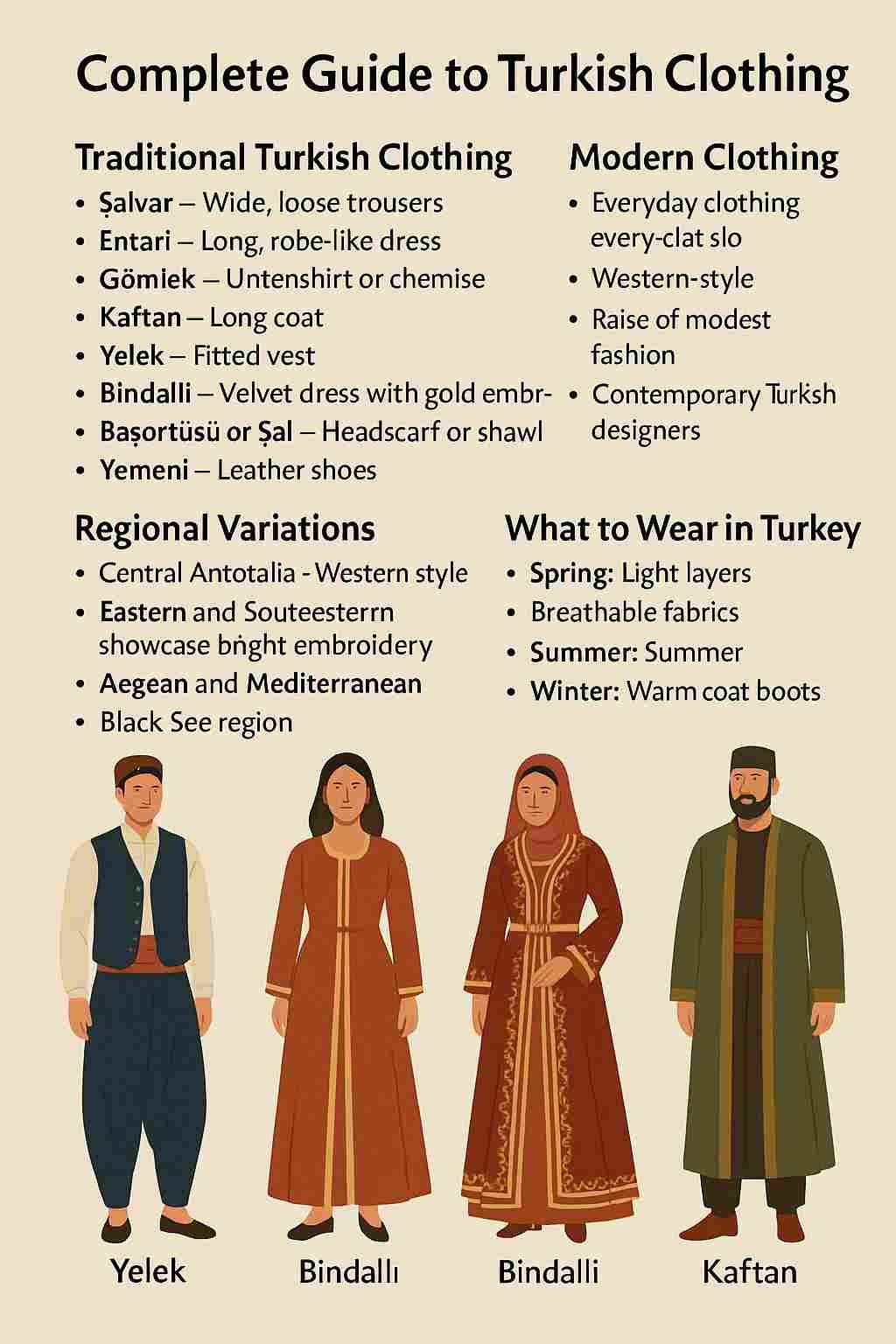
2.1 Main Traditional Clothing Items (Table)
| Garment | Description | Who Wears It | Notes |
|---|---|---|---|
| Şalvar | Loose, comfortable trousers | Men & Women | Found in many regions with different styles |
| Entari | Long dress or robe | Women | Usually colourful and embroidered |
| Gömlek | Light shirt or undershirt | Men & Women | Made from cotton or linen |
| Kaftan | Long coat | Both | Worn in the Ottoman palace |
| Yelek | Vest worn over a shirt | Both | Adds shape to the outfit |
| Bindallı | Fancy velvet dress with gold embroidery | Women (brides) | Worn during henna night |
| Başörtüsü / Şal | Scarf or shawl | Mainly Women | Different colours and patterns |
| Yemeni | Traditional leather shoes | Both | Handmade and durable |
3. Clothing Styles in Different Regions
Turkey has many regions with different weather, traditions, and cultures. Because of this, clothing styles change from one place to another.
3.1 Central Anatolia
-
Natural, earthy colours
-
Wool clothing for cold winters
-
Embroidered vests
-
Layered outfits
3.2 Eastern and Southeastern Turkey
-
Very colourful clothes
-
Heavy gold embroidery
-
Kurdish, Arab, and Assyrian influences
-
Wide sashes and long dresses
3.3 Aegean and Mediterranean Regions
-
Light and cool fabrics
-
Cotton and linen clothes
-
Simple patterns and soft colours
3.4 Black Sea Region
-
Practical clothes for rainy and mountainous weather
-
Dark-coloured dresses
-
Special headscarves with local designs
Read also: Complete Guide to Norwegian Clothing
4. Turkish Textiles and Fabrics
Turkey is famous for its high-quality fabrics and strong textile industry. Many people travel to Turkey to buy clothes and textiles because they are beautiful and well-made.
4.1 Popular Turkish Fabrics (Table)
| Fabric | Where It Comes From | Features | Used For |
|---|---|---|---|
| Şile Bezi | Town of Şile | Soft, light, handmade cotton | Shirts, dresses, summer clothes |
| Bursa Silk | City of Bursa | Smooth and shiny | Scarves, dresses |
| Denizli Cotton | Denizli | Soft, absorbent | Towels, robes, peshtemals |
| Kilim Fabric | Many regions | Traditional patterns, natural dyes | Bags, jackets, decorative items |
4.2 Textile Traditions
Turkish textile workers are known for:
-
Hand embroidery
-
Natural dyeing
-
Kilim weaving
-
Handloom fabrics
4.3 Modern Textile Strength
Today, Turkey exports clothes around the world. Many European brands produce their clothing in Turkey because:
-
The quality is high
-
Fabrics are strong
-
Production is fast
5. Modern Clothing in Turkey
5.1 Everyday Style
Most people wear modern Western clothing such as:
-
Jeans
-
T-shirts
-
Dresses
-
Jackets
-
Sneakers
Cities like Istanbul look very similar to European cities when it comes to fashion.
5.2 Modest Fashion
Many Turkish women prefer modest fashion, which means dressing in a stylish but covered way.
Common modest clothing items:
-
Long cardigans
-
Loose dresses
-
Tunics with trousers
-
Long coats
-
Headscarves
5.3 Modern Designers
New fashion designers often use:
-
Traditional patterns
-
Turkish fabrics
-
Modern cuts and simple styles
This creates a unique Turkish modern look.
6. What to Wear in Turkey (Visitor Guide)
If you are visiting Turkey, this section helps you pack the right clothes.
6.1 General Clothing Tips
-
Big cities are modern, so normal Western clothing is fine
-
Smaller towns prefer modest dress
-
A scarf is useful for women
-
Light clothing is good for summer
6.2 Clothing Rules for Mosques (Table)
| Visitors | What They Must Wear |
|---|---|
| Women | Headscarf, long skirt/pants, covered shoulders |
| Men | Long trousers, no sleeveless shirts |
| Both | Remove shoes before entering the mosque |
6.3 Seasonal Clothing Guide
Spring (March–May)
-
Light jacket
-
Long-sleeve tops
-
Comfortable pants
Summer (June–August)
-
Cotton and linen clothes
-
Sun hat
-
Modest dresses or skirts
Autumn (September–November)
-
Light sweaters
-
Long pants
-
Layered outfits
Winter (December–February)
-
Thick coat
-
Boots
-
Gloves and warm scarf
6.4 What to Wear for Different Activities
Beach
-
Swimsuits allowed in resort areas
-
Cover-up recommended elsewhere
City Walks
-
Comfortable shoes
-
Light, modest clothes
Hiking
-
Strong shoes
-
Warm layers
Nightlife
-
Smart casual (especially in Istanbul)
7. Where to Shop for Turkish Clothing
7.1 Traditional Markets
-
Grand Bazaar (Istanbul) – kaftans, scarves, shawls
-
Small village markets – handmade clothing and accessories
7.2 Modern Areas
-
Nişantaşı – high-end fashion
-
Kadıköy – vintage and indie shops
-
Cappadocia – handmade textiles
7.3 Things to Buy (List)
-
Şile Bezi clothing
-
Silk scarves
-
Turkish towels (peshtemals)
-
Leather yemeni shoes
-
Kilim-pattern bags
-
Embroidered shawls
-
Kaftans
7.4 How to Check Quality
-
Look at stitching
-
Feel the fabric
-
Check if embroidery is hand-made
-
Ask about natural materials
8. Turkey’s Clothing Industry Today
Turkey is known globally for its strong clothing production.
8.1 Why Turkey Is Important in Fashion
-
Good-quality fabrics
-
Skilled workers
-
Fast production
-
Modern machines and technology
8.2 What Turkey Exports Most
-
Denim jeans
-
Sportswear
-
Knitwear
-
Modest fashion
-
Towels and home textiles
8.3 Sustainability
Many Turkish factories now focus on:
-
Organic fabrics
-
Eco-friendly dyes
-
Reducing waste
9. Conclusion
Turkish clothing is a mix of old and new. Traditional items like the şalvar, kaftan, and bindallı show the beauty of Turkish culture, while modern Turkish fashion reflects today’s stylish and creative spirit. Whether you want to learn about history, shop for textiles, or plan what to wear on your trip, understanding Turkish clothing gives you a deeper view of the country.