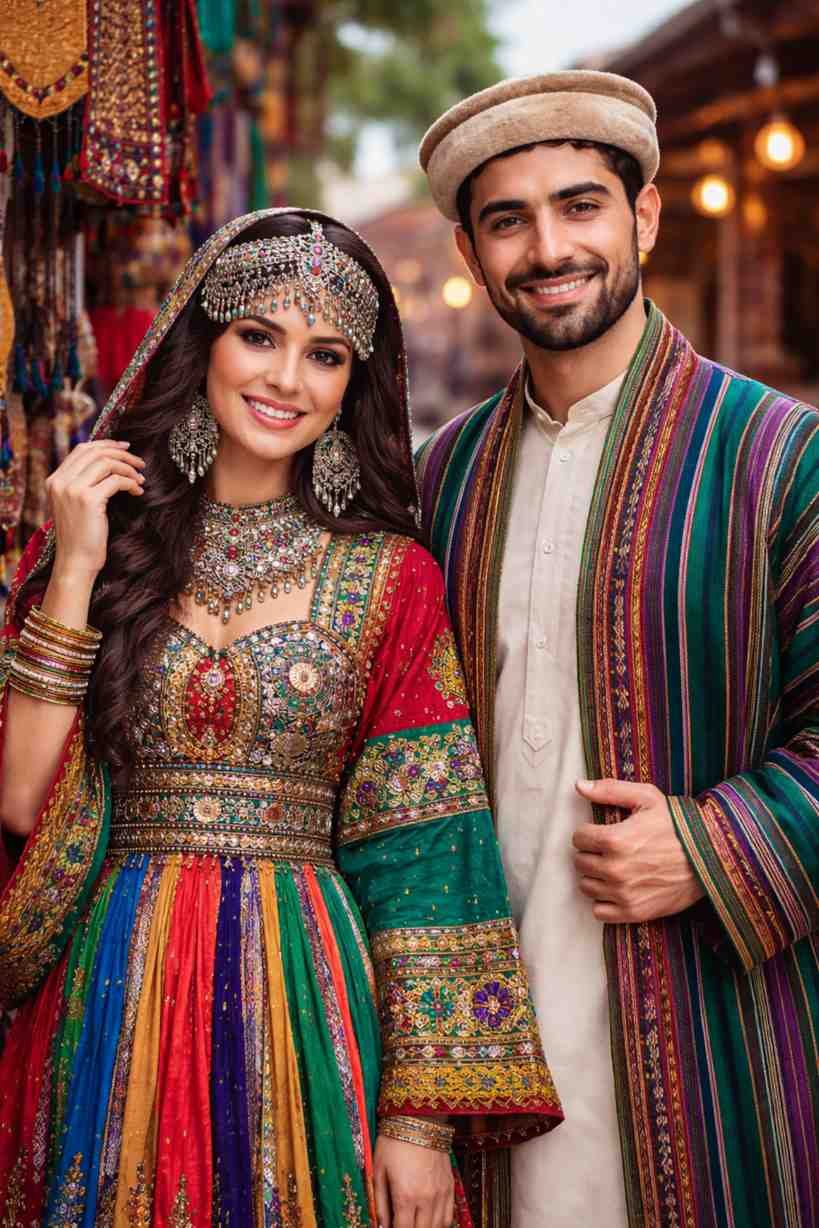
Afghan clothing is more than just what people wear. It shows culture, history, weather needs, and family traditions. People in Afghanistan wear clothes that are comfortable for hot summers and cold winters. Clothing also shows where a person comes from and what group they belong to.
In this guide, you will learn about traditional Afghan clothing for men and women, regional differences, fabrics, colors, special occasion clothes, and modern fashion. This article uses simple words, clear lists, and tables to make everything easy to understand.
1. What Shapes Afghan Clothing?
Many things affect how people in Afghanistan dress.
Main factors:
-
Weather (hot summers, cold winters)
-
Mountains, deserts, and villages
-
Religion and modesty rules
-
Local culture and traditions
-
Ethnic groups and regions
-
History and trade with other countries
How these factors affect clothing:
-
Loose clothes help in hot weather
-
Warm coats help in cold areas
-
Long clothes are worn for modesty
-
Strong fabrics are used for daily work
2. Regional and Ethnic Differences
Afghanistan has many ethnic groups. Each group has small differences in clothing style, color, and design.
Table 1: Clothing by Region and Group
| Group / Region | Clothing Style | Special Features |
|---|---|---|
| Pashtun | Simple, loose clothes | Turbans, pakol hats |
| Tajik | Colorful dresses | More embroidery |
| Uzbek | Layered clothing | Warm fabrics |
| Turkmen | Bright red colors | Heavy jewelry |
| Hazara | Warm, simple clothes | Thick fabrics |
City vs Village Clothing:
-
Cities:
-
People may wear modern clothes with traditional styles
-
More fashion changes
-
-
Villages:
-
Traditional clothes are worn more
-
Styles change slowly
-
3. Traditional Men’s Clothing
Afghan men wear clothes that are loose and comfortable.
Common men’s clothes:
-
Perahan Tunban:
Long shirt with loose pants. This is the most common outfit. -
Chapan:
A long coat worn in cold weather or at special events. -
Headwear:
-
Pakol (round wool hat)
-
Turban
-
Small cap
-
-
Shoes:
-
Sandals
-
Leather shoes
-
Boots in cold areas
-
Read also: Complete Guide to American Clothing
Table 2: Men’s Clothing
| Clothing Item | What It Is | When It Is Worn |
|---|---|---|
| Perahan Tunban | Long shirt and pants | Daily wear |
| Chapan | Long warm coat | Winter, events |
| Pakol/Turban | Head covering | Daily or formal |
| Traditional Shoes | Simple shoes | Work and travel |
4. Traditional Women’s Clothing
Women’s clothing is often more colorful and decorated.
Common women’s clothes:
-
Perahan Tunban (for women):
Long dress with loose pants. Often bright and embroidered. -
Burqa (Chadari):
A full-body covering worn by some women in public. -
Headscarves and Shawls:
Used for modesty and style. -
Jewelry:
Necklaces, bracelets, and earrings for special days.
Table 3: Women’s Clothing
| Clothing Item | Description | When Worn |
|---|---|---|
| Embroidered Dress | Long, colorful dress | Weddings, parties |
| Burqa/Chadari | Full-body cover | Public spaces (varies) |
| Headscarf/Shawl | Covers head and shoulders | Daily wear |
| Traditional Jewelry | Decorative items | Celebrations |
5. Fabrics and Materials
Afghan clothes are made from natural materials.
Common fabrics:
-
Cotton – light and cool
-
Wool – warm and thick
-
Silk – soft and beautiful
-
Linen – light for summer
Table 4: Fabrics and Uses
| Fabric | Feel | Used For |
|---|---|---|
| Cotton | Soft and cool | Daily clothes |
| Wool | Warm | Coats, winter wear |
| Silk | Smooth and shiny | Wedding clothes |
| Linen | Light | Summer clothes |
Clothing making skills:
-
Hand embroidery
-
Hand weaving
-
Natural dyes
-
Patterns passed from parents to children
6. Colors and Patterns
Colors are important in Afghan clothing. Different colors are used for daily life and special days.
Common color meanings:
-
Red: happiness and weddings
-
Blue: calm and protection
-
Green: religious meaning
-
White: simple and clean
Table 5: Colors and Meanings
| Color | Meaning | Common Use |
|---|---|---|
| Red | Joy and celebration | Weddings |
| Blue | Calm and safety | Coats, dresses |
| Green | Religious value | Special days |
| White | Clean and simple | Daily wear |
Common patterns:
-
Flower designs
-
Simple shapes
-
Lines and borders
7. Clothing for Special Days
On special days, people wear their best clothes.
Special occasions:
-
Weddings
-
Religious holidays
-
Family events
-
Cultural festivals
Table 6: Special Occasion Clothing
| Event | Women Wear | Men Wear |
|---|---|---|
| Wedding | Bright dress, jewelry | Perahan tunban, chapan |
| Holiday | Nice long dress | Clean formal clothes |
| Festival | Colorful traditional clothes | Decorative coat |
8. Modern Afghan Fashion
Today, many Afghans mix old and new styles.
Modern trends:
-
Traditional embroidery on modern dresses
-
Afghan patterns on jackets and bags
-
Young people mixing jeans with traditional tops
-
Afghan designers showing work online
This helps keep tradition alive while allowing new fashion ideas.
9. Wearing Afghan Clothing with Respect
If you are not Afghan and want to wear Afghan clothes:
Do:
-
Learn about the culture
-
Dress modestly
-
Respect the meaning of the clothes
-
Buy from local makers if possible
Do Not:
-
Use traditional clothes as costumes
-
Make fun of the culture
-
Wear religious clothing in a disrespectful way
10. How to Buy Real Afghan Clothing
Look for:
-
Hand-made embroidery
-
Natural fabric
-
Good stitching
-
Information about where it was made
Good places to buy:
-
Local markets
-
Handicraft shops
-
Trusted online stores
11. How to Care for Afghan Clothes
Simple care tips:
-
Hand wash soft clothes
-
Use mild soap
-
Do not use hot water
-
Air dry clothes
-
Store in a dry place
This helps clothes last longer.
12. Conclusion
Afghan clothing is an important part of Afghan life and culture. It shows history, family tradition, and local identity. From daily clothes like the perahan tunban to beautiful wedding dresses and warm chapans, Afghan clothing is both practical and meaningful.
Even as modern fashion grows, traditional Afghan clothing continues to be valued and respected. Learning about these clothes helps us understand Afghan culture better and shows respect for its long and rich history.