Brazil is a country full of color, music, and life — and its clothing shows that spirit. People in Brazil dress in ways that match the weather, culture, and joy of the country. From traditional outfits to modern streetwear, this guide will help you understand what Brazilians wear, where the styles come from, and what you should wear if you visit.
1. What Makes Brazilian Clothing Special
Brazil’s fashion is a mix of many influences:
-
Indigenous roots: use of natural fibers and handmade designs.
-
African heritage: bright colors, beads, and flowing fabrics.
-
European styles: brought by Portuguese and other settlers.
Most clothing in Brazil is comfortable, colorful, and made for warm weather. People like to dress neatly, but not too formally.
2. Traditional Clothing in Different Parts of Brazil
2.1 Northeast – Bahia & Pernambuco
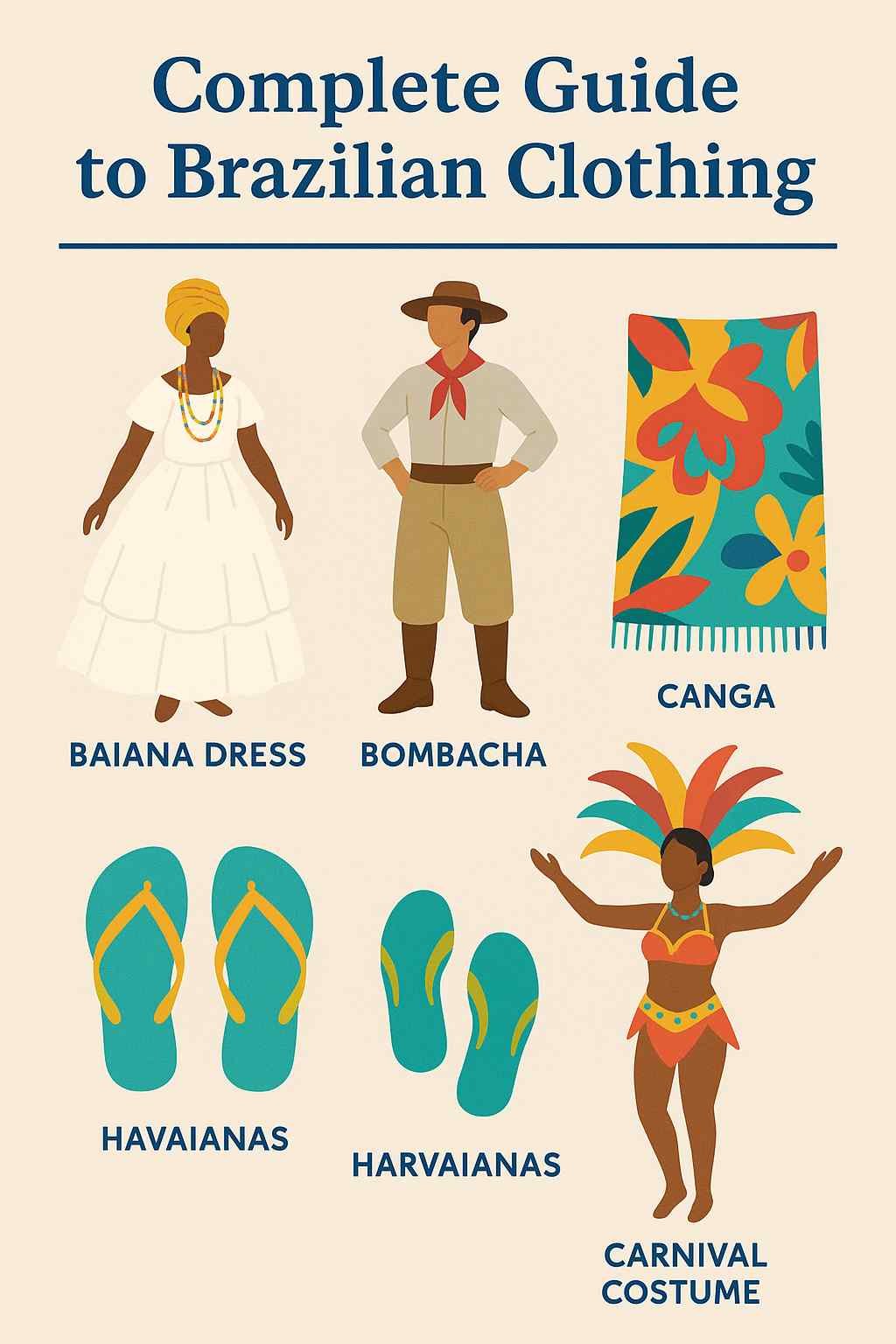
The most famous traditional outfit is the Baiana dress, worn by Afro-Brazilian women in Bahia. It includes:
-
A long white lace skirt
-
A matching blouse
-
Beaded necklaces with cultural meanings
-
A head wrap
This style mixes African and Portuguese traditions. It is often seen during religious and cultural festivals.
2.2 South – Rio Grande do Sul
In the south, the Gaúchos (Brazilian cowboys) wear:
-
Bombacha pants – wide trousers tucked into boots
-
A belt and poncho for work or festivals
-
Leather boots and hat
This outfit shows the European ranching influence in southern Brazil.
Read also: Harajuku DTI
2.3 North – Amazon Region
In the Amazon, Indigenous groups create clothing using materials from nature:
-
Plant fibers and cotton
-
Feathers and seeds for decoration
-
Natural dyes from plants and minerals
Each tribe has its own special designs and meanings.
2.4 Big Cities – Rio & São Paulo
In large cities, fashion is more modern:
-
People like bright colors and tropical prints
-
They wear casual clothes like jeans, skirts, and sandals
-
At night, they dress more formally for restaurants or events
City fashion mixes comfort with style — it’s relaxed but still looks good.
3. Modern Brazilian Fashion & Popular Brands
Brazilian designers are known for creative and sustainable fashion.
Here are some popular brands:
| Brand | Style | Known For |
|---|---|---|
| Osklen | Simple and eco-friendly | Natural fabrics and recycled materials |
| Farm Rio | Bright and playful | Colorful prints and dresses |
| ViX Paula Hermanny | Resort and swimwear | Beach-inspired luxury |
| Melissa | Fun footwear | Jelly shoes with unique designs |
| Havaianas | Everyday wear | Brazil’s classic flip-flops |
Common Streetwear Trends
-
Jeans and crop tops
-
Colorful sneakers
-
Loose T-shirts
-
Light dresses or shorts
-
Big accessories and sunglasses
4. Beach & Swimwear Style
The beach is part of everyday life in Brazil. People spend weekends and holidays by the sea.
What to Wear:
-
Bikini or sunga (men’s swim trunks)
-
Canga (a colorful sarong or wrap)
-
Flip-flops (Havaianas)
-
Sunglasses and hats
🏝️ Tip: Swimwear is only for the beach or pool.
When you leave the beach, cover up with a dress, shirt, or shorts.
Brazilians believe everyone can wear a swimsuit — confidence is what matters most.
5. What to Wear in Brazil (by Weather and Place)
Clothing by Region
| Region | Weather | Best Clothes to Wear |
|---|---|---|
| North & Northeast | Hot and humid | Light cotton or linen, shorts, sandals |
| Southeast (Rio, São Paulo) | Warm with cooler nights | Casual clothes, light jacket for evening |
| South (Curitiba, Porto Alegre) | Cooler winters | Jeans, sweaters, rain jacket |
| Central-West (Brasília, Pantanal) | Hot with dry and wet seasons | Quick-dry shirts, breathable pants, waterproof shoes |
By Occasion
-
Everyday: T-shirts, shorts, dresses, sneakers
-
Business: Formal clothes — suits or blouses and slacks
-
Evening out: Smart-casual — dresses, shirts, loafers
-
Festivals: Colorful, shiny, and creative costumes
6. Clothing Etiquette and Local Customs
Brazilian fashion is open and expressive, but people still follow some social rules.
Do:
-
Dress neatly, even when casual
-
Cover shoulders and knees in churches or religious places
-
Use bright colors — Brazilians love them!
-
Wear light fabrics for the heat
Don’t:
-
Walk into restaurants or stores in just swimwear
-
Wear heavy clothes — it’s too hot
-
Copy religious or traditional outfits unless invited
In short, dress for comfort and respect, and you’ll fit right in.
7. Eco-Friendly and Local Fashion
Brazil is becoming a leader in sustainable fashion. Many designers now use recycled or natural materials.
Green Fashion Ideas
-
Recycled fibers made from plastic bottles
-
Natural dyes from plants
-
Fair-trade projects that help local workers
| Brand | Eco Focus |
|---|---|
| Osklen | Uses organic and recycled fabrics |
| Refazenda | Promotes “slow fashion” and handmade clothes |
| Insecta Shoes | Makes vegan shoes from reused materials |
| Veja | Uses wild Amazon rubber for sneakers |
When you buy local, you help support Brazil’s environment and communities.
8. Best Places to Shop in Brazil
| Market / Store | City | What You’ll Find |
|---|---|---|
| Feira Hippie de Ipanema | Rio de Janeiro | Handmade clothes and art |
| Galeria do Rock | São Paulo | Youth streetwear and sneakers |
| Pelourinho Market | Salvador | Afro-Brazilian dresses and jewelry |
| Farm Rio / Osklen Boutiques | Major cities | Designer and eco-friendly fashion |
Shopping Tips
-
Bargain politely at street markets.
-
Support local artisans — they make unique items.
-
Pick clothes that breathe well in Brazil’s warm climate.
9. Famous Traditional Garments in Brazil
| Clothing | From | Description |
|---|---|---|
| Baiana Dress | Bahia | White lace outfit with beads and head wrap |
| Bombacha Pants | South (Gaúchos) | Loose trousers tucked into boots |
| Canga | Coastal regions | Colorful wrap used at the beach |
| Havaianas | All over Brazil | Simple, durable flip-flops |
| Carnival Costume | Rio | Bright feathers, sequins, and glitter |
| Feather Headdress | Amazon Tribes | Ceremonial item showing status |
10. Common Questions About Brazilian Clothing
Q: What do Brazilians wear daily?
A: Simple clothes like jeans, T-shirts, dresses, and sandals.
Q: Are shorts okay to wear everywhere?
A: Yes, except in formal or religious places.
Q: Which fabrics are best for Brazil’s weather?
A: Cotton, linen, and light synthetic fabrics.
Q: What colors are popular?
A: Bright ones — yellow, green, blue, coral, and white for holidays like New Year’s.
Q: Can visitors wear traditional clothes?
A: Yes, as long as it’s respectful and not a sacred outfit. Always buy from local artisans.
11. Final Thoughts
Brazilian clothing is a mix of comfort, culture, and creativity. From the elegant Baiana dresses in Bahia to the relaxed street style of São Paulo, clothes in Brazil tell a story of freedom and pride.
When you visit:
-
Dress light and stay comfortable.
-
Respect local traditions.
-
Don’t be afraid of color — in Brazil, it’s a way of life!
In Brazil, style is not about perfection — it’s about happiness and self-expression.