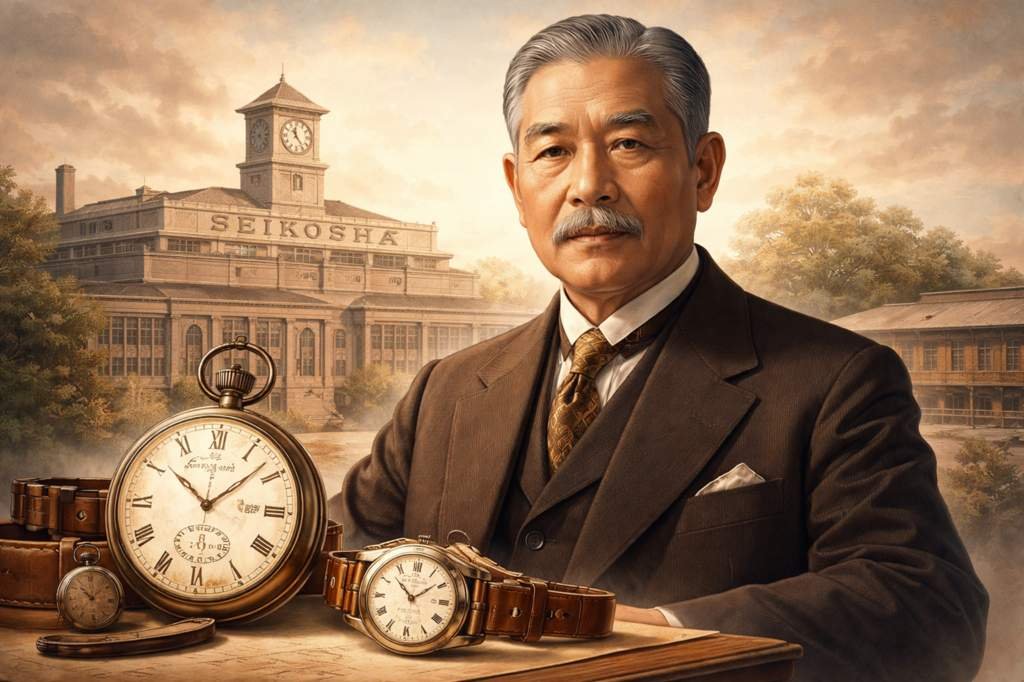
Kintaro Hattori is known as the founder of Seiko and one of the most important people in the history of Japanese watches. He helped change Japan from a country that bought watches from other nations into a country that could make its own high-quality timepieces. His life story is about hard work, clear goals, and never giving up, even when times were very difficult.
This article explains his life, work, and legacy in simple words, using lists and tables to make everything easy to understand.
Quick Facts About Kintaro Hattori
| Topic | Information |
|---|---|
| Full Name | Kintaro Hattori |
| Born | 1860, Tokyo, Japan |
| Died | 1934 |
| Known For | Founder of Seiko |
| Business Started | Watch and clock shop in 1881 |
| Main Belief | “Always one step ahead of the rest” |
Early Life
Kintaro Hattori was born in 1860 in Tokyo. At that time, Japan was changing very fast. New machines and ideas were coming from other countries. Watches and clocks were mostly brought from Europe and America.
When Hattori was young, he became interested in how clocks and watches worked. He did not come from a rich family, so he learned by working and watching others.
Important points about his early life:
-
He learned how to fix clocks and watches
-
He worked as an apprentice
-
He saw that Japan depended on foreign-made watches
-
He believed Japan could make its own watches one day
Starting His First Shop (1881)
In 1881, when he was 21 years old, Hattori opened a small shop in Ginza, Tokyo. At first, he sold and repaired watches and clocks from other countries.
What he did in his first shop:
-
Sold imported clocks and watches
-
Repaired broken watches
-
Learned what customers wanted
-
Saved money for future plans
Why Ginza Was a Good Place
Ginza was becoming a busy business area.
Benefits of opening his shop in Ginza:
-
Many customers passed by
-
Foreign goods were sold there
-
He could learn modern business ways
-
He could grow his name and trust
Building a Factory: Seikosha (1892)
After running his shop for some years, Hattori wanted to make watches in Japan instead of only selling foreign ones. In 1892, he started a factory called Seikosha, which means “House of Precision.”
Main goals of Seikosha:
-
Make clocks in Japan
-
Reduce the need to import watches
-
Train Japanese workers
-
Improve product quality
Results of Seikosha:
-
Japan started making its own clocks
-
Workers learned new skills
-
The company slowly improved quality
-
A strong base for future watchmaking was built
Read also: Gert Boyle
Key Milestones in His Life
| Year | Event | Why It Was Important |
|---|---|---|
| 1881 | Opened first watch shop | Start of his business journey |
| 1892 | Started Seikosha factory | Beginning of watch making in Japan |
| 1913 | Made the first Japanese wristwatch (Laurel) | Big step for Japan’s watch industry |
| 1924 | Used the name “Seiko” | Created a strong brand name |
| 1923 | Rebuilt after a big earthquake | Showed strong leadership |
His Business Beliefs
Kintaro Hattori believed in moving forward all the time. His main belief was simple:
“Always one step ahead of the rest.”
His key business ideas:
-
Always try to improve
-
Focus on quality
-
Plan for the long term
-
Learn from other countries
-
Train workers well
His leadership style:
-
Calm and patient
-
Focused on learning
-
Willing to invest in machines
-
Thought about the future, not just today
Facing Hard Times: The Great Earthquake
In 1923, a big earthquake hit Tokyo. Many buildings, including Hattori’s factories and offices, were destroyed. This was one of the hardest times in his life.
Problems Caused by the Earthquake
-
Factories were damaged
-
Machines were lost
-
Work stopped for some time
-
The business lost money
How He Handled the Crisis
Instead of giving up, Hattori decided to rebuild.
Steps he took:
-
Rebuilt factories
-
Started production again
-
Kept trust with customers
-
Continued to believe in the future
What we can learn from this:
-
Hard times test true leaders
-
Strong planning helps recovery
-
Never give up after failure
Helping Society
Kintaro Hattori believed that business should also help society.
Ways he helped:
-
Supported public and charity work
-
Helped improve worker skills
-
Took part in social activities
-
Helped build Japan’s industry
His Legacy Today
Even after his death in 1934, his work still affects the world today. Seiko became one of the most famous watch brands in the world.
His Long-Term Impact
-
Japan became known for good watches
-
Many people learned technical skills
-
Japanese manufacturing gained global respect
-
His business ideas are still used today
How Seiko Follows His Ideas
| Area | How His Ideas Are Still Used |
|---|---|
| Quality | Strong focus on accuracy |
| Workers | Training and skill growth |
| Products | New watch technology |
| Brand | Trusted name worldwide |
Why Kintaro Hattori Is Still Important
Even today, many people can learn from his life.
Simple lessons from his story:
-
Start small but think big
-
Learn skills before leading
-
Do not fear new ideas
-
Be patient and work hard
-
Keep going during hard times
Conclusion
Kintaro Hattori’s life shows how one person’s hard work and clear goals can change a whole industry. From a small watch repair shop in Tokyo, he built the base for a company that later became Seiko, a world-famous watch brand. His story teaches us that success does not come quickly or easily. It comes from learning, planning, improving, and never giving up.