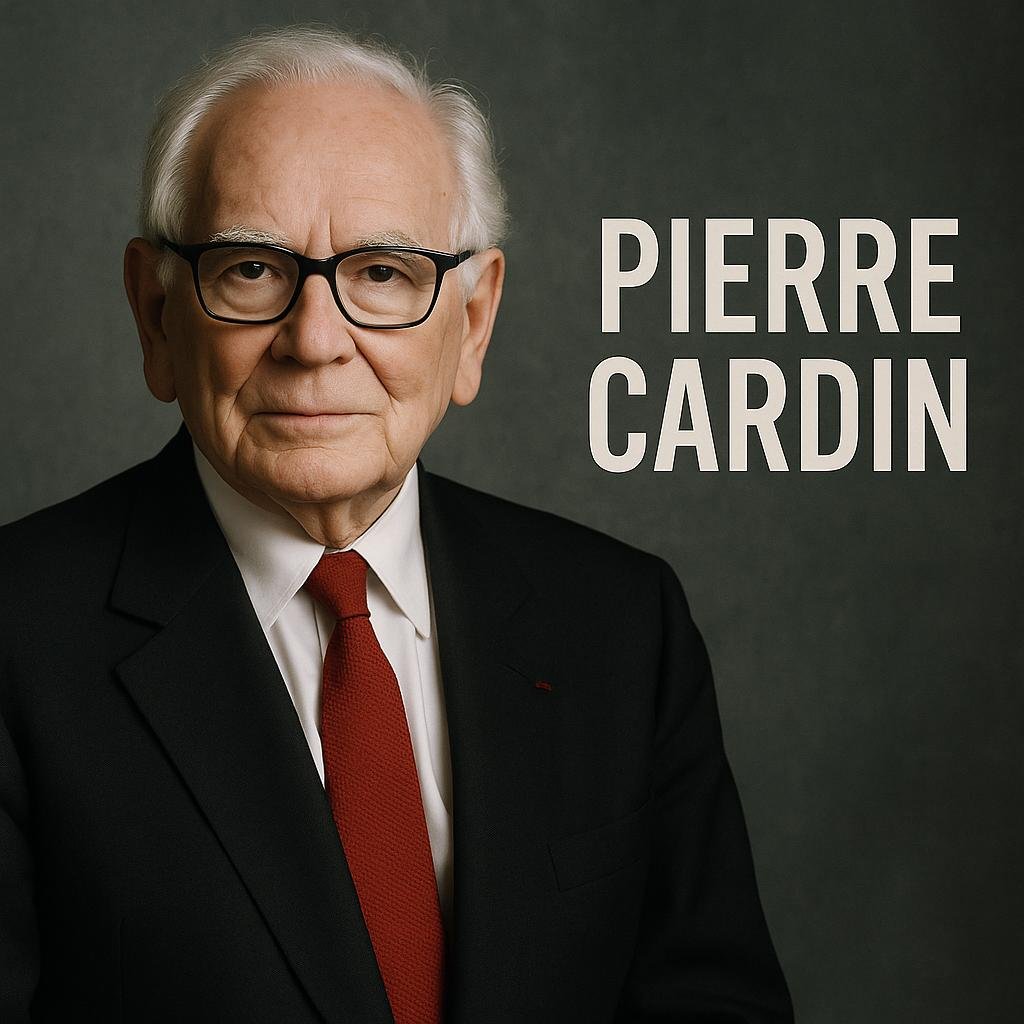
Pierre Cardin was one of the most creative fashion designers of the 20th century. He changed how the world saw clothes, business, and beauty. Cardin’s style mixed art, science, and imagination, and his ideas about ready-to-wear and licensing still shape fashion today.
1. Early Life and Start in Fashion
-
Full name: Pietro Cardin
-
Born: 1922, near Treviso, Italy
-
Moved to France: As a child
-
Died: 2020, Paris, France
| Year | Event | Notes |
|---|---|---|
| 1936–1944 | Learned tailoring in France | Gained strong sewing and cutting skills |
| 1946 | Worked with Elsa Schiaparelli | Learned artistic design |
| 1947 | Joined Christian Dior | Helped make the “New Look” |
| 1950 | Opened his own fashion house | Began his career as an independent designer |
Inspiration:
Architecture, modern art, and theater costumes influenced his design thinking. He wanted clothes to look like sculptures, not just garments.
2. The Start of His Own Brand
Pierre Cardin opened his first workshop in Paris in 1950. His early work was bold and different from traditional fashion.
Main Achievements:
-
Created the Bubble Dress (1954) — a round, full skirt that became world famous.
-
Focused on shape and structure instead of decoration.
-
Used new materials like plastic and metal in fashion.
-
Introduced simple, modern lines that showed his love of geometry.
He believed fashion should reflect the future, not the past.
3. The Space-Age Look
In the 1960s, Cardin became known for his Space-Age fashion. His designs looked futuristic and used unusual materials.
Key Features:
-
Circular cut-outs, helmets, and body suits
-
Silver, white, and metallic colors
-
Plastic and vinyl fabrics
-
Outfits for both men and women (unisex designs)
| Decade | Theme | Famous Designs |
|---|---|---|
| 1950s | Structure and volume | Bubble Dress |
| 1960s | Space-Age & unisex | Helmet dresses, tunics |
| 1970s | Mass fashion | Ready-to-wear lines |
| 1980s–1990s | Global expansion | Licensing and branding |
| 2000s–2020s | Heritage & museums | Palais Bulles exhibitions |
Cardin said:
“The clothes I prefer are those I invent for a life that doesn’t yet exist.”
He wanted his designs to belong to the future, not the present.
Read also: Anna Wintour
4. Making Fashion for Everyone
In 1959, Pierre Cardin shocked the fashion world by showing a ready-to-wear collection in a Paris department store. At that time, only the rich could buy designer clothes. Cardin wanted everyone to enjoy good design.
Why It Was Important:
-
Made designer fashion affordable.
-
Started the trend of ready-to-wear (RTW) in high fashion.
-
Changed how fashion houses earned money.
-
Inspired others like Yves Saint Laurent to follow.
Impact:
-
Brought fashion to millions of people.
-
Proved that creativity could reach beyond luxury salons.
5. The Power of Licensing
Pierre Cardin was also a smart businessman. He realized that his name had value — not just his clothes. He licensed his brand to companies around the world.
| Category | Products |
|---|---|
| Fashion | Shirts, ties, suits, handbags |
| Perfume & Beauty | Fragrance, makeup |
| Home & Lifestyle | Furniture, linens, tableware |
| Accessories | Watches, sunglasses, pens |
Facts about his empire:
-
Over 800 licenses worldwide
-
Sold in 140 countries
-
Among the first designers to work in China and the USSR
Pros:
-
Spread his name across the world
-
Created a huge global business
-
Made fashion a worldwide industry
Cons:
-
Some people said his name was used too much
-
Quality sometimes varied between products
Even so, Cardin’s licensing idea became the foundation of modern fashion business.
6. Beyond Clothes: Design, Art, and Architecture
Pierre Cardin didn’t stop at fashion. He explored many other creative fields.
Architecture
-
Designed the Palais Bulles (Bubble Palace) — a futuristic home on the French Riviera.
-
The house is made of round, bubble-like rooms.
-
It became a symbol of his love for curves and innovation.
Theater and Film
-
Created costumes for stage and movies.
-
Believed that fashion should move and tell stories like performance art.
Furniture and Products
-
Designed chairs, lamps, and tables with his same circular style.
-
Proved that good design can improve everyday life.
7. Building a Cultural Legacy
Cardin turned his brand into a complete world of art, design, and culture.
Main Projects:
-
Maxim’s de Paris: Bought the famous restaurant and expanded it into hotels and shops.
-
Musée Pierre Cardin: A museum in Paris showing 200+ designs and furniture pieces.
-
Art Exhibitions: His works have been shown in museums around the world.
He wanted his art to live on and teach people about the link between fashion and innovation.
8. Challenges and New Leadership
Running a global business came with challenges. Cardin had to manage hundreds of licenses and protect his name. After his death in 2020, his nephew Rodrigo Basilicati-Cardin took control of the company.
Current goals:
-
Protect the brand’s image.
-
Update the style for younger people.
-
Keep the brand’s futuristic spirit alive.
9. His Lasting Influence
Style Influence
-
Geometric and clean shapes
-
Use of modern materials
-
Unisex and futuristic looks
Business Influence
-
First designer to mix art with global business
-
Created the idea of “designer as brand”
-
Inspired future fashion giants like Armani and Calvin Klein
Cultural Impact
-
His work influenced architecture, movies, and modern art.
-
Designers today still learn from his fearless creativity.
10. Quick Summary Table
| Topic | Details |
|---|---|
| Born | 1922, Italy |
| Famous For | Space-Age fashion, Bubble Dress |
| Main Idea | Combine creativity with accessibility |
| Business Model | Global licensing and ready-to-wear |
| Legacy | Futurist design and new business vision |
| Died | 2020, aged 98 |
11. Lessons from Pierre Cardin
For Designers
-
Don’t fear the future — design it.
-
Mix art with practicality.
-
Try new materials and ideas.
For Entrepreneurs
-
Think global but protect your quality.
-
A brand can be more than one product.
-
Innovation brings both risk and reward.
For Students
-
Study how Cardin turned creativity into business success.
-
Learn that fashion can be about ideas, not just clothes.
12. Timeline of His Life
| Year | Event |
|---|---|
| 1922 | Born in Italy |
| 1950 | Opened his own fashion house |
| 1954 | Created the Bubble Dress |
| 1959 | Started ready-to-wear collections |
| 1960s | Space-Age designs make him world-famous |
| 1970s–1990s | Licensing and global success |
| 2000s | Founded Pierre Cardin Museum |
| 2020 | Passed away at 98 |
| 2020s | Brand led by Rodrigo Basilicati-Cardin |
13. Conclusion
Pierre Cardin was a man who lived ahead of his time. He saw fashion as a mix of art, science, and dreams. He believed that design should belong to everyone — not just the rich. From the Bubble Dress to the Bubble Palace, Cardin proved that imagination can change the world.
He turned his name into a symbol of the future, leaving behind a lesson that still inspires designers today:
True creativity never goes out of style.