Malta is a small island country in the middle of the Mediterranean Sea. Its clothing tells a long story of change and culture. Over hundreds of years, styles from Phoenicians, Arabs, Italians, and the British mixed together. This guide explains how Maltese clothing began, what people used to wear, and how modern Maltese fashion still shows the country’s history.
Historical Background
Because Malta is close to both Europe and North Africa, its clothing shows a mix of styles from both regions.
Main Periods of Influence
| Time Period | Influences | Clothing Style |
|---|---|---|
| Before 1530 | Arab & Mediterranean | Simple long tunics, light fabrics |
| 1530–1798 (Knights of St. John) | European & Baroque | Fitted bodices, full skirts, lace trims |
| 1800–1964 (British Period) | Victorian England | Modest clothing, industrial fabrics |
Class Differences
- Rich families: Used silk and lace for fancy clothes
- Working people: Wore dark cotton for daily use
- Middle class: Mixed simple styles with better fabrics
Over time, one special piece of clothing became a Maltese symbol — the għonnella.
Women’s Traditional Clothing
The Għonnella (or Faldetta)
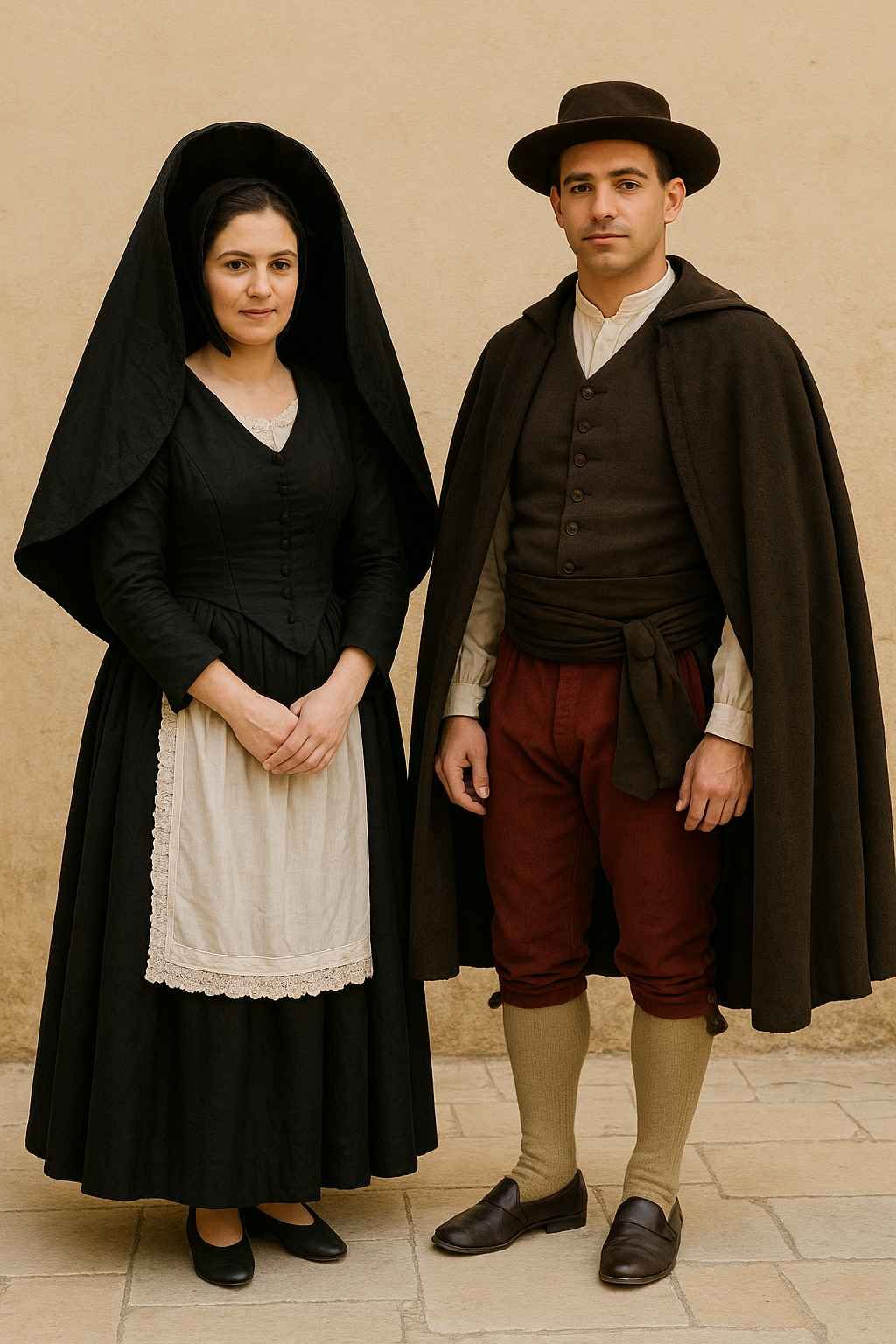
The għonnella was a long dress with a hooded cover. Women wore it to protect themselves from the sun and to look modest. It had a stiff hood made of wood, cane, or whalebone that stood up in a curved shape.
| Feature | Description |
|---|---|
| Common Color | Black |
| Other Colors | White, blue, navy |
| Material | Cotton, silk, or wool |
| Purpose | Shade and modesty |
| Design | Hood and long skirt |
Accessories
- Lace collars and cuffs
- Silver jewelry
- Decorative aprons
- Simple shoes or slippers
By the 1950s, the għonnella was rarely seen, and by the 1970s, only older women wore it during parades or religious festivals.
Read also: Matryoshka Dress
Men’s Traditional Clothing
Maltese men’s clothing was simple but neat. It was made for comfort in a hot climate.
Main Items
- Loose trousers or short breeches
- White linen shirt
- Dark waistcoat (called ġiletta)
- Belt (terħa)
- Heavy coat (kabozza)
- Hooded cloak (kappa)
| Social Class | Material | Common Colors | Extra Items |
|---|---|---|---|
| Workers | Cotton or wool | Brown, grey, beige | Cap, belt |
| Rich men | Silk or fine wool | Dark blue, red | Hat, gloves, decorated waistcoat |
Men’s traditional clothes disappeared earlier than women’s, but you can still see them at festivals or folk dance events.
Maltese Crafts: Lace, Weaving, and Embroidery
Lace (Bizzilla)
- Began in the 1800s, mostly in Gozo
- Made by hand using a pillow (trajbu) and wooden bobbins
- Designs often show the Maltese Cross
- Made with linen or silk thread
Other Crafts
- Weaving: Used to make skirts and shawls
- Embroidery: Decorated clothes and church fabrics
- Gold thread work: For church and special garments
| Craft | Tool | Use | Today’s Use |
|---|---|---|---|
| Lace | Bobbins and pillow | Dress edges, veils | Souvenirs, fashion |
| Weaving | Loom | Shawls, skirts | Local crafts |
| Embroidery | Needle and silk thread | Church and wedding cloths | Designer fashion |
Gozo is still famous for handmade lace, and visitors can watch lace-makers working in small workshops.
Colors, Fabrics, and Meanings
| Type of Clothing | Fabric | Colors | Meaning |
|---|---|---|---|
| Everyday wear | Cotton, linen | Cream, brown | Cool and simple |
| Festive clothes | Silk | Red, blue, green | Joy and wealth |
| Women’s outerwear | Cotton or silk | Black | Modesty and faith |
| Men’s outfits | Wool or cotton | Earth tones | Practical and humble |
Colors and materials showed a person’s status. Bright fabrics were for special events, and black was for respect and modesty.
Modern Maltese Clothing
Modern Maltese fashion mixes the old and new. Many designers use traditional ideas in their work.
Examples:
- Dresses shaped like the għonnella
- Lace details on modern outfits
- Jewelry with the Maltese Cross design
- Eco-friendly fabrics inspired by old cotton and linen use
Everyday Style Today
- Cotton or linen shirts for hot days
- Dresses with light scarves or shawls
- Hats and sunglasses for sun protection
- Modest clothing for church visits
What to Wear When Visiting Malta
| Season | Best Fabrics | What to Pack | Notes |
|---|---|---|---|
| Spring | Cotton, linen | Light jacket, scarf | Warm days, cool nights |
| Summer | Linen, rayon | Sun hat, sandals | Very sunny, light colors best |
| Autumn | Cotton, thin wool | Cardigan, pants | May rain sometimes |
| Winter | Wool, denim | Coat, shoes | Windy and humid |
Tips for Visitors
- Dress modestly in churches—cover shoulders and knees
- Don’t wear swimwear away from beaches
- Wear comfortable shoes for stone streets
- Bring layers for sudden weather changes
Where to See Maltese Clothing Today
You Can Visit:
- Museums:
- National Museum of Ethnography (Vittoriosa)
- Gozo Museum of Archaeology
- Festivals: Local festas and historical shows
- Markets and Workshops: Lace shops in Gozo and craft stalls in Mdina and Valletta
- Modern Designers: Charles & Ron, Carla Grima Atelier, Sef Farrugia
Glossary
| Word | Meaning |
|---|---|
| Għonnella / Faldetta | Traditional hooded dress worn by women |
| Xurqana | Blue cotton version of the għonnella |
| Stamijna / Manta | Early head coverings |
| Kabozza | Men’s heavy coat |
| Kappa | Men’s cloak |
| Terħa | Belt or sash |
| Bizzilla | Maltese lace |
| Trajbu | Pillow used for lace-making |
Conclusion
Maltese clothing is a mix of history, art, and everyday life. From the black għonnella to handmade lace, every piece has a story. Even though modern clothes are different, the island’s fashion still keeps its traditional heart. Malta’s clothing reminds us how culture, climate, and creativity come together to make something beautiful and lasting.