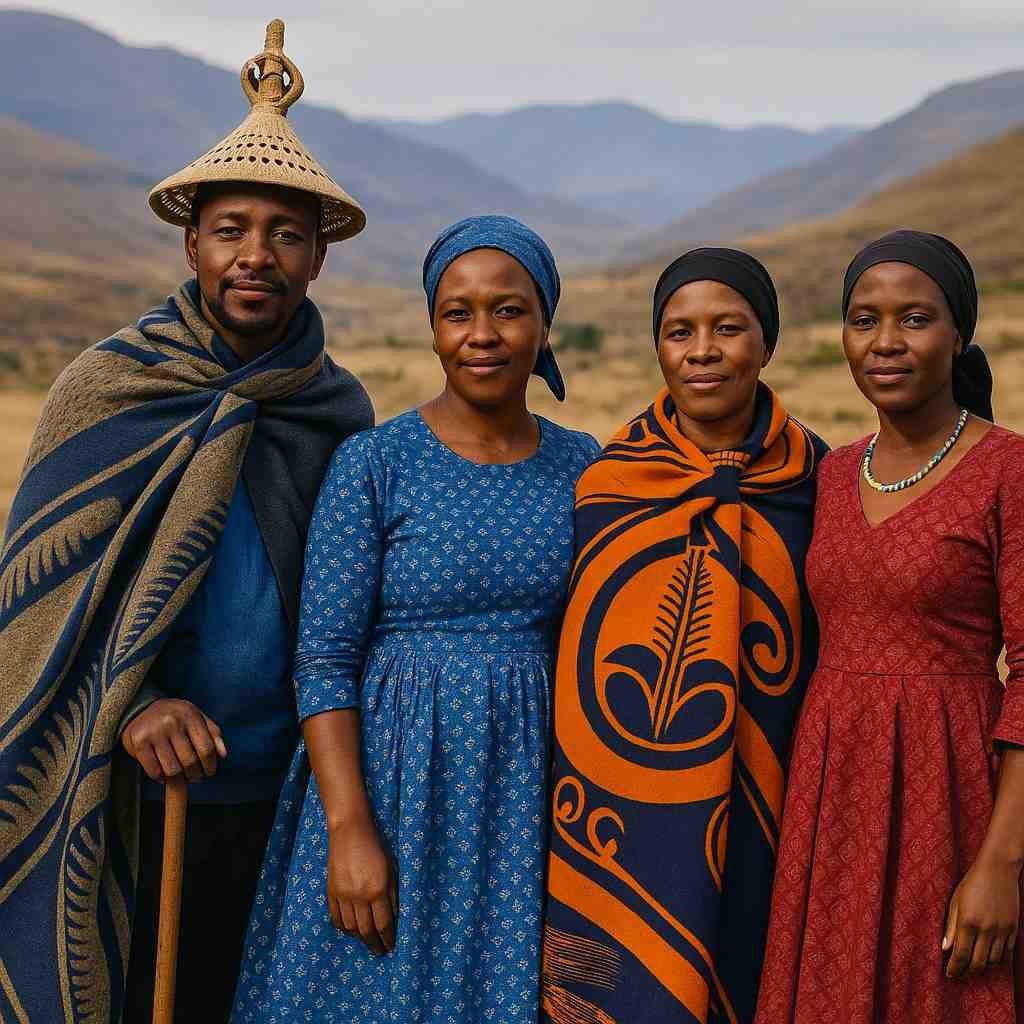
Lesotho, also called the “Kingdom in the Sky,” is a small country full of mountains and strong cultural traditions. One of the most important parts of Basotho (the people of Lesotho) culture is their clothing. The clothes worn in Lesotho are not only for protection from the cold but also show identity, history, and pride.
This guide explains Lesotho clothing in simple English, using lists and tables to make everything easy to understand.
1. History of Basotho Clothing
Before blankets were used, people in Lesotho wore animal skins called kaross. These skins kept them warm in the cold mountains. Later, European traders brought wool blankets. King Moshoeshoe I liked these blankets and started wearing them. Soon, the whole nation followed. Over time, the Basotho blanket became a special symbol of the Basotho people.
Important points from history
-
People first wore animal skins
-
Wool blankets arrived through trade
-
King Moshoeshoe I helped make blankets popular
-
Blankets became cultural symbols
2. Basotho Blankets
The Basotho blanket is the most important and famous piece of clothing in Lesotho. People wear it daily and during special events.
2.1 Why the Blanket Is Important
-
Keeps people warm in cold weather
-
Worn in ceremonies, celebrations, and family events
-
Passed down between generations
-
Shows cultural identity
2.2 Types of Basotho Blankets
| Blanket Name | What It Means | When It Is Used |
|---|---|---|
| Seana Marena | Leader or high status | Used by chiefs and respected elders |
| Lingoetsi | Bridal blanket | Worn by brides |
| Lekhokolo | Growing into adulthood | Used in initiation ceremonies |
| Moholobela | Fertility | Linked to starting a family |
| Serope | Motherhood | Given after first childbirth |
2.3 Blanket Features
-
Material: Wool or wool blend
-
Designs: Strong patterns and symbols
-
Colors: Blue, red, brown, gold, black
-
Ways to wear:
-
Wrapped around shoulders
-
Wrapped around waist
-
Layered for extra warmth
-
3. Mokorotlo Hat
The mokorotlo is the traditional Basotho hat. It is cone-shaped and made from grass. It is one of the most famous symbols of Lesotho.
Why the Mokorotlo Is Special
-
It represents Basotho identity
-
Used in dances, ceremonies, and cultural events
-
Appears on the national flag
-
Inspired by Mount Qiloane
Features of the Mokorotlo
-
Woven from local grass
-
Light and comfortable
-
A design that allows air to pass through
Read also: Complete Guide to Maltese Clothing
4. Men’s Traditional Clothing
Men’s clothing is simple but very meaningful. It also protects them from cold temperatures.
4.1 Common Men’s Clothing
-
Basotho blanket
-
Long trousers
-
Warm shirts
-
Thick jackets
4.2 Accessories for Men
-
Lieta tsa letlalo (leather sandals)
-
Wool hats
-
Balaclavas
-
Walking sticks
4.3 Herd Boy Clothing
Herd boys spend long hours in the mountains watching livestock. Their clothing includes:
-
Thick blanket
-
Gumboots
-
Knitted masks
-
Layers of warm clothing
-
Long stick for walking and herding
5. Women’s Traditional Clothing
Women in Lesotho wear colorful and beautiful clothing made from local fabrics.
5.1 Seshoeshoe (Shweshwe) Dresses
These dresses are made from cotton fabric with special patterns. They are worn at weddings, church services, and cultural events.
5.2 Other Clothing for Women
-
Thepa: A wraparound skirt
-
Dira: Decorated cloth often worn on top of skirts
-
Tuku: A headscarf that shows respect or marital status
5.3 Women’s Accessories
| Accessory | Description | Meaning |
|---|---|---|
| Neck beads | Colorful beads worn around the neck | Beauty, culture |
| Waist beads | Worn around the waist | Femininity, tradition |
| Beaded belts | Decorative belts | Status or style |
6. Clothing for Children and Youth
6.1 Initiation Clothing (Lebollo)
During initiation ceremonies, young people wear special clothing.
| Group | Clothing | Meaning |
|---|---|---|
| Boys | Tshea (loincloth), special blankets | Becoming a man |
| Girls | Thethana (beaded wrap), animal skins | Becoming a woman |
6.2 School Uniforms
Most children in Lesotho wear school uniforms. These uniforms:
-
Create unity
-
Encourage discipline
-
Include warm sweaters for winter
7. Clothing of Traditional Healers
Traditional healers in Lesotho wear clothing that shows their role in the community.
Common healer clothing
-
Bandoliers (straps with small pockets for herbs)
-
Beaded jewelry
-
Animal skins
-
Special blankets
-
Spiritual symbols
Their clothing helps identify them and is used in ceremonies and healing rituals.
8. Modern Clothing in Lesotho
Lesotho’s modern clothing style mixes everyday fashion with traditional pieces.
8.1 Everyday Modern Wear
-
Jeans
-
T-shirts
-
Hoodies
-
Sneakers
8.2 Modern Clothing With a Traditional Touch
Many designers now mix Basotho patterns with modern styles:
-
Coats made from Basotho blankets
-
Seshoeshoe shirts and dresses
-
Modern handbags with Basotho designs
-
Festival outfits combining old and new
8.3 When Traditional Clothing Is Still Worn
-
Weddings
-
Funerals
-
Religious gatherings
-
National holidays
-
Village ceremonies
-
Cultural festivals
9. Where to Buy Traditional Clothing
9.1 Places to Buy
-
Local markets
-
Craft shops
-
Basotho blanket factories
-
Boutiques with modern Basotho fashion
9.2 How to Know a Real Basotho Blanket
-
High-quality wool
-
Clear labels
-
Strong stitching
-
Traditional patterns
9.3 How to Care for Basotho Clothing
-
Use mild soap when washing
-
Avoid hot water
-
Dry in the shade
-
Fold blankets carefully to protect them
10. Meaning and Symbolism in Basotho Clothing
Clothing in Lesotho is not just for covering the body. It carries messages.
Examples of Clothing Meanings
-
Colors show status or age
-
Patterns tell stories about family and culture
-
Headscarves show respect or marriage
-
Blankets symbolize warmth, unity, and tradition
Basotho clothing is full of beauty and meaning passed down from older generations.
Conclusion
Lesotho’s clothing is a powerful part of Basotho culture. From the warm Basotho blanket to the famous mokorotlo hat, every piece has a story. Traditional clothing shows identity, history, and pride, while modern clothing adds creativity and new styles.
Today, Basotho people proudly wear their traditional clothes in both everyday life and special events. This strong connection between old and new keeps the culture alive for future generations.