Mongolia is known for its wide grasslands, cold winters, and strong nomadic traditions. Because of this environment, Mongolian people created clothing that is warm, practical, and full of meaning. Traditional Mongolian clothes are not only used for staying warm—they also show history, culture, and identity.
This guide explains Mongolian clothing in simple English. It includes how the clothing started, what each item looks like, what it means, and how people use it today.
1. A Short History of Mongolian Clothing
Mongolian clothing has changed over thousands of years. Many groups influenced it, but the main goals stayed the same: warmth, comfort, and usefulness.
Main historical influences
-
Early nomads used wool, leather, and felt for warmth.
-
Turkic and Uighur people added more color and decoration.
-
During the Mongol Empire, clothes showed rank and status.
-
Under Qing/Manchu rule, new sleeve shapes and decorations appeared.
-
In the 20th century, traditional clothes stayed common in the countryside but less common in cities.
Even with changes, traditional Mongolian clothes still keep their old style and purpose.
2. Main Ideas Behind Mongolian Clothing
Mongolian clothing follows several simple rules:
-
Warmth: Clothes protect against cold winds and very low temperatures.
-
Useful for riding: People move a lot and ride horses daily. Clothes must allow easy movement.
-
Strong materials: They use wool, leather, felt, and fur.
-
Symbolism: Colors and patterns have important meanings.
-
Full coverage: Clothes protect the whole body from weather and dust.
3. Important Parts of Mongolian Clothing
Below are the main pieces of clothing people wear in Mongolia.
3.1 The Deel – The Main Robe of Mongolia
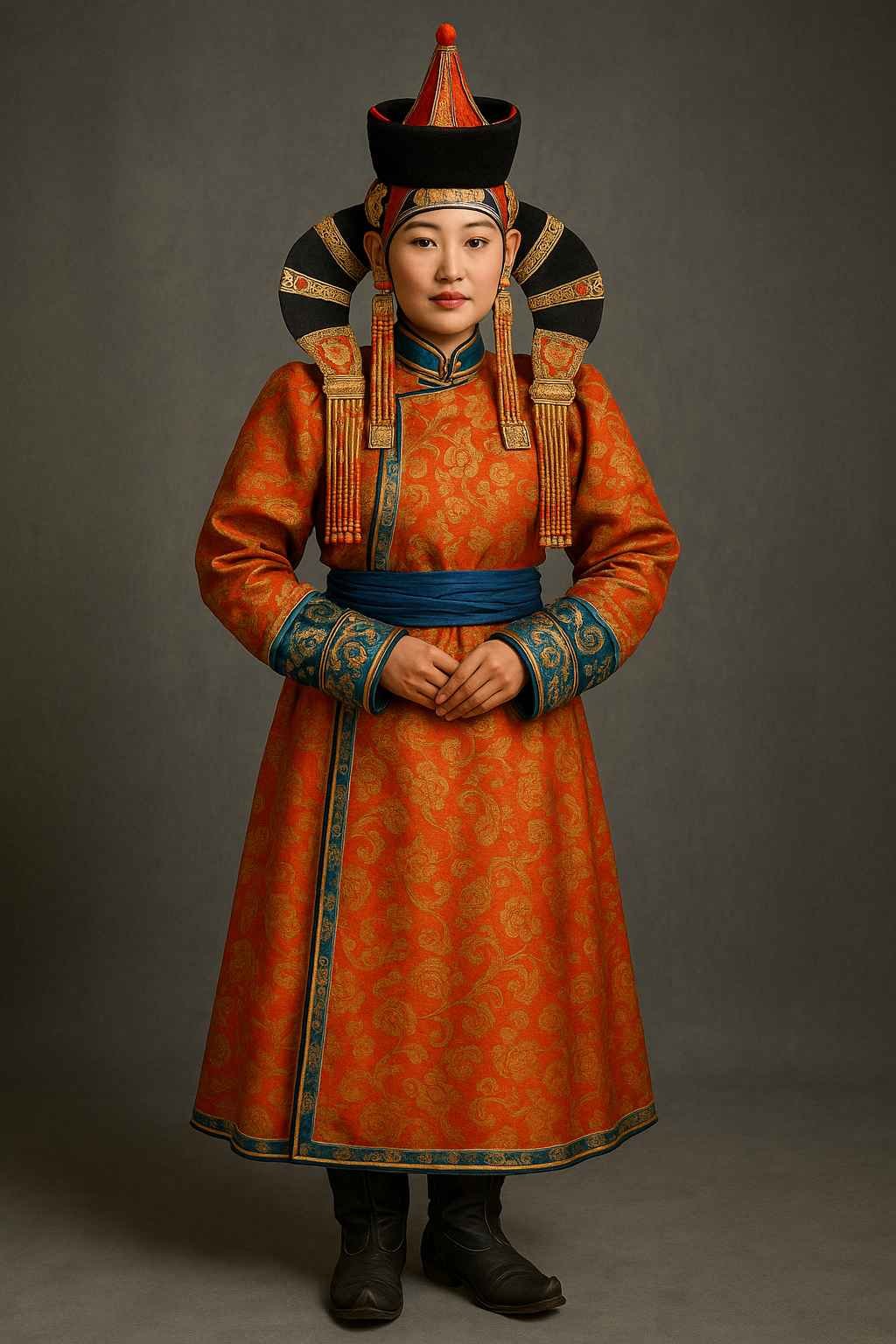
The deel is the most famous Mongolian garment. It looks like a long robe or coat and is worn by men, women, and children.
Main features of the deel
-
Long sleeves
-
High collar
-
Wraps from the left side to the right
-
Tied with a wide belt
-
Made of wool, cotton, silk, or thick winter fabric
Types of deel
| Deel Type | Material | When Used |
|---|---|---|
| Summer deel | Light cotton or thin silk | Warm seasons |
| Winter deel | Thick wool, fur, sheepskin | Cold seasons |
| Ceremonial deel | Silk brocade, rich colors | Festivals, weddings |
Differences between men’s and women’s deels
-
Women’s deels often have brighter colors and more decoration.
-
Men’s deels are usually darker and simpler.
3.2 The Terleg – Padded Inner Vest
The terleg is a padded vest or jacket worn under the deel.
What it is used for
-
Keeps the body warm
-
Gives extra protection during horse riding
-
Helps stop cold wind from entering the clothing
3.3 The Büs – Belt Around the Waist
The büs is a long belt, often wrapped around the waist several times.
Practical purpose
-
Keeps the deel closed
-
Supports the back, useful for long rides
-
Holds tools like knives or pouches
Symbolic meaning
-
Strength
-
Power
-
Health and good fortune
3.4 Gutal – Traditional Mongolian Boots
Gutal are strong leather boots with a very unique shape: the toes point upward.
Why they look this way
-
The curved toe makes it safer when riding horses.
-
Thick leather protects the feet from cold and rocks.
-
Some boots have fur inside for extra warmth.
| Boot Type | Best Use | Features |
|---|---|---|
| Riding boots | Horseback travel | Hard leather, curved toe |
| Winter boots | Snow and cold | Fur-lined |
| Ceremonial boots | Festivals | Colorful and decorative |
3.5 Hats and Headdresses (Malgai)
Hats are very important in Mongolian culture.
Common styles
-
Toortsog – soft hat for winter
-
Loovuuz – warm hat that covers ears
-
Bogtag / boqta – tall, fancy headdress worn by noble women
Cultural rules
-
A hat should never be placed on the ground.
-
Hats show age, gender, and status.
3.6 Accessories and Jewelry
Mongolian people traditionally carry tools and wear jewelry.
Tools worn at the waist
-
Knives
-
Small tool sets
-
Pouches for items like money or flint
Jewelry
-
Made from silver, coral, turquoise
-
Bridal jewelry is often very large and detailed
Read also: Complete Guide to Bolivian Clothing
4. Materials and Decoration
Mongolian clothing uses natural materials because they come from animals people raise.
Main materials
-
Wool
-
Felt
-
Leather
-
Fur
-
Silk (for special events)
Meaning of colors
| Color | Meaning |
|---|---|
| Blue | Sky and protection |
| Red | Celebration and happiness |
| Yellow/Gold | Royalty and religion |
| Green | Nature and life |
Common designs
-
Clouds
-
Dragons
-
The Endless Knot
-
Nature patterns
These designs often come from Buddhist beliefs and tribal symbols.
5. Clothing Differences Among Mongolian Ethnic Groups
Mongolia has more than 20 ethnic groups, and each has its own style of clothing.
| Ethnic Group | Clothing Style |
|---|---|
| Khalkh | The most common deel style |
| Kazakh | Fur-lined coats; eagle hunter outfits |
| Buryat | Round collars, wide cuffs |
| Darkhad | Very warm clothing for cold northern areas |
| Tsaatan | Reindeer-hide clothes, heavy fur boots |
These differences show how people adapt their clothing to local weather and traditions.
6. Everyday Clothing vs. Ceremonial Clothing
Everyday clothing
-
Simple colors
-
Thick, long-lasting materials
-
Few decorations
-
Made for work and travel
Ceremonial clothing
-
Bright colors
-
Silk and brocade
-
Many decorations and patterns
-
Used for:
-
Naadam Festival
-
Weddings
-
Tsagaan Sar (Lunar New Year)
-
Cultural events
-
7. Traditional Clothing in Modern Mongolia
Today, Mongolians wear Western-style clothing in cities, but traditional clothing is still important.
Modern uses
-
Children wear deels for school cultural days
-
Many people wear deels for holidays
-
Designers make modern deels with new colors and styles
-
Tourists can rent deels for photos or festivals
-
“Deel Day” in Ulaanbaatar encourages everyone to wear traditional clothing
Traditional garments continue to be a symbol of pride and identity.
8. Tips for Travelers Who Want Mongolian Clothing
Where to buy
-
Local markets
-
Artisan shops
-
Cultural centers
-
Special clothing stores
How to check quality
-
Look at stitching
-
Feel the fabric (real wool or silk feels stronger)
-
Check if embroidery is hand-made
Care tips
-
Air out wool clothes instead of washing often
-
Keep silk and brocade flat to avoid wrinkles
-
Store fur in dry places
Conclusion
Mongolian clothing is warm, strong, meaningful, and beautiful. Each item—from the deel and belt to the boots and hats—shows how Mongolian people live in harmony with their land and traditions. Even today, traditional clothing remains a proud symbol of Mongolian culture.
Whether you want to learn, travel, or celebrate Mongolia’s heritage, exploring its clothing is a wonderful way to understand the country and its people.