Belarusian traditional clothing is a very important part of the country’s culture. These clothes show how people lived in the past, what they believed in, and what values they wanted to pass on to future generations. The colors, patterns, and shapes are not random—they all have meaning.
This guide explains the history of Belarusian clothing, what materials were used, what different garments look like, and how people wear these clothes today.
1. History of Belarusian Clothing
1.1 Early Slavic Times
The first Belarusians were Slavic people. Their clothes were:
-
Long and warm
-
Made from simple materials like linen and wool
-
Decorated with symbols to protect them from bad luck
These symbols were thought to bring safety, health, and happiness.
1.2 Middle Ages (13th–17th Century)
During this time, Belarus traded with many neighbors. This changed clothing styles.
People began to use:
-
New fabrics from Poland, Lithuania, and Russia
-
Coats, jackets, and more fitted clothing
-
More color and decoration
Rich people wore finer fabrics, while poor people wore simple village clothing.
1.3 19th Century
This was an important time because Belarusians started to protect and celebrate their own culture. Traditional clothing became a symbol of national pride.
1.4 20th Century
Traditional clothing slowly stopped being used for everyday life. Instead, it was worn during:
-
Folk dances
-
Festivals
-
Holidays
-
Museum shows
Even though daily life changed, the meaning and symbols stayed important.
1.5 21st Century Revival
Today, traditional clothing is popular again. Belarusians wear embroidered shirts, support local craft makers, and bring old patterns into modern fashion. Some clothing items also became symbols of freedom and identity.
2. Materials and How Clothes Were Made
2.1 Main Traditional Materials
| Material | What It Is | How It Was Used |
|---|---|---|
| Linen | Cloth made from flax plants | Shirts, skirts, aprons |
| Wool | Made from sheep | Winter clothes, coats |
| Hemp | Strong plant fiber | Work clothing, belts |
| Leather / Sheepskin | Animal hide | Coats, shoes |
| Cotton | Later addition | Thread and decoration |
2.2 Natural Dyes
People used nature to color fabric:
-
Red: berries and roots
-
Black: oak bark or muddy water
-
Blue: special plants
-
Yellow/Brown: onion skins or herbs
2.3 Techniques
Belarusian clothing included:
-
Weaving: making patterns directly in the cloth
-
Embroidery: adding designs by hand
-
Felting: pressing wool fibers together
-
Lace-making: used for festive clothing
Read also: Complete Guide to Papua New Guinea Clothing
3. Embroidery and Symbols
Belarusian embroidery is famous and very meaningful.
3.1 Common Motifs
These shapes were believed to protect or bless the wearer:
-
Diamond – womanhood, fertility
-
Cross – harmony and safety
-
Star – order and light
-
Tree of Life – family and growth
-
Bird – connection between worlds
-
Waves – water and continuity
3.2 Color Meanings
| Color | Meaning |
|---|---|
| Red | Life, protection |
| Black | Earth, strength |
| White | Purity |
| Blue | Calmness, sky |
3.3 Vyshyvanka
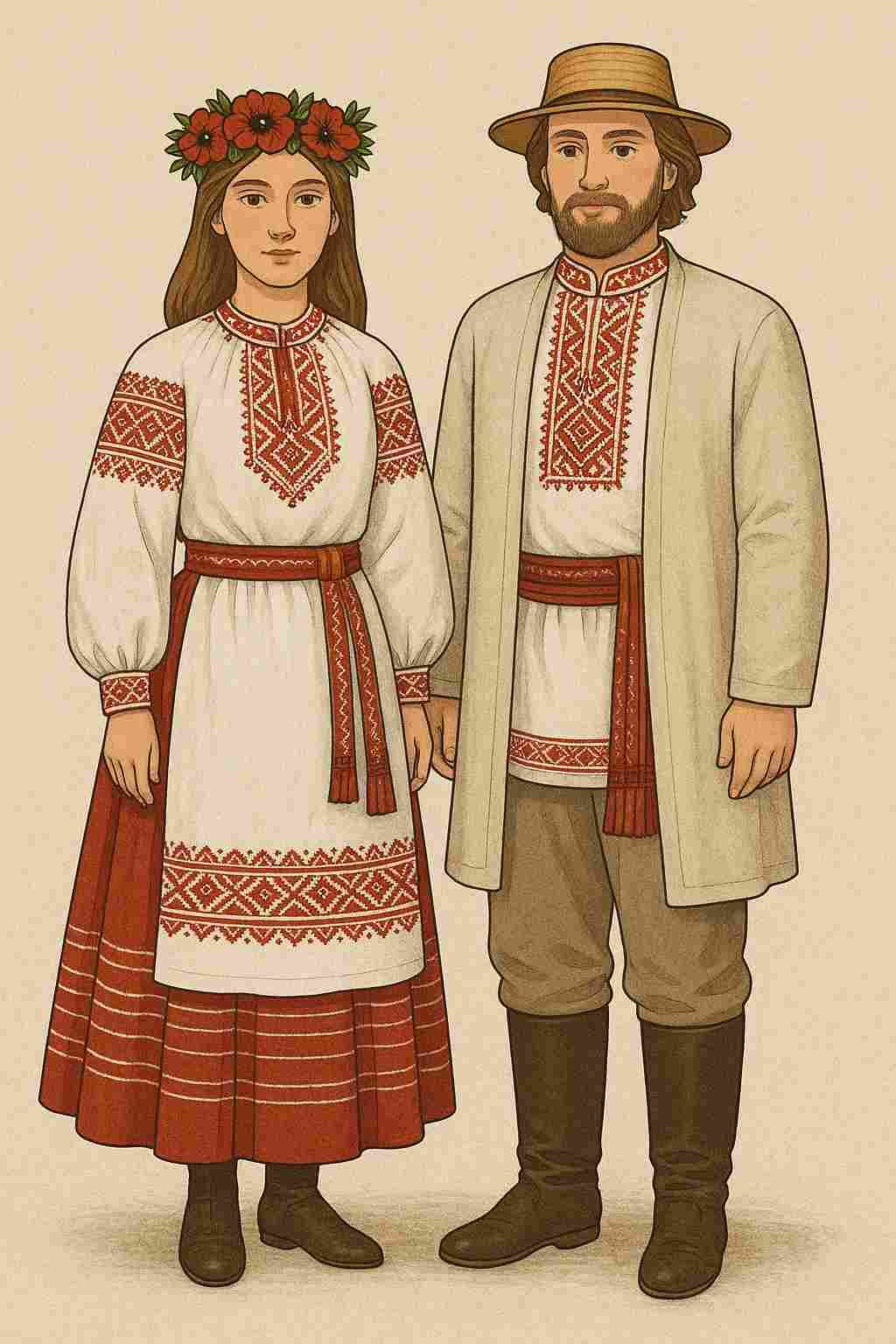
The vyshyvanka is the most famous Belarusian shirt. It is made of linen and decorated with embroidery, usually in red or red-and-black. Different regions have different styles.
Today, the vyshyvanka is a strong symbol of:
-
Culture
-
Community
-
Hope for the future
4. Women’s Traditional Clothing
Women’s clothing was full of layers, bright colors, and detailed patterns.
4.1 Main Items
-
Rubakha: long linen shirt
-
Skirts:
-
Spadnitsa (gathered skirt)
-
Andarak (striped wool skirt)
-
Poneva (wrap skirt)
-
-
Apron (Fartukh): highly decorated
-
Vest or Bodice: fitted and often embroidered
4.2 Outerwear
-
Svitka: wool coat
-
Seryak: heavy coat for winter
-
Sheepskin coat: very warm
4.3 Footwear and Accessories
-
Postoly: simple leather shoes
-
Boots: worn in cold seasons
-
Necklaces and belts for decoration and meaning
4.4 Headwear
Headwear showed a woman’s life stage.
| Headwear | Who Wears It | Meaning |
|---|---|---|
| Flower wreath | Young, unmarried girls | Youth and purity |
| Namitka | Married women | Respect and maturity |
| Scarf/Kerchief | Adult women | Modesty |
5. Men’s Traditional Clothing
Men’s clothing was simpler but still meaningful.
5.1 Main Items
-
Kashulya: linen shirt with embroidery
-
Porty: wide trousers
-
Poyas: woven belt that symbolized protection
5.2 Outer Garments
-
Kaftan: long coat
-
Zupan: fitted coat
-
Sukman: common peasant coat
-
Sheepskin coat: used in winter
5.3 Headwear and Shoes
-
Bryl: straw hat
-
Fur hat: for cold months
-
Leather boots or postoly depending on the weather
6. Clothing for Children
Children wore clothes similar to adults, but:
-
They were simpler
-
They had fewer decorations
-
They were used for school, church, and seasonal festivals
7. Regional Styles of Belarus
Different parts of Belarus have their own designs, colors, and patterns.
| Region | Style Features |
|---|---|
| Ponemanye (West) | Simple colors, geometric embroidery |
| Palesse (South) | Warm colors, layered skirts |
| Central Belarus | Classic Belarusian look |
| Dnieper / East | Bright red patterns, bold aprons |
| North / Polotsk | Cooler colors, blue tones |
There are over 30 regional costume types across the country.
8. Social and Ritual Meanings
Clothing showed who you were and what role you played in society.
8.1 Social Class
-
Peasants: simple, handmade clothing
-
Wealthy families: bright fabrics, more embroidery, imported materials
8.2 Age and Marital Status
-
Teenagers wore simpler clothing
-
Married women covered their hair
-
Elderly people wore darker colors
8.3 Ritual Clothing
Traditional clothes were used for:
-
Weddings (special wreaths and belts)
-
Harvest festivals
-
Religious holidays
-
Seasonal celebrations like Kupala Night
9. Belarusian Clothing Today
Belarusian clothing is becoming popular again. People enjoy reconnecting with their roots.
9.1 Modern Uses
-
Embroidered shirts with jeans
-
Folk-style dresses
-
Scarves with old patterns
-
Decorative belts
9.2 Designers and Fashion
Modern designers create:
-
Dresses inspired by folk patterns
-
Hoodies with traditional embroidery
-
Shoes and bags with Belarusian symbols
9.3 Political and Cultural Meaning
In recent years, traditional patterns and the red-white color scheme have become symbols of:
-
National pride
-
Hope
-
Freedom
-
Cultural identity
9.4 Where You Can See It
-
Museums
-
Folk festivals
-
Weddings
-
Street fashion
-
Cultural centers
10. Conclusion
Belarusian clothing is a beautiful mix of history, art, and everyday life. Its shapes, colors, and designs connect people to their ancestors and their land. Even though styles have changed over time, the meaning behind the clothing remains strong.
Today, many Belarusians proudly wear traditional or modernized folk clothing to show love for their culture, celebrate their identity, and keep these old traditions alive.