Chinese clothing has a long history that goes back thousands of years. It is not only about fashion. It also shows culture, tradition, history, and values. Chinese clothing changed over time, but many old ideas are still used today.
This guide explains Chinese clothing in a simple way. You will learn about its history, main clothing types, colors, symbols, modern styles, and how to wear them properly.
What Is Chinese Clothing?
Chinese clothing includes different types of dress, such as:
-
Traditional clothing from ancient China
-
Clothing worn by ethnic groups in China
-
Modern clothing inspired by traditional styles
-
Festival and ceremonial clothing
Chinese clothing is not just one outfit. It is a system that depends on time, place, and purpose.
History of Chinese Clothing (Simple Timeline)
Chinese clothing changed with each dynasty. Every period had its own style.
Clothing History by Period
| Time Period | Main Clothing Features |
|---|---|
| Early China | Loose robes, simple shapes |
| Han Dynasty | Hanfu system, cross collars |
| Tang Dynasty | Bright colors, open styles |
| Song Dynasty | Simple and elegant clothing |
| Yuan Dynasty | Practical designs |
| Ming Dynasty | Structured and formal styles |
| Qing Dynasty | Manchu influence, early qipao |
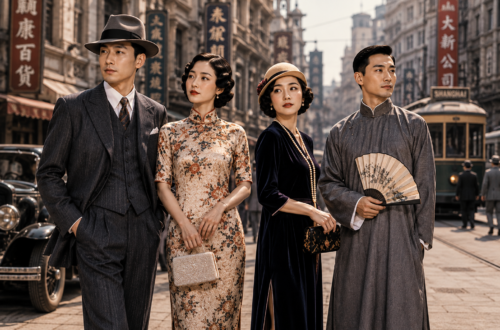
| Republic Era | Mix of Chinese and Western styles |
| Modern Time | Revival of tradition, modern fashion |
Main Traditional Chinese Clothing
1. Hanfu
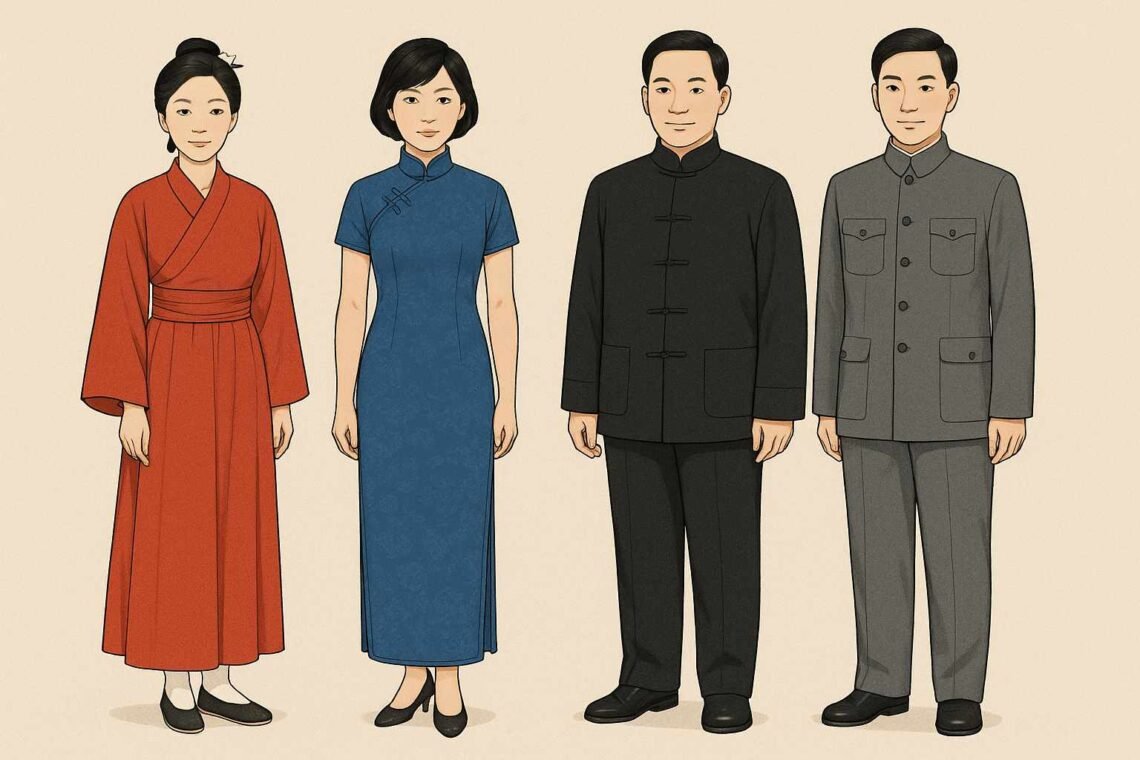
Hanfu is the traditional clothing of Han Chinese people before the Qing dynasty. It is not one dress but many styles.
Common Hanfu features:
-
Cross collar (one side over the other)
-
Wide sleeves
-
Long and flowing shape
-
Tied with belts, not buttons
Common Hanfu Types
| Type | Description |
|---|---|
| Ruqun | Top with long skirt |
| Shenyi | One-piece robe |
| Aoqun | Jacket and skirt |
| Zhiduo | Long robe, often worn by scholars |
2. Qipao (Cheongsam)
The qipao comes from the Qing dynasty and became popular in the 1900s.
Qipao features:
-
High collar
-
Close-fitting shape
-
Side slits
-
Decorative buttons
Used for:
-
Weddings
-
Formal events
-
Cultural shows
3. Tang Suit
The Tang suit is a modern jacket. It is not from the Tang dynasty.
Features:
-
Standing collar
-
Frog buttons
-
Straight shape
Often worn during:
-
Chinese New Year
-
Weddings
-
Celebrations
4. Zhongshan (Mao) Suit
This suit was designed in modern China.
Meaning of the design:
-
Four pockets = values like honesty and order
-
Five buttons = unity
-
Clean shape = discipline
Read also: Complete Guide to Turkish Clothing
Design Elements in Chinese Clothing
Chinese clothing focuses on comfort, balance, and meaning.
Main Design Parts
Shapes
-
Robes
-
Jackets
-
Skirts
-
Pants
Collars
-
Cross collar
-
Standing collar
-
Round collar
Closures
-
Cloth belts
-
Ties
-
Frog buttons
Fabrics
-
Silk
-
Cotton
-
Hemp
-
Brocade
Patterns and Symbols
Patterns on Chinese clothing often have meaning.
Common Symbols
| Symbol | Meaning |
|---|---|
| Dragon | Power |
| Phoenix | Peace and beauty |
| Peony | Wealth |
| Crane | Long life |
| Clouds | Good luck |
These symbols are used to send good wishes.
Colors and Their Meanings
Colors are very important in Chinese clothing.
Color Meaning Table
| Color | Meaning |
|---|---|
| Red | Happiness, luck |
| Yellow | Power (used by emperors in the past) |
| Black | Serious and formal |
| White | Mourning |
| Blue/Green | Nature and growth |
In the past, some colors were only allowed for certain people.
Clothing for Different Occasions
Everyday Clothing
-
Simple styles
-
Soft colors
-
Comfortable materials
Wedding Clothing
Traditional weddings often include:
-
Red clothing
-
Dragon and phoenix patterns
-
Special ceremonial outfits
Festival Clothing
Popular festival clothes include:
-
Tang suits
-
Modern Han-style clothing
-
Red-themed outfits
Performance Clothing
-
Chinese opera costumes
-
Dance and ritual clothing
-
Very colorful and symbolic
Ethnic Minority Clothing in China
China has 56 ethnic groups. Many have their own clothing styles.
Examples of Ethnic Clothing
| Group | Clothing Features |
|---|---|
| Miao | Silver jewelry, embroidery |
| Tibetan | Thick robes, strong colors |
| Uyghur | Bright colors, patterns |
| Mongolian | Clothing for riding horses |
| Dai | Light fabric, tropical style |
These clothes are often worn during festivals.
Modern Chinese Clothing
Hanfu Revival
Many young people now wear Hanfu again.
Common places to wear Hanfu today:
-
Festivals
-
Photo sessions
-
Museums
-
Daily life (modern styles)
Guochao Fashion
Guochao means “national trend.”
It combines:
-
Traditional patterns
-
Modern streetwear
-
New fashion ideas
How to Wear Chinese Clothing Properly
Hanfu Tips
-
Wear layers in the correct order
-
Use belts correctly
-
Match accessories with the style
Qipao Tips
-
Fit is very important
-
Do not wear it too tight
-
Keep accessories simple
Common Accessories
-
Hairpins
-
Fans
-
Belts
-
Traditional shoes
Mistakes to Avoid
-
Mixing clothing from different time periods
-
Treating traditional clothing like a costume
-
Wearing the wrong size
Sizing, Buying, and Care
Sizing Tips
-
Chinese sizes are often smaller
-
Always measure your body
-
Custom-made clothing is common
Clothing Care Table
| Fabric | How to Care |
|---|---|
| Silk | Hand wash or dry clean |
| Brocade | Gentle cleaning |
| Cotton | Cold wash |
Store clothes carefully to protect embroidery.
Cultural Respect and Etiquette
When wearing Chinese clothing:
-
Learn about the style
-
Respect cultural meaning
-
Avoid sacred or religious outfits
-
Wear it with understanding
Most people appreciate respectful interest.
Conclusion
Chinese clothing is more than fashion. It is history, culture, and art. From ancient Hanfu to modern Guochao styles, Chinese clothing continues to grow and change. By understanding its meaning and proper use, anyone can appreciate the beauty of Chinese clothing in a respectful way.