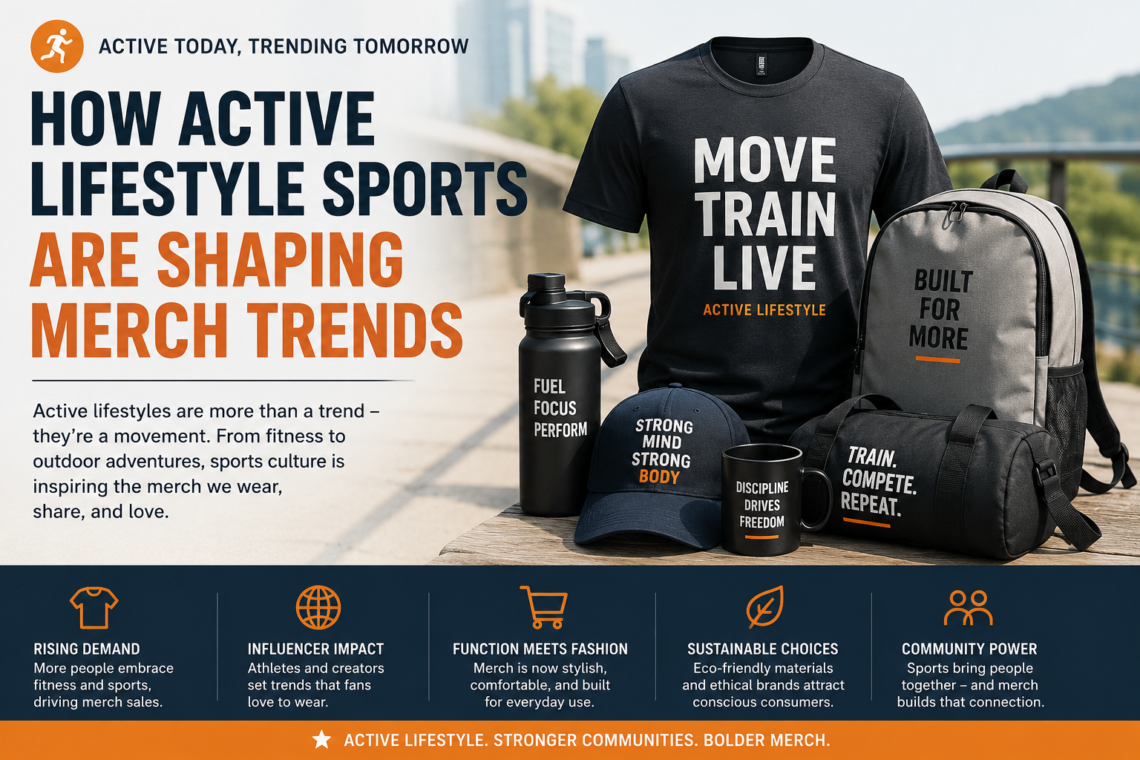
Merchandise trends are increasingly influenced by active lifestyle sports. Activities such as pickleball, padel, cycling, and recreational running are no longer niche communities. They have become part of mainstream culture, and consumer demand is changing alongside them.
People no longer view sports merchandise as something limited to professional teams or competitive athletes. Apparel and branded products are now tied to identity, social interaction, and everyday lifestyle habits.
This shift is reshaping how brands approach sports merchandise design, production, and marketing.
Lifestyle Sports Are Expanding Consumer Demand
Traditional sports merchandise focused heavily on fan loyalty and team branding. Active lifestyle sports create a different type of demand.
Participants want apparel and accessories they can actually wear during activity while still fitting into casual everyday style.
This changes the priorities behind product development.
What Consumers Expect From Modern Sports Merch
The line between athletic wear and lifestyle fashion continues to shrink.
Pickleball Is Driving New Apparel Trends
Pickleball has become one of the fastest-growing recreational sports in recent years. Its accessibility and social nature have attracted players across multiple age groups.
As participation increases, apparel demand has followed closely behind.
Players are looking for lightweight, performance-oriented clothing that also reflects personal identity and local club culture.
Products such as a pickleball jersey show how active lifestyle sports are influencing custom apparel markets. Consumers want gear that combines comfort, branding, and social visibility.
The growth of smaller sports communities is creating entirely new merchandising categories.
Functionality Is Becoming More Important Than Branding Alone
Sports merchandise used to focus mainly on logos and visual identity. Today, functionality matters just as much.
Consumers expect apparel to perform well during actual physical activity.
Breathability, stretch materials, and moisture management are now standard expectations even for casual sportswear.
This has pushed merch brands to adopt technical fabric technologies that were previously limited to professional athletic gear.
Community Identity Drives Purchasing Decisions
Active lifestyle sports often revolve around local communities rather than large-scale professional organizations.
This changes how consumers connect with merchandise.
People purchase apparel to represent clubs, training groups, or recreational leagues instead of national teams.
Community-Based Merch Trends
Localized identity has become a major factor in merch purchasing behavior.
Social Media Accelerates Sports Merch Visibility
Platforms like Instagram and TikTok have amplified sports-inspired lifestyle branding.
Athletes, creators, and recreational players regularly share apparel, events, and training experiences online.
This creates faster product visibility and shorter trend cycles.
Merchandise is now heavily tied to visual culture and online identity.
Consumers increasingly purchase products that fit both activity needs and social presentation.
Sports Merch Is Expanding Beyond Apparel
Apparel remains central, but sports merchandise now includes accessories, collectibles, and personalized memory products.
Participants want ways to document experiences and preserve event milestones.
Tournament participation, travel events, and group competitions create emotional attachment beyond the activity itself.
This has increased interest in products connected to memory preservation and storytelling.
Event Documentation Is Becoming Part of Merch Culture
Sports participation often involves shared experiences that people want to revisit later.
Players now document tournaments, group events, and travel experiences more intentionally than before.
Photo books allow athletes and recreational players to organize and preserve those experiences in a structured format.
This trend reflects how sports culture increasingly overlaps with lifestyle and personal branding.
Memories themselves are becoming part of the merchandise ecosystem.
Sustainability Is Influencing Sports Merch Production
Consumers are paying more attention to how merchandise is produced.
This includes material sourcing, durability, and production methods.
Many active lifestyle consumers prefer apparel that lasts longer and performs consistently over time.
Sustainability Trends in Sports Merchandise
Sustainability is becoming a competitive advantage for merch brands.
Customization Continues to Grow
Customization has become one of the strongest drivers in sports merchandise.
Consumers want products that feel personal instead of mass-produced.
Advances in digital printing and on-demand production make small-batch customization more accessible than before.
This allows teams, clubs, and individuals to create highly specific designs without large inventory commitments.
Customization aligns closely with the community-driven nature of active lifestyle sports.
Final Take
Active lifestyle sports are reshaping merchandise trends by combining functionality, identity, and community participation.
Consumers no longer view sports merch as simple fan apparel. They expect products that support activity, reflect personal style, and preserve experiences connected to the sport itself.
As recreational sports continue growing, merchandise trends will likely become even more personalized, performance-focused, and community-driven.