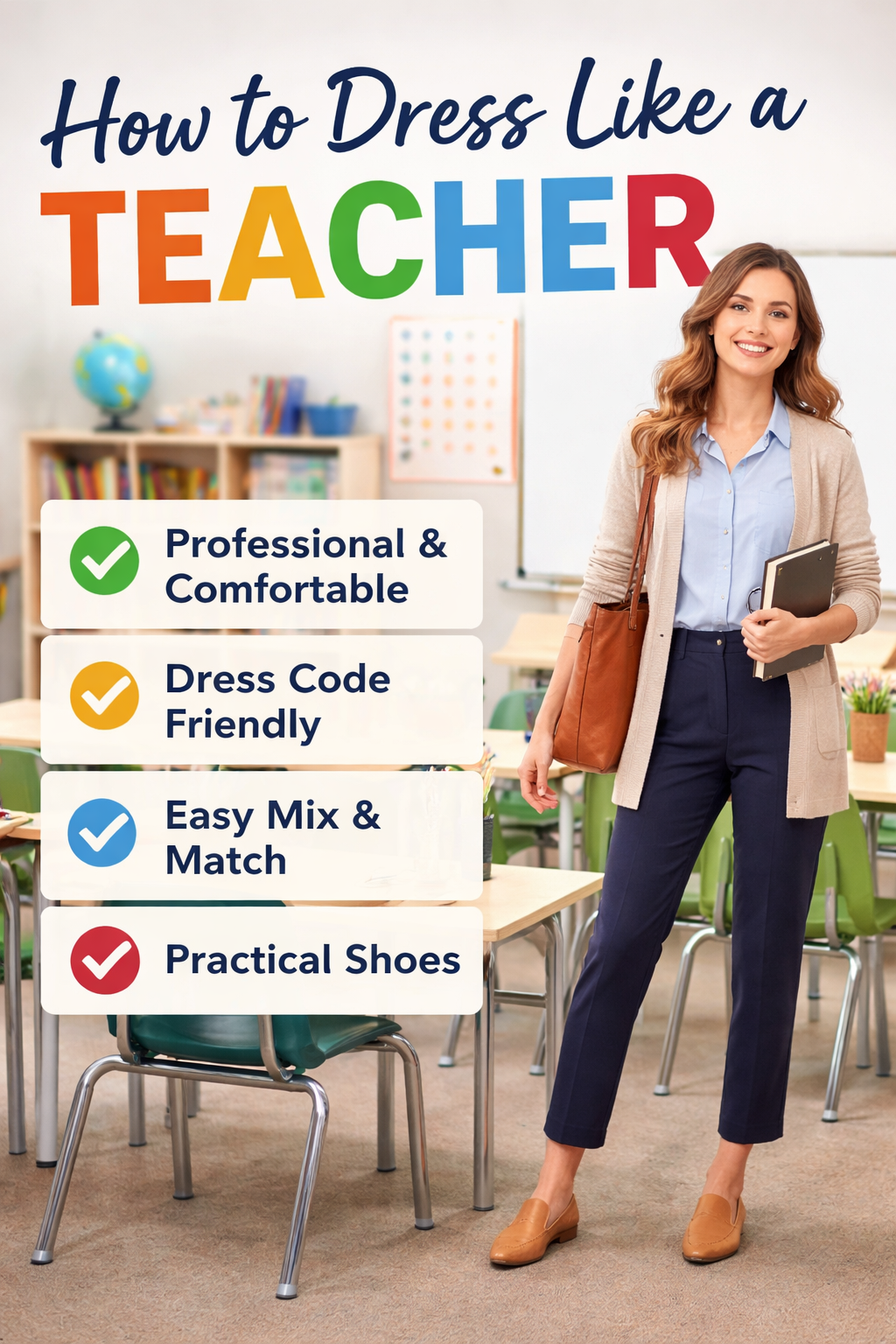
Dressing like a teacher is not about fashion trends or expensive clothes. It is about wearing outfits that are professional, comfortable, and suitable for a school environment. Teachers work long hours, move a lot, and interact with students, parents, and other staff. Their clothes need to support all of this.
This guide explains how to dress like a teacher in a simple way. It will help you choose the right clothes, shoes, and accessories for everyday teaching.
What Does It Mean to Dress Like a Teacher?
Dressing like a teacher means looking neat, respectful, and ready to work. It does not mean dressing boring or old-fashioned. It means choosing clothes that fit your role as an educator.
A teacher’s outfit should:
-
Look professional
-
Feel comfortable all day
-
Follow school rules
-
Not distract students
Most teachers dress in a style between business casual and smart casual.
Know Your School Dress Code
Every school has different rules about clothing. Before buying or planning outfits, you should understand what your school allows.
Common School Dress Code Types
| Dress Code Type | What It Usually Means |
|---|---|
| Business Casual | Dress pants, blouses, dresses, closed shoes |
| Smart Casual | Dark jeans, nice tops, cardigans |
| Casual (Limited) | Jeans and sneakers (with rules) |
| Formal | Blazers, skirts, dress shoes |
General Rules Most Schools Follow
Most schools do not allow:
-
Very short skirts or dresses
-
Low-cut or see-through tops
-
Clothes with offensive words or images
-
Very ripped jeans or gym clothes
If you are unsure, choose clothes that look clean and professional.
Basic Rules for Teacher Clothing
1. Comfort Is Very Important
Teachers stand and walk for many hours. Clothes should:
-
Stretch a little
-
Feel soft on the skin
-
Not feel tight or heavy
2. Clothes Should Allow Movement
Teachers need to:
-
Walk around the classroom
-
Bend down to help students
-
Reach shelves or boards
Tight or stiff clothes can make this hard.
3. Look Professional
Professional clothes help teachers:
-
Gain respect from students
-
Look confident
-
Make a good impression on parents
4. Choose Practical Clothes
Good teacher clothes should be:
-
Easy to wash
-
Not wrinkle easily
-
Strong enough for daily use
Teacher Wardrobe Basics
These are the main clothing items most teachers need.
Teacher Clothing Essentials
| Clothing Type | Examples |
|---|---|
| Tops | Blouses, knit tops, button shirts |
| Bottoms | Slacks, chinos, midi skirts |
| Dresses | Knee-length or longer dresses |
| Layers | Cardigans, blazers, sweaters |
| Shoes | Flats, loafers, low heels |
| Accessories | Tote bag, scarf, simple jewelry |
Tops Teachers Can Wear
Teacher tops should cover well and feel comfortable.
Good Top Choices
-
Blouses with higher necklines
-
Soft knit tops
-
Button-down shirts
-
Long or short sleeve tops
Tips for Choosing Tops
-
Pick neutral colors like black, blue, or beige
-
Avoid tops that are too tight or see-through
-
Choose breathable fabric
Bottoms That Work Well for Teachers
Bottoms should look neat and allow easy movement.
Best Bottom Choices
-
Dress pants or slacks
-
Stretchy ponte pants
-
Midi skirts
-
Dark jeans (if allowed)
Avoid These
-
Very tight pants
-
Very short skirts
-
Pants that need constant adjusting
Read also:How to Dress Like a Nerd
Dresses for Teachers
Many teachers like dresses because they are easy to wear.
What Makes a Dress Teacher-Friendly?
-
Length at or below the knee
-
Not too tight
-
Easy to move in
-
Can be worn with layers
Why Teachers Like Dresses
| Reason | Benefit |
|---|---|
| One piece | Easy to plan outfits |
| Comfortable | No tight waistbands |
| Professional | Looks polished |
Layering Clothes at School
Classrooms can be too cold or too warm. Layers help you stay comfortable.
Best Layering Items
-
Cardigans
-
Blazers
-
Light sweaters
-
Vests
Layering Tips
-
Choose light fabrics
-
Avoid thick or heavy layers
-
Use neutral colors so they match many outfits
Read also: How to Dress as an Angel
Shoes Teachers Should Wear
Shoes are very important for teachers because they are on their feet all day.
Good Shoes for Teachers
| Shoe Type | Why It’s Good |
|---|---|
| Flats | Comfortable and neat |
| Loafers | Supportive and professional |
| Low heels | Dressy but stable |
| Ankle boots | Good support |
| Sneakers (if allowed) | Very comfortable |
Shoes to Avoid
-
High heels
-
Shoes with no support
-
Shoes that make noise
Comfort should always come first.
Accessories for Teacher Outfits
Accessories help make outfits look complete.
Useful Teacher Accessories
-
A strong tote bag or backpack
-
Simple necklaces or earrings
-
Scarves
-
Belts
Accessories to Avoid
-
Very noisy jewelry
-
Very large or heavy bags
Dressing Like a Teacher in Different Seasons
Fall and Winter
Cold weather clothing includes:
-
Sweaters
-
Cardigans
-
Tights under skirts
-
Closed shoes or boots
Spring and Summer
Warm weather clothing includes:
-
Light dresses
-
Cotton or linen pants
-
Short sleeves that are not too revealing
Dressing Based on Teaching Role
Different teaching jobs may need different clothing.
| Teaching Role | Clothing Focus |
|---|---|
| Elementary Teacher | Comfort and movement |
| Middle School Teacher | Comfort with authority |
| High School Teacher | Slightly more formal |
| Art or Science Teacher | Easy-to-wash clothes |
Showing Personality in Teacher Outfits
Teachers can still show their style.
Simple Ways to Add Personality
-
Bright cardigans
-
Patterned scarves
-
Colored shoes
Keep it simple so it does not distract students.
Common Teacher Clothing Mistakes
Avoid these mistakes:
-
Dressing too casually
-
Wearing uncomfortable shoes
-
Wearing clothes that do not fit well
-
Following trends that are not school-friendly
Building a Simple Teacher Capsule Wardrobe
A capsule wardrobe is a small set of clothes that mix well together.
Benefits of a Capsule Wardrobe
-
Saves time in the morning
-
Makes outfit planning easy
-
Reduces shopping costs
Example Capsule Wardrobe
| Item | Amount |
|---|---|
| Tops | 6–8 |
| Bottoms | 4–6 |
| Dresses | 2–4 |
| Layers | 3–5 |
| Shoes | 3–4 pairs |
Final Thoughts
Dressing like a teacher means choosing clothes that help you do your job well. Your clothes should be comfortable, professional, and practical. When you feel good in what you wear, you can focus better on teaching.
With the right basics, simple layers, and comfortable shoes, you can dress like a teacher every day with confidence and ease.