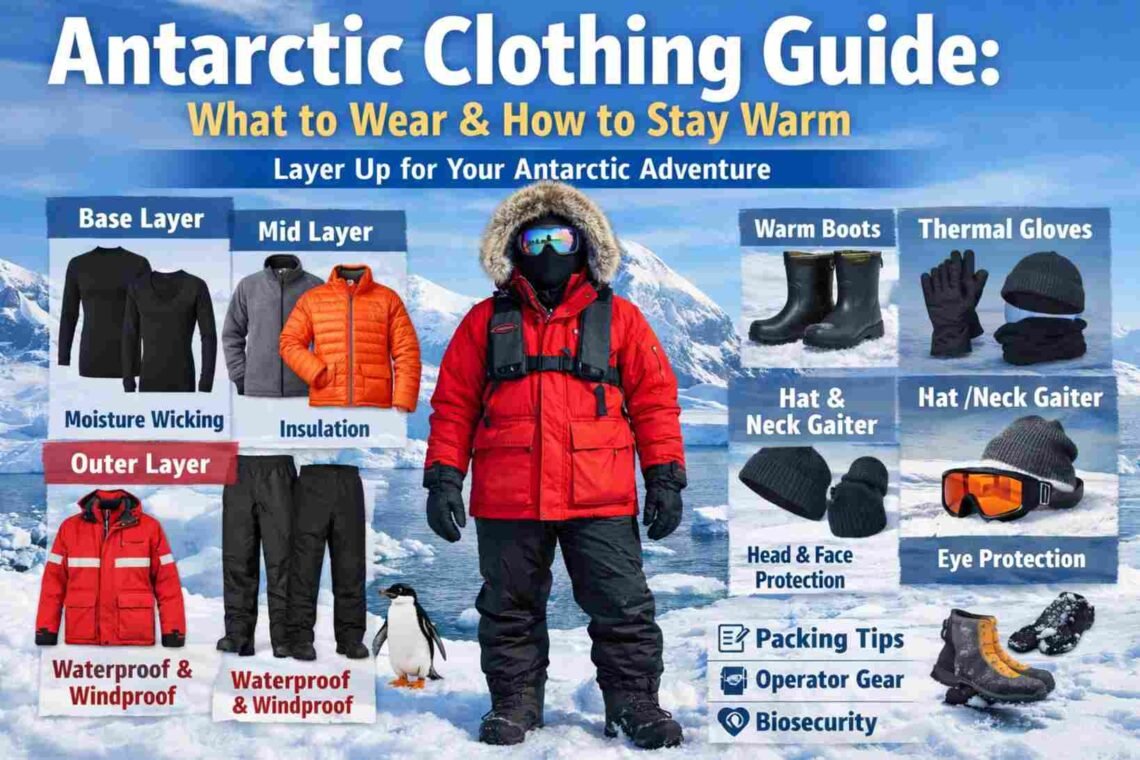
A trip to Antarctica is a rare and exciting experience. It is one of the coldest and most remote places on Earth. Because of this, wearing the right clothing is very important. Good clothing helps you stay warm, dry, safe, and comfortable during your journey.
Many people think Antarctica is always freezing, but that is not fully true. During the travel season, temperatures are often not as cold as expected. However, strong winds, snow, rain, and sea water can still make you feel very cold. This guide explains what clothes to wear, how to layer them, and what mistakes to avoid, using simple and easy language.
Understanding Antarctic Weather
Most visitors travel to Antarctica between November and March, which is summer in the Southern Hemisphere. Even in summer, the weather can change very fast.
Main Weather Challenges in Antarctica
-
Cold air temperatures
-
Strong winds that make it feel colder
-
Wet conditions from snow, ice, and sea spray
-
Bright sunlight reflected from snow and ice
-
Sudden changes in weather
Typical Conditions You Will Experience
| Location | Temperature | Main Problem |
|---|---|---|
| Inside the ship | Warm and heated | Dressing too warmly |
| Outside deck | Cold | Wind |
| Shore landings | Cold and wet | Snow and water |
| Zodiac boats | Very cold | Water spray and wind |
The Layering System (Most Important Rule)
The best way to dress for Antarctica is to wear layers. Layers let you add or remove clothes easily when the weather or your activity changes.
The Three Main Layers
-
Base layer – keeps your skin dry
-
Mid layer – keeps you warm
-
Outer layer – protects from wind and water
Base Layer: Keeps You Dry
The base layer is the clothing you wear next to your skin. Its job is to move sweat away from your body. If sweat stays on your skin, you will feel cold very fast.
Best Materials for Base Layers
-
Merino wool
-
Synthetic fabrics (sports or thermal wear)
Materials to Avoid
-
Cotton (gets wet and stays wet)
What to Pack
-
2–3 thermal tops
-
2–3 thermal bottoms
Simple tip: Even in cold places, you can sweat while walking. A good base layer keeps you dry and warm.
Mid Layer: Keeps You Warm
Mid layers trap your body heat. You can wear one or more mid layers depending on how cold it feels.
Common Mid Layer Clothing
-
Fleece jackets
-
Light insulated jackets
-
Light down jackets
Which One Is Best?
-
Fleece: good for movement, dries fast
-
Synthetic insulation: still warm when wet
-
Down: very warm but must stay dry
Best choice: Bring more than one thin mid layer instead of one thick jacket. This gives you more control.
Read also: Complete Guide to Indian Clothing
Outer Layer: Protects You from Wind and Water
The outer layer is very important in Antarctica. It blocks wind, snow, and water.
Outer Layer Must Be
-
Waterproof
-
Windproof
-
Strong and durable
Outer Clothing You Need
-
Waterproof jacket
-
Waterproof pants or over-pants
You will need this layer during:
-
Zodiac boat rides
-
Shore landings
-
Windy days
Important Clothing Items
Jackets and Parkas
Many tour companies give travelers a special Antarctic parka. These jackets are made for cold and windy weather.
Before your trip:
-
Ask if a parka is included
-
Check if it is waterproof or only warm
Even if a parka is provided, you should still bring:
-
Your own warm mid layers
-
A waterproof jacket if needed
Pants and Bottoms
You must have waterproof pants. Jeans are not good for Antarctica because they get wet and cold.
Best Pants System
-
Thermal base layer
-
Optional warm mid layer
-
Waterproof outer pants
Your pants should:
-
Fit comfortably
-
Allow movement
-
Have space for layers
Socks and Underwear
Cold feet can make your day very uncomfortable.
Sock System
-
Thin socks (optional)
-
Thick wool or thermal socks
Pack many pairs so you always have dry socks.
Footwear for Antarctica
Boots
Most Antarctica tour operators give travelers rubber waterproof boots. These boots are designed for wet landings and cold conditions.
If boots are provided:
-
You do not need to bring your own
If boots are not provided:
-
Bring waterproof and insulated boots
-
Make sure they fit with thick socks
Extra Foot Items (Optional)
-
Warm insoles
-
Foot warmers
These are helpful if your feet get cold easily.
Gloves, Hats, and Face Protection
Hands, head, and face lose heat very quickly.
Gloves and Mittens
It is best to use layers for your hands.
| Type | Purpose |
|---|---|
| Thin gloves | Easy movement |
| Warm gloves or mittens | Keep hands warm |
| Waterproof gloves | Keep hands dry |
Mittens are warmer but make it harder to use your fingers.
Head and Face Clothing
-
Warm hat or beanie
-
Neck warmer or scarf
-
Face cover for wind
A lot of body heat is lost through the head, so this is very important.
Eye Protection
-
Sunglasses with UV protection
-
Ski goggles for wind and snow
The sun is very strong in Antarctica because it reflects off the snow.
Clothing for Inside the Ship
Inside the ship, it is warm and comfortable.
What to Wear on the Ship
-
Casual pants
-
Long-sleeve shirts
-
Light jacket or sweater
-
Comfortable shoes or slippers
Heavy winter clothing is not needed indoors.
Gear Provided by Tour Operators
Many tour companies give travelers special gear.
Often Provided Items
-
Expedition parka
-
Rubber boots
-
Life jacket for landings
Always Check Before Packing
-
What clothing is included
-
Boot sizes
-
What you must bring yourself
This helps you avoid buying things you do not need.
Protecting Antarctica (Biosecurity)
Antarctica is very clean and fragile. Tourists must help protect it.
Simple Biosecurity Rules
-
Wash all clothes before your trip
-
Clean boots before every landing
-
Check pockets and seams for dirt
-
Avoid clothing with lots of Velcro
These steps stop plants and dirt from entering Antarctica.
Packing Tips and Luggage
Luggage Rules
-
Soft bags are better than hard suitcases
-
Weight limits may apply
-
Pack only what you need
Important Items for Carry-On Bag
-
Base layers
-
Gloves and hat
-
Medicine
-
Travel documents
Rent or Buy?
| Item | Rent or Provided | Buy |
|---|---|---|
| Parka | Often provided | ❌ |
| Rubber boots | Often provided | ❌ |
| Base layers | ❌ | ✔ |
| Gloves & hats | ❌ | ✔ |
Common Mistakes to Avoid
-
Packing too many heavy clothes
-
Wearing cotton or jeans
-
Forgetting waterproof clothing
-
Ignoring sun protection
-
Not checking what the tour company provides
Final Tips for Antarctica Clothing
-
Add or remove layers often
-
Stay dry at all times
-
Choose comfort over fashion
-
Test your clothing before the trip
With the right clothing, Antarctica can be comfortable and enjoyable. Good preparation lets you focus on the amazing wildlife, beautiful ice, and unforgettable experience of visiting the southernmost continent on Earth.