Shanghai was a busy and growing city in the 1920s. People from China and other parts of the world lived, worked, and traded there. This mix of cultures also changed the way people dressed.
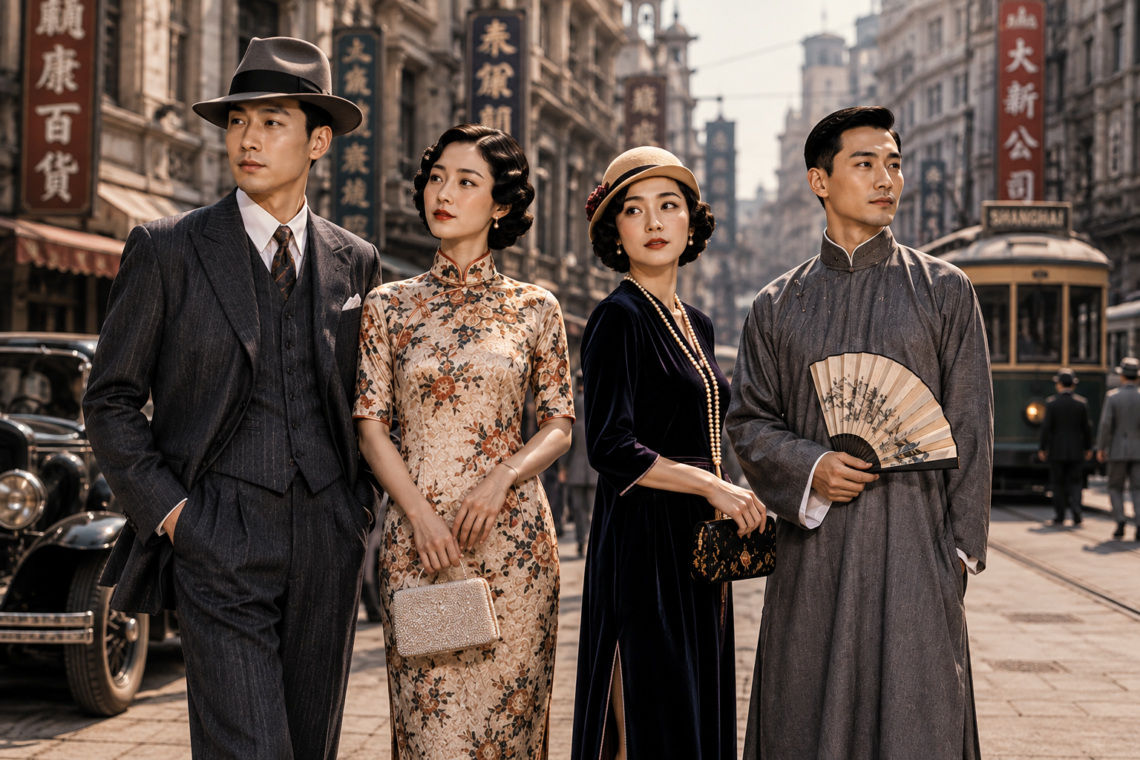
1920 Shanghai fashion was a mix of traditional Chinese clothing and new Western styles. Women wore qipao, Chinese jackets, dresses, skirts, and other modern clothes. Men wore Chinese long gowns as well as Western suits, shirts, ties, and hats.
The 1920s were an important time because Shanghai was moving from older clothing styles toward a more modern fashion culture.
What Was 1920 Shanghai Fashion?
Fashion in Shanghai was different for every person. Clothing depended on age, job, money, social class, and the type of event.
People could wear traditional Chinese clothes or choose Western-style clothing. Some people also mixed both styles.
| Fashion Type | Examples |
|---|---|
| Women’s clothing | Qipao, dresses, skirts, jackets |
| Men’s clothing | Long gowns, suits, shirts, jackets |
| Shoes | Chinese cloth shoes, leather shoes |
| Accessories | Hats, handbags, jewelry, fans |
| Fabrics | Silk, cotton, wool, imported fabrics |
| Hairstyles | Traditional and modern styles |
This mix made 1920s Shanghai fashion special.
Why Was Shanghai a Fashion City?
Shanghai had strong links with other countries. The city had international trade, foreign businesses, stores, hotels, clubs, cinemas, and restaurants.
These places helped new fashion trends spread.
Western clothing brought new ideas about:
- Tailoring
- Clothing shapes
- Shoes
- Hats
- Fabrics
- Accessories
- Formal clothes
Chinese tailors did not simply copy Western fashion. They changed these ideas to fit Chinese clothing and local tastes.
This created a unique Shanghai fashion style.
Women’s Fashion in 1920s Shanghai
Women’s clothing was changing quickly during this period.
Traditional Chinese clothes were still common, but women in cities had more choices. They could wear Chinese clothes or try Western-style dresses, skirts, blouses, and jackets.
Common women’s fashion items included:
- Qipao
- Chinese jackets
- Long robes
- Dresses
- Skirts
- Blouses
- Stockings
- Leather shoes
- Handbags
- Jewelry
- Hair accessories
Clothing was not only used for comfort. It also helped women show their personal style.
Read also: Complete Guide to Afghan Clothing
The Rise of the Qipao
The qipao, also called the cheongsam, became one of the most famous Chinese garments.
The qipao has roots in older Manchu clothing. However, its design changed over time. Shanghai played an important role in making the qipao more modern.
Early qipao styles in the 1920s were often loose and covered most of the body. Later styles became more shaped and showed more influence from Western tailoring.
Common qipao features included:
- High collar
- Long shape
- Long sleeves in earlier designs
- Side openings
- Decorative buttons
- Silk fabric
- Embroidery
- Chinese patterns
The Shanghai-style qipao became a good example of traditional Chinese clothing mixed with modern ideas.
Early 1920s and Late 1920s Fashion
Fashion changed during the decade.
| Early 1920s | Late 1920s |
| Loose clothing | More fitted clothing |
| Longer sleeves | Different sleeve lengths |
| More traditional look | More modern look |
| Less Western influence | More Western influence |
| Simple shapes | More shaped designs |
It is important to remember that people did not suddenly change their clothes in one year. Fashion developed slowly.
Western Influence on Shanghai Fashion
Western fashion had a strong effect on Shanghai.
People became interested in Western suits, dresses, shoes, hats, and other clothing.
Western influence could be seen in:
- Suits
- Dresses
- Skirts
- Shirts
- Ties
- Leather shoes
- Hats
- Stockings
- Handbags
- New sewing methods
But Chinese clothing did not disappear.
Instead, people often mixed Chinese and Western styles. This created a new type of East-meets-West fashion.
Men’s Fashion in 1920s Shanghai
Men’s fashion is sometimes forgotten when people talk about Shanghai fashion.
Traditional Chinese clothing was still common. Men wore long gowns and Chinese jackets. At the same time, Western suits were becoming popular, especially among businessmen and other city workers.
Men could wear:
- Chinese long gowns
- Mandarin jackets
- Western suits
- Shirts
- Ties
- Leather shoes
- Wool hats
- Formal clothes
The choice often depended on the person’s job and the event.
A Western suit could give a modern and professional look. Traditional Chinese clothing could show Chinese culture and identity.
Hairstyles and Beauty
Fashion was not only about clothes.
Hairstyles also changed during the 1920s. Many city women started trying shorter and more modern hairstyles.
Women also paid more attention to makeup and accessories.
Popular beauty elements included:
- Short hairstyles
- Styled hair
- Hair ornaments
- Makeup
- Jewelry
- Decorative accessories
The whole appearance was important.
A woman might match her hairstyle, dress, shoes, and accessories to create a complete look.
Shoes and Accessories
Small fashion items could make a big difference.
Women and men could use different types of shoes, hats, bags, and jewelry depending on their clothing and the event.
| Item | Purpose |
| Leather shoes | Modern Western-style look |
| Stockings | Often worn with modern women’s clothing |
| Handbags | Useful and fashionable |
| Jewelry | Added beauty and showed wealth |
| Hats | Strong Western influence |
| Hair ornaments | Added decoration |
| Fans | Traditional Chinese accessory |
These items helped create the fashionable look of the period.
Fabrics and Patterns
Silk was very important in Chinese clothing. It was widely valued for its smooth feel and beautiful appearance.
Other materials were also used, including cotton, wool, and imported fabrics.
Clothing could include:
- Silk
- Cotton
- Wool
- Embroidery
- Floral patterns
- Chinese designs
- Decorative borders
- Imported fabrics
Traditional embroidery and Chinese designs helped keep a strong Chinese identity even when modern tailoring was used.
Fashion and Women’s Changing Lives
Women’s lives were changing during this period. More women were becoming involved in education, work, entertainment, and public life.
Fashion became one way to show these changes.
The modern Shanghai woman was often seen as:
- Independent
- Educated
- Modern
- Stylish
- Active in city life
The qipao was useful for this new image because it kept Chinese design while allowing new styles and tailoring.
Socialites and Famous Women
Rich and famous women helped spread new fashion.
Actresses, singers, socialites, and other public figures appeared in newspapers, magazines, photographs, and films.
People could copy the clothing and hairstyles they saw on famous women.
Fashion could show:
- Wealth
- Beauty
- Modern ideas
- Social position
- Personal taste
This helped Shanghai develop a strong fashion culture.
Cinema and Fashion
Shanghai’s film industry also helped fashion become popular.
People watched actresses wearing new dresses and hairstyles. This gave viewers new ideas about how modern women should look.
Cinema helped spread:
- New clothing styles
- Hairstyles
- Makeup
- Accessories
- Ideas about beauty
- Celebrity fashion
As films became more popular, actresses became important fashion figures.
Nightlife and Social Events
Shanghai had many places where people could meet and enjoy entertainment.
These included:
- Hotels
- Restaurants
- Clubs
- Dance halls
- Ballrooms
- Cinemas
- Social events
People often dressed differently for different activities.
| Event | Possible Clothing |
| Daily activities | Simple Chinese or Western clothes |
| Work | Suit or formal Chinese clothing |
| Social events | Smart Chinese or Western clothing |
| Evening events | Formal dresses and suits |
| Traditional events | Chinese clothing |
This growing social life helped make Shanghai a modern fashion city.
Fashion and Social Class
Not everyone could afford the same clothes.
Rich people could buy better fabrics and pay professional tailors to make custom clothing. They could also buy expensive shoes, jewelry, and other accessories.
Middle-class people had access to more affordable modern clothing.
Working-class people usually focused more on simple and useful clothing.
| Social Group | Fashion Possibilities |
| Wealthy | Custom clothes, silk, jewelry, imported fabrics |
| Middle class | Modern Chinese and Western clothing |
| Working class | Simple and practical clothing |
Because of these differences, there was no single outfit that everyone in Shanghai wore in the 1920s.
Traditional Chinese and Western Fashion Together
One of the best things about 1920 Shanghai fashion was the mix of old and new styles.
For example, someone could wear:
- Chinese silk with modern tailoring
- A qipao with Western-style shoes
- Traditional embroidery with a modern shape
- Chinese clothing with a Western handbag
- Traditional hair accessories with modern clothing
This mix created the special look of Shanghai.
What Made 1920 Shanghai Fashion Special?
Several things made the city’s fashion different.
Main reasons included:
- Traditional Chinese culture
- Western fashion
- International trade
- Modern tailoring
- New stores
- Cinema
- Social events
- Changing women’s lives
- New hairstyles
- Imported fabrics
Shanghai became a place where people could see many different fashion ideas at the same time.
1920s Shanghai Fashion vs 1930s Fashion
The 1920s and 1930s are often mixed together, but they were not exactly the same.
The 1920s were a time of change. The qipao was still developing, and Western influence was growing.
During the 1930s, the fitted qipao became much more famous and strongly connected with the glamorous image of Shanghai.
So, when discussing 1920s Shanghai clothing, it is better not to use every style from the 1930s as if it was already common in 1920.
The Legacy of 1920 Shanghai Fashion
The fashion of 1920s Shanghai had a long-lasting effect.
The qipao became a famous symbol of Chinese fashion. Shanghai also became known for combining Chinese design with modern fashion ideas.
Today, designers and filmmakers still use ideas from Old Shanghai fashion.
You can see its influence in:
- Modern qipao
- Vintage fashion
- Chinese fashion design
- Period movies
- Fashion photography
- Costume design
- Cultural exhibitions
- Modern Asian fashion
Conclusion
1920 Shanghai fashion was a mix of traditional Chinese clothing and modern Western ideas. Women wore qipao, dresses, skirts, jackets, stockings, and accessories. Men wore Chinese long gowns as well as Western suits, shirts, ties, and hats.
The qipao was an important part of this change, but it was not the only fashion trend. Hairstyles, shoes, fabrics, jewelry, cinema, nightlife, and social class all played a role.
The most important feature of 1920s Shanghai fashion was the mix of Chinese tradition and modern life. This created a unique fashion style that helped shape the famous Old Shanghai aesthetic and continues to inspire fashion today.