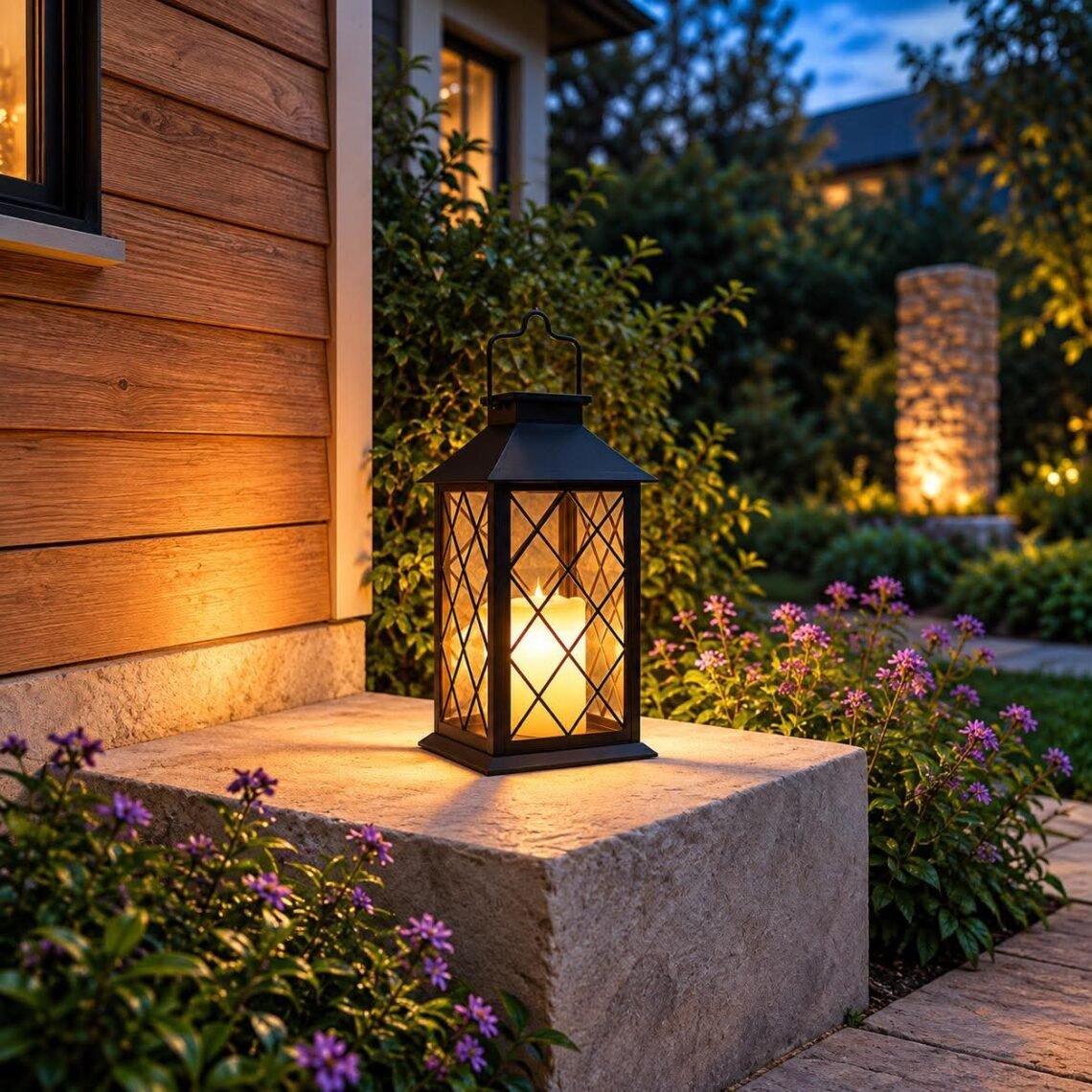
A patio can look perfectly pleasant during the day and strangely unfinished after sunset. The furniture is still there, the plants have not changed, and the table may already be set, yet the space loses much of its character when one bright security light becomes the only visible feature.
Fixing this does not require new furniture or a complete garden makeover. Portable lanterns can change the atmosphere with far less effort. They work much like accessories in an outfit: a few carefully placed pieces can connect colors, introduce texture, and make a familiar setting feel ready for a different occasion.
Decide what the evening is for
Start with the activity rather than the decoration. A family dinner needs enough light to see plates and drinks. A quiet conversation after dinner can work with a softer glow near the seating. A larger gathering needs clearer routes between the house, table, and garden.
Trying to make one lantern handle all three jobs usually leads to disappointment. Instead, identify the most important area and light that first. Once the table, seating group, or main route is comfortable, decorative pieces can be added around it.
This also prevents the patio from becoming cluttered. Lanterns are attractive objects during the day, but too many handles, frames, and shades can compete with planters and furniture. Begin with two or three useful positions, then review the effect from a distance.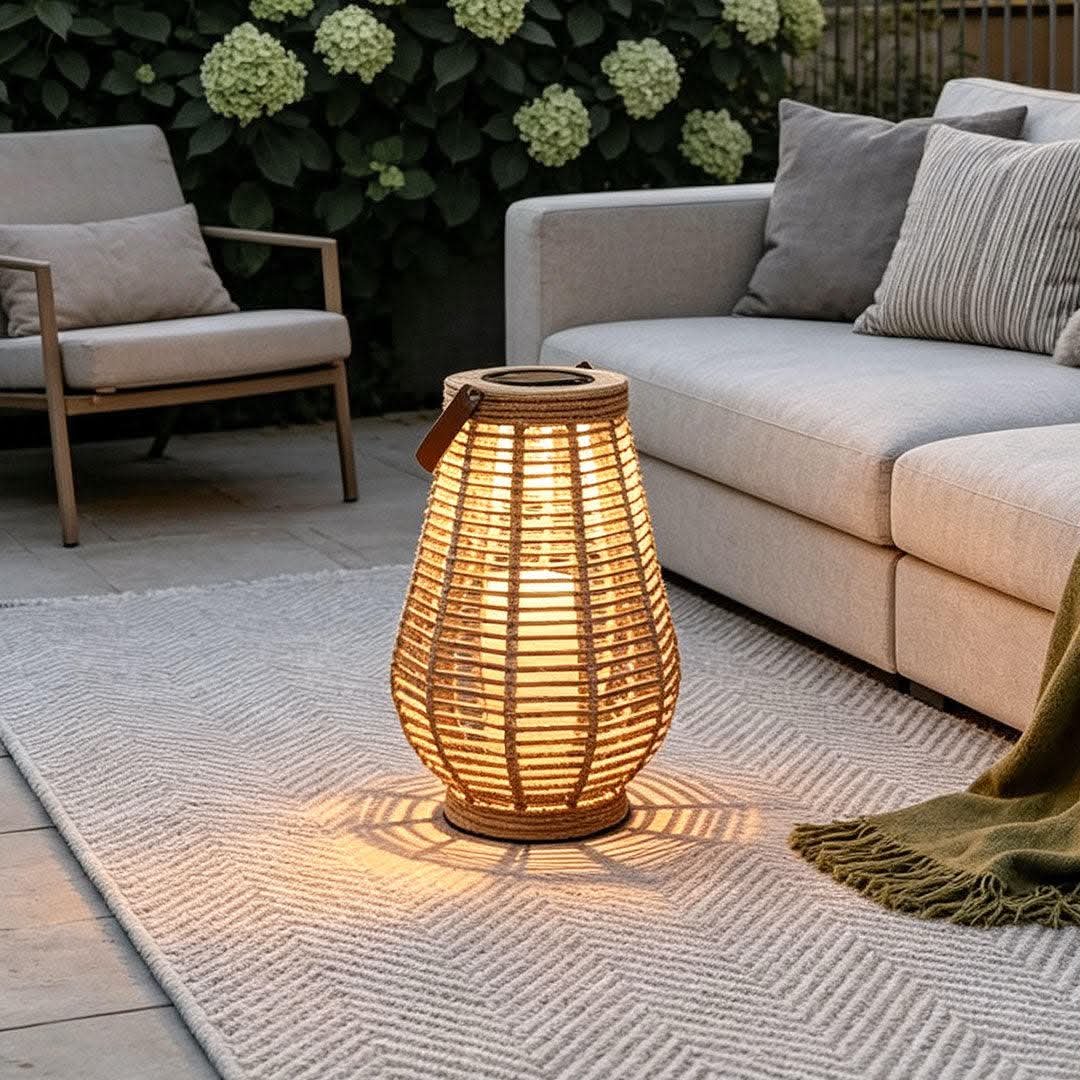
A single textured lantern can make a relaxed seating area feel more finished after sunset.
Use lanterns as part of the table setting
An outdoor dining table benefits from light at a lower level than a wall fixture or overhead floodlight can provide. A lantern placed near the center brings light closer to faces, food, and glassware while helping the gathering feel more intimate.
Scale is important. A tall lantern in the middle of a small table can block conversation. On a narrow table, one compact piece or a pair of smaller lanterns is usually easier to live with. A larger round table can support a more substantial centerpiece, although it should leave enough space for serving dishes.
If the lantern produces a strong glow, move it slightly away from direct eye level. Placing it between serving pieces or beside a low arrangement of greenery can soften its presence. Avoid surrounding it with tall dried stems, loose fabric, or other materials that may interfere with ventilation or safe operation.
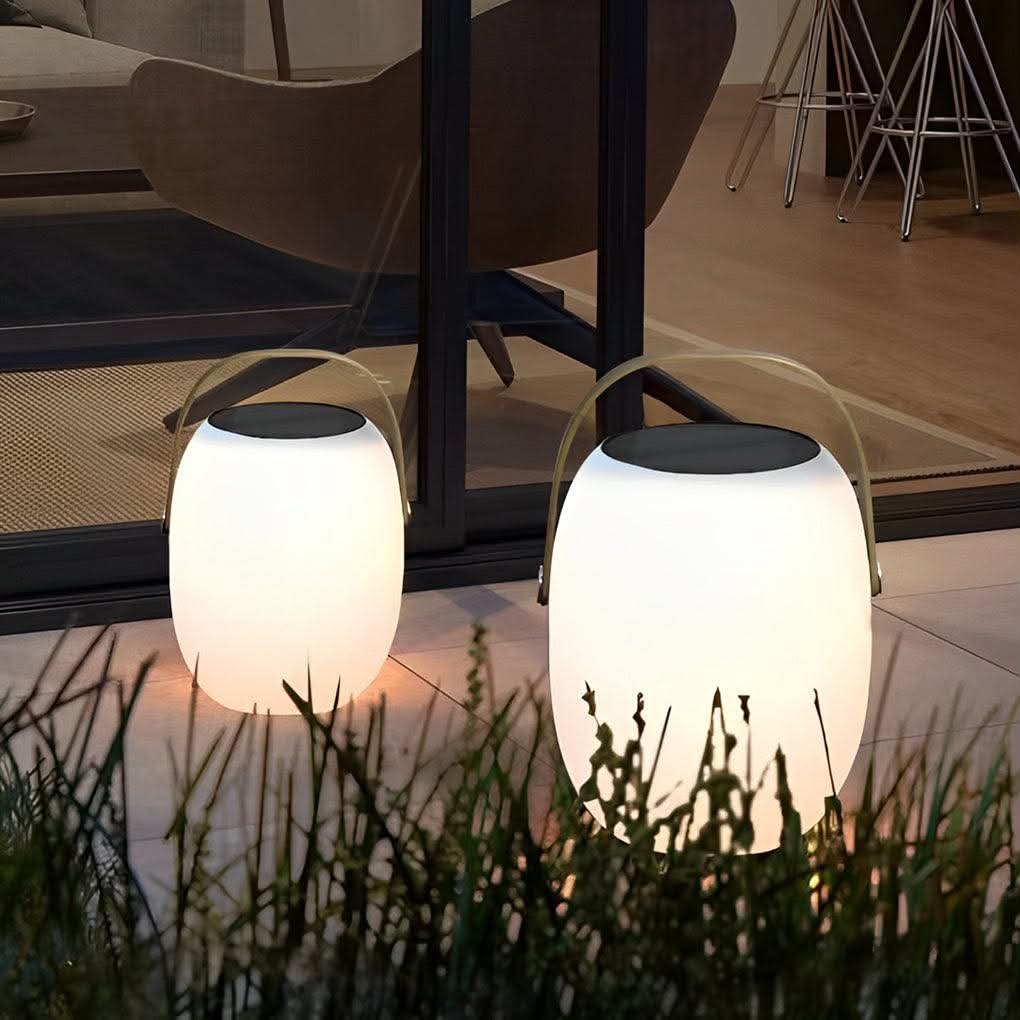 Compact lanterns illuminate the table without creating a visual barrier between guests.
Vary the height instead of repeating one arrangement
A row of identical lanterns can look formal, which may suit an entrance or structured walkway. Around a casual patio, varying the height usually feels more natural. Place one lantern on a side table, another on the ground beside a chair, and perhaps a third on a wide step or low garden wall.
The differences do not need to be dramatic. Even a few inches can stop the lighting from appearing like a shop display. If several lanterns belong to the same design family, mixing two sizes creates variety while keeping the arrangement visually connected.
Keep walking areas clear. A lantern on the ground should sit beside furniture, a planter, or the edge of a wall rather than in the middle of an open route. Guests looking toward the table may not notice a low object near their feet.
Match the material to the mood
Material changes the character of the light before the lantern is even switched on. Woven shades and rope handles feel relaxed and work naturally with wood, linen, greenery, and casual lounge furniture. A slim black frame looks sharper beside concrete, pale upholstery, metal furniture, or a modern pool.
Matching every finish is unnecessary. A black lantern can work on a timber deck, and a woven design can soften a contemporary patio. Look for one shared detail instead: the warm tone of the wood, the black line of a chair frame, or the texture of an outdoor rug.
When exploring Outdoor Lanterns, consider how each piece will look during daylight as well as at night. A fixture may spend more hours switched off than illuminated, so its size, texture, and color should still belong in the space.
Leave some darkness between the lights
A comfortable patio does not need uniform brightness. Small darker areas create depth and keep the illuminated seating or table from feeling exposed. They also allow plants and textured surfaces to appear gradually rather than flattening everything under one strong wash of light.
Do not place a lantern beside every chair or along every edge. Light the points that help people use the space: the table, a step, the transition to the house, and perhaps one garden feature. If the gaps between these locations feel unsafe, add practical path or wall lighting rather than asking decorative lanterns to do every job.
A restrained pool of light can define a conversation area while preserving the evening atmosphere.
Choose the power source for the way you live
Solar lanterns are useful where direct sunlight is available and wiring would be inconvenient. Before relying on them for a dinner or gathering, observe the charging location throughout the day. A patio that feels sunny in the morning may be shaded by the house during the strongest afternoon light.
Rechargeable lanterns offer more predictable preparation because they can be charged indoors and moved wherever needed. The tradeoff is remembering to recharge them. Keeping the charging cable in a labeled drawer near the patio door makes the routine much easier.
Hardwired designs suit permanent positions where consistent illumination matters. Installation should follow local electrical requirements, particularly in wet locations. For every type, check the stated outdoor or wet-location suitability rather than assuming that a portable appearance means the lantern can remain in heavy rain.
Check the effect from inside the house
After arranging the lanterns, step indoors and look through the windows. Outdoor areas are often part of the interior view, especially in the evening when dark glass can otherwise feel like a blank wall.
A lantern near a plant, chair, or textured wall can create a small scene that remains attractive from the living room. If all the light sources are visible at once, the arrangement may feel busy. Turning one lantern away or moving it behind a planter can make the light feel softer and more layered.
Plan for ordinary nights, not only parties
The best arrangement should be easy enough to use on an ordinary Tuesday. If setting it up requires carrying ten lanterns from a storage closet, it will probably be reserved for special occasions. Two or three pieces that can stay near the patio door or remain outside in suitable weather are more likely to become part of daily life.
Retailers such as Dazuma offer designs ranging from woven portable lights to structured modern frames, but the most useful choice is the one that fits your actual routine. Consider where it will charge, how often it must be moved, and where it can be stored during severe weather.
An outdoor evening does not need elaborate styling. A softly lit table, a clear step, and one warm glow beside the seating may be enough. When the lanterns support the activity instead of dominating it, the patio feels considered, comfortable, and ready to use.