Arabian clothing is more than just clothes. It shows culture, tradition, climate needs, and personal identity. In many Arab countries, people still wear traditional clothes every day. These clothes are made to be comfortable in hot weather and to follow cultural values like modesty and respect.
This guide explains Arabian clothing in a simple way. You will learn about the main clothes for men and women, how styles change by region, when these clothes are worn, and how traditional clothing is used in modern life.
1. What Is Arabian Clothing?
Arabian clothing means the traditional clothes worn in Arab countries, especially in the Middle East and parts of North Africa. These clothes are designed for:
-
Hot and dry weather
-
Comfort and easy movement
-
Modest dressing
-
Cultural and social traditions
-
Daily use and special events
Main Features of Arabian Clothing
| Feature | Simple Explanation |
|---|---|
| Loose fit | Clothes are not tight and allow air to pass |
| Long length | Covers the body and protects from sun |
| Light fabric | Keeps the body cool |
| Simple design | Clean and elegant look |
| Cultural meaning | Shows tradition and identity |
2. History and Culture Behind the Clothes
Arabian clothing started long ago. People needed clothes that could protect them from the strong sun, heat, and sand. Over time, these clothes became part of the culture and were passed down from parents to children.
What Influenced Arabian Clothing?
-
Weather: Hot desert climate
-
Culture: Respect and modesty
-
Religion: Encourages modest dress
-
Travel and trade: Brought new fabrics and styles
-
Local customs: Each area developed its own style
Read also: Complete Guide to Afghan Clothing
3. Different Styles in Different Regions
Arabian clothing is not the same in every country. Each region has small differences in style, color, and design.
Regional Clothing Styles
| Region | Common Clothes | Notes |
|---|---|---|
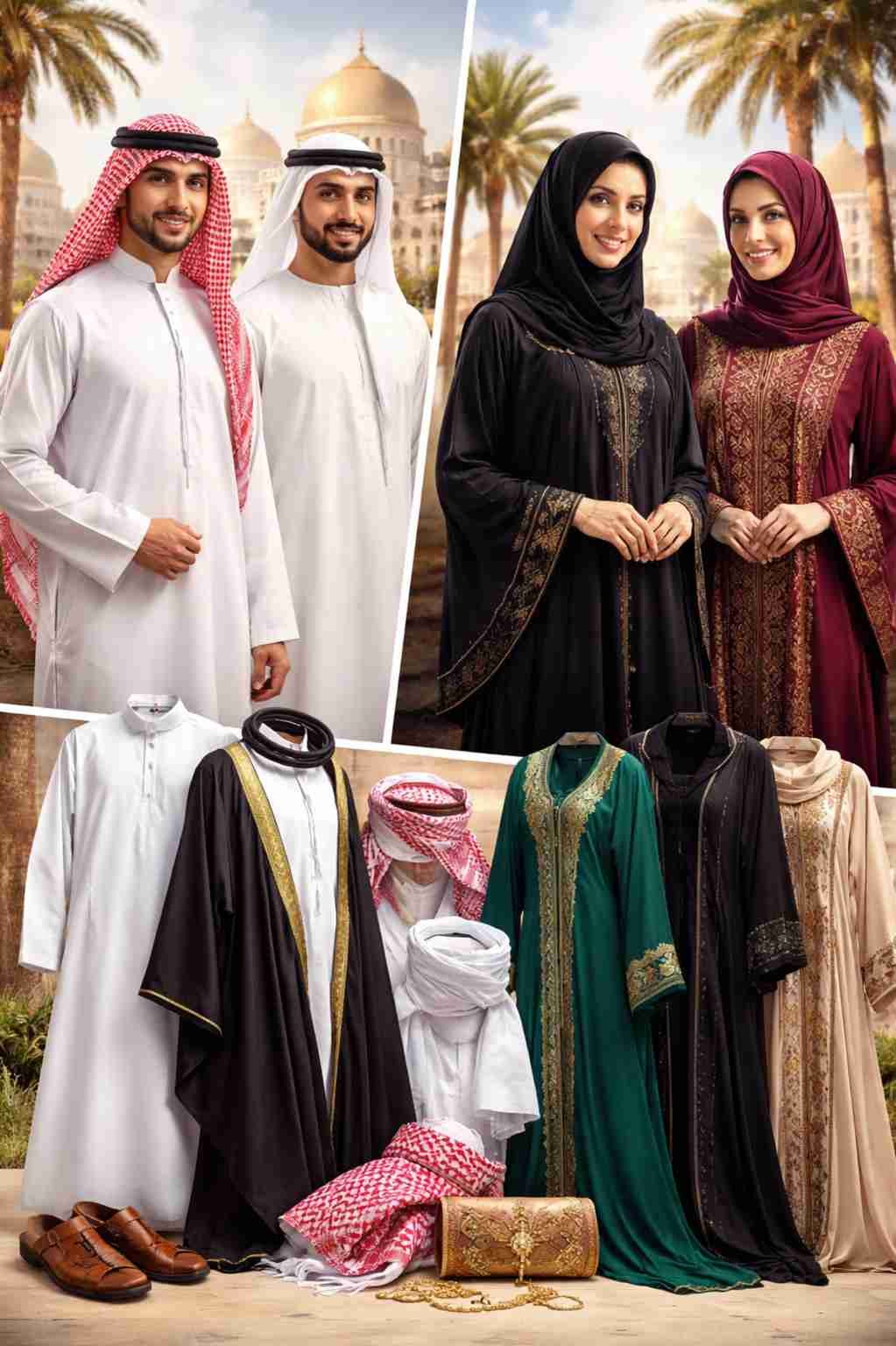
| Gulf countries (Saudi, UAE, Qatar) | Thobe, abaya | Often white for men, black for women |
| Levant (Jordan, Syria, Palestine) | Embroidered dresses | More colors and patterns |
| North Africa (Morocco, Egypt) | Jalabiya, kaftan | Mix of Arab and local styles |
4. Men’s Arabian Clothing
Men’s traditional clothing is simple, clean, and comfortable.
Main Clothes for Men
| Clothing | What It Is | Where It’s Common |
|---|---|---|
| Thobe | Long robe for men | Gulf countries |
| Kandura | Thobe in UAE | UAE |
| Dishdasha | Another name for thobe | Oman, Kuwait |
| Bisht | Cloak worn over thobe | Special events |
Men’s Accessories
Men often wear:
-
Ghutra (head scarf)
-
Shemagh (patterned head scarf)
-
Agal (black cord to hold scarf)
-
Sandals or shoes
When Men Wear These Clothes
| Time | Clothes Worn |
|---|---|
| Daily life | Simple thobe |
| Mosque visits | Clean, neat thobe |
| Weddings | Thobe with bisht |
| National events | Full traditional dress |
5. Women’s Arabian Clothing
Women’s clothing is modest and elegant. It can be simple for daily use or fancy for special events.
Main Clothes for Women
| Clothing | What It Is | Use |
|---|---|---|
| Abaya | Long outer coat | Worn over normal clothes |
| Jalabiya | Long dress | Home and gatherings |
| Thawb | Traditional dress | Cultural events |
| Kaftan | Fancy long dress | Weddings, parties |
Head Coverings
Women may wear:
-
Hijab (head scarf)
-
Shayla (long scarf, common in Gulf)
-
Khimar (long veil)
-
Niqab (face cover, worn by some women)
Not all women wear head coverings. It depends on personal choice and culture.
Women’s Accessories
-
Jewelry (often gold)
-
Handbags
-
Belts
-
Sandals or heels
6. How to Wear Arabian Clothing (Simple Guide)
For Men
Basic outfit:
-
Clean thobe
-
Ghutra or shemagh
-
Agal
-
Simple shoes or sandals
For Women
Basic outfit:
-
Abaya over normal clothes
-
Hijab or scarf (if worn)
-
Simple jewelry
Best Fabrics for Weather
| Weather | Best Fabric |
|---|---|
| Hot | Cotton, linen |
| Cool | Thicker cotton |
| Special events | Silk or shiny fabrics |
7. When Are These Clothes Worn?
| Occasion | Type of Clothing |
|---|---|
| Daily wear | Simple thobe or abaya |
| Work | Neat traditional clothes |
| Religious holidays | Clean and formal clothes |
| Weddings | Fancy traditional clothes |
| Festivals | Traditional styles |
8. Modern Changes in Arabian Clothing
Today, Arabian clothing is changing. Designers are making clothes that are:
-
More fitted
-
More colorful
-
Styled for young people
-
Mixed with modern fashion
Traditional vs Modern Styles
| Feature | Traditional | Modern |
|---|---|---|
| Fit | Loose | Slightly fitted |
| Colors | White, black | Many colors |
| Design | Simple | More decoration |
| Style | Classic | Fashionable |
9. Common Myths About Arabian Clothing
| Myth | Truth |
|---|---|
| All Arabs dress the same | Styles change by country |
| These clothes are only religious | They are also cultural |
| Traditional clothes are old-fashioned | Many people wear them today |
| Women have no fashion choice | Women choose styles in many ways |
10. Craft and Sustainability
In the past, clothes were made to last a long time. People repaired clothes instead of throwing them away.
Today’s Trends
-
Better quality fabrics
-
Support for local tailors
-
Less waste
-
Eco-friendly fashion
11. Simple Glossary
| Word | Meaning |
|---|---|
| Thobe | Long robe for men |
| Kandura | Thobe in UAE |
| Abaya | Long coat for women |
| Hijab | Head scarf |
| Ghutra | Men’s head scarf |
| Agal | Black cord for scarf |
| Bisht | Formal cloak |
| Jalabiya | Long dress |
Conclusion
Arabian clothing is a strong part of Arab culture. It shows tradition, respect, and identity. These clothes are also practical for hot weather and daily life. Even today, people wear traditional clothing with pride, while also adding modern styles and designs.
By learning about Arabian clothing, we can better understand Arab culture and the meaning behind these beautiful and practical clothes.