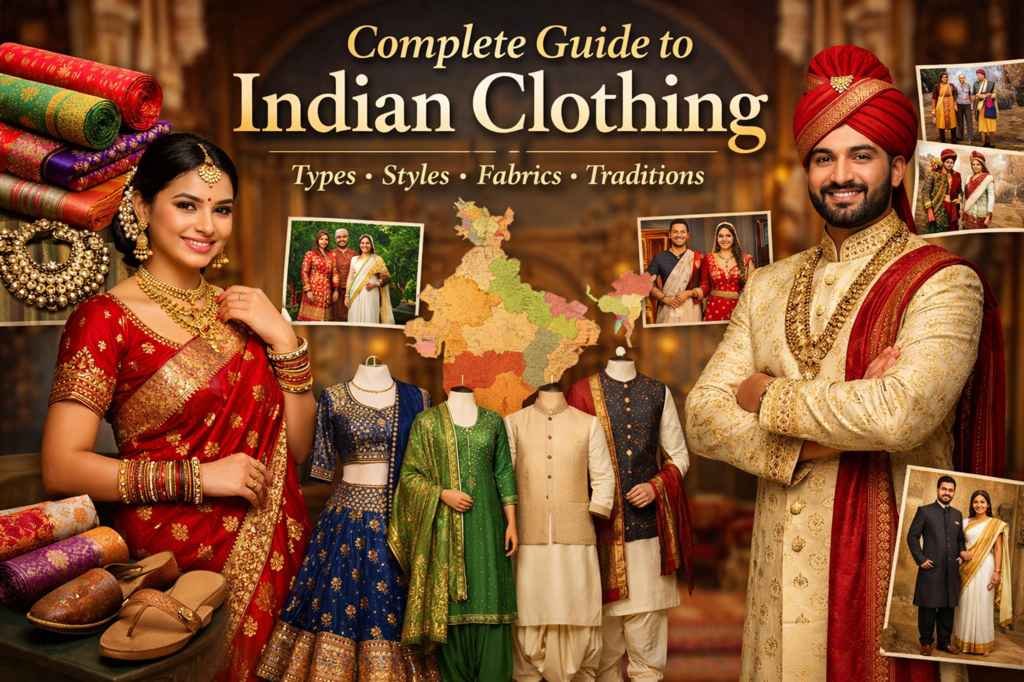
Indian clothing is colorful, comfortable, and full of tradition. It has been shaped by history, culture, weather, and local customs. Different parts of India have different styles of clothing. Some clothes are worn every day, while others are worn for festivals, weddings, and special events.
This guide explains Indian clothing in a simple way. It covers fabrics, women’s and men’s clothes, regional styles, accessories, styling tips, buying advice, care, and modern trends.
1. What Is Indian Clothing?
Indian clothing includes traditional, ethnic, and modern clothes that come from India. These clothes are made to suit different climates, cultures, and occasions.
Main Types of Indian Clothing
| Type | Meaning |
|---|---|
| Traditional | Old styles worn for rituals and customs |
| Ethnic | Modern versions of traditional clothes |
| Fusion | Mix of Indian and Western styles |
| Contemporary | Modern fashion inspired by Indian designs |
Indian clothing is worn by people of all ages and genders and is popular both in India and around the world.
2. Main Elements of Indian Clothing
2.1 Fabrics Used in Indian Clothing
India is famous for its textiles. The fabric used depends on the weather and the occasion.
Common Natural Fabrics
-
Cotton – light, breathable, good for daily wear
-
Silk – rich and shiny, used for weddings and festivals
-
Wool – worn in cold regions
-
Linen – cool and comfortable
Famous Indian Silks
-
Banarasi Silk
-
Kanjeevaram Silk
-
Tussar Silk
-
Chanderi Silk
-
Mulberry Silk
Modern Fabrics
-
Georgette
-
Chiffon
-
Crepe
-
Velvet
-
Organza
2.2 Embroidery and Textile Work
Indian clothes often have beautiful handwork.
| Type of Work | Area | Description |
|---|---|---|
| Zari / Zardozi | North India | Gold or silver thread work |
| Chikankari | Lucknow | Light and delicate embroidery |
| Phulkari | Punjab | Bright flower designs |
| Kantha | Bengal | Simple hand stitches |
| Bandhani | Gujarat/Rajasthan | Tie and dye patterns |
| Ikat | Odisha/Andhra | Dyed thread designs |
| Kalamkari | Andhra Pradesh | Hand-painted fabric |
3. Traditional Indian Clothing for Women
3.1 Saree
The saree is one of the most popular Indian clothes for women.
Main Features of a Saree:
-
Long piece of cloth (5–9 meters)
-
Worn with a blouse and skirt (petticoat)
-
Draped in different styles
Popular Sarees by Region
| Region | Saree Type |
|---|---|
| Uttar Pradesh | Banarasi Saree |
| Tamil Nadu | Kanjeevaram Saree |
| West Bengal | Baluchari Saree |
| Maharashtra | Paithani Saree |
| Assam | Muga Silk Saree |
Sarees can be worn for daily use, office wear, festivals, and weddings.
3.2 Salwar Kameez
The salwar kameez is comfortable and easy to wear.
Parts of Salwar Kameez:
-
Kameez (long top)
-
Bottoms (salwar, churidar, or palazzo)
-
Dupatta (scarf)
Common Types
-
Anarkali Suit
-
Patiala Suit
-
Straight-Cut Suit
It is popular with women of all ages.
3.3 Lehenga Choli
The lehenga choli is mainly worn at weddings and festivals.
Parts:
-
Lehenga (long skirt)
-
Choli (blouse)
-
Dupatta
Types of Lehengas
-
Bridal Lehenga
-
Festive Lehenga
-
A-line Lehenga
-
Panelled Lehenga
3.4 Other Women’s Clothes
-
Ghagra
-
Sharara
-
Gharara
-
Kurti
-
Indo-Western outfits
Read also: Complete Guide to South African Clothing
4. Traditional Indian Clothing for Men
4.1 Kurta and Pajama
-
Long shirt worn with pajama or churidar
-
Suitable for daily wear and festivals
4.2 Sherwani
-
Formal long coat
-
Worn mostly at weddings
-
Often worn with a stole and turban
4.3 Dhoti and Lungi
-
Unstitched clothes
-
Worn mainly in traditional and religious settings
4.4 Other Men’s Clothes
| Clothing | Used For |
|---|---|
| Bandhgala | Formal events |
| Nehru Jacket | Semi-formal wear |
| Pathani Suit | Casual and festive |
| Angarkha | Traditional wear |
5. Regional Styles of Indian Clothing
Each region of India has its own clothing style.
| Region | Clothing Style |
|---|---|
| North India | Phulkari work, Patiala salwar, pheran |
| South India | Kanjeevaram sarees, veshti |
| East India | Cotton and silk sarees |
| West India | Bandhani and mirror work |
| Central India | Tribal prints and handloom |
6. Indian Clothing for Special Occasions
Wedding Clothing
-
Brides wear sarees or lehengas
-
Grooms wear sherwani, bandhgala, or dhoti-kurta
Festival Clothing
-
Diwali – Bright ethnic wear
-
Eid – Elegant suits and kurtas
-
Navratri – Colorful ghagra choli
-
Durga Puja – Traditional sarees
Daily and Office Wear
-
Cotton sarees
-
Kurtis
-
Simple salwar suits
-
Indo-Western sets
7. Accessories and Footwear
Jewelry
-
Gold jewelry
-
Silver jewelry
-
Kundan and polki
-
Temple jewelry
Footwear
| Footwear | Usage |
|---|---|
| Jutti | Festivals |
| Mojri | Traditional events |
| Kolhapuri | Casual wear |
Other Accessories
-
Dupatta
-
Stole
-
Turban
-
Waist belt (kamarbandh)
8. How to Style Indian Clothing
Simple Styling Tips
-
Choose clothes that suit your body shape
-
Do not wear heavy jewelry with heavy clothes
-
Mix modern shoes with traditional clothes
-
Use jackets or belts for a modern look
9. How to Choose the Right Indian Outfit
| Thing to Check | Why It Matters |
|---|---|
| Occasion | Wedding, festival, or daily use |
| Weather | Cotton for summer, silk for winter |
| Culture | Respect local customs |
| Fit | Comfortable and correct size |
10. Buying Indian Clothing
Buying Tips
-
Check fabric quality
-
Prefer handloom clothes
-
Compare online and local shops
-
Support ethical and local brands
11. Care and Storage of Indian Clothing
Care Tips
-
Dry clean silk and heavy clothes
-
Hand wash cotton clothes
-
Store clothes in cloth covers
-
Keep away from moisture and sunlight
12. Modern Trends in Indian Clothing
Popular trends today include:
-
Indo-Western fashion
-
Sustainable and eco-friendly clothing
-
Ready-to-wear sarees
-
Soft pastel colors
-
Simple embroidery
13. Indian Clothing for Kids
Children’s Indian clothing focuses on:
-
Soft fabrics
-
Comfortable fitting
-
Simple designs
-
Festive wear for special occasions
14. Conclusion
Indian clothing is not just about fashion. It shows culture, tradition, and history. From simple daily wear to rich wedding outfits, Indian clothes offer something for everyone. By understanding fabrics, styles, regions, and care, anyone can enjoy and appreciate the beauty of Indian clothing.