Papua New Guinea (PNG) is one of the most diverse countries in the world. Many tribes live there, and each tribe has its own clothing, customs, and traditions. Clothing in PNG is not just something people wear. It also shows who they are, where they come from, and what they believe.
This guide explains traditional PNG clothing, modern clothing, festival outfits, and what travelers should wear. Everything is written in simple English to make it clear and easy to understand.
1. Why Clothing in Papua New Guinea Is Special
Clothing in PNG is special for three reasons:
A. Culture
-
Each tribe has its own style of dress.
-
Traditional clothing shows:
-
Clan or tribe
-
Social rank
-
Role in ceremonies
-
Respect for ancestors
-
B. Natural Materials
Traditional clothes are made from nature, such as:
-
Bark (tapa cloth)
-
Grass and leaves
-
Shells
-
Pig tusks
-
Feathers
-
Natural paint
C. Climate
PNG has different climates in different areas.
| Region | Weather | Clothing Needs |
|---|---|---|
| Coastal areas | Hot, humid | Light, cool clothes |
| Highlands | Cool mornings/nights | Light jacket, long pants |
| Whole country | Sun + rain | Sun hat, umbrella or raincoat |
2. Traditional Papua New Guinea Clothing (Bilas)
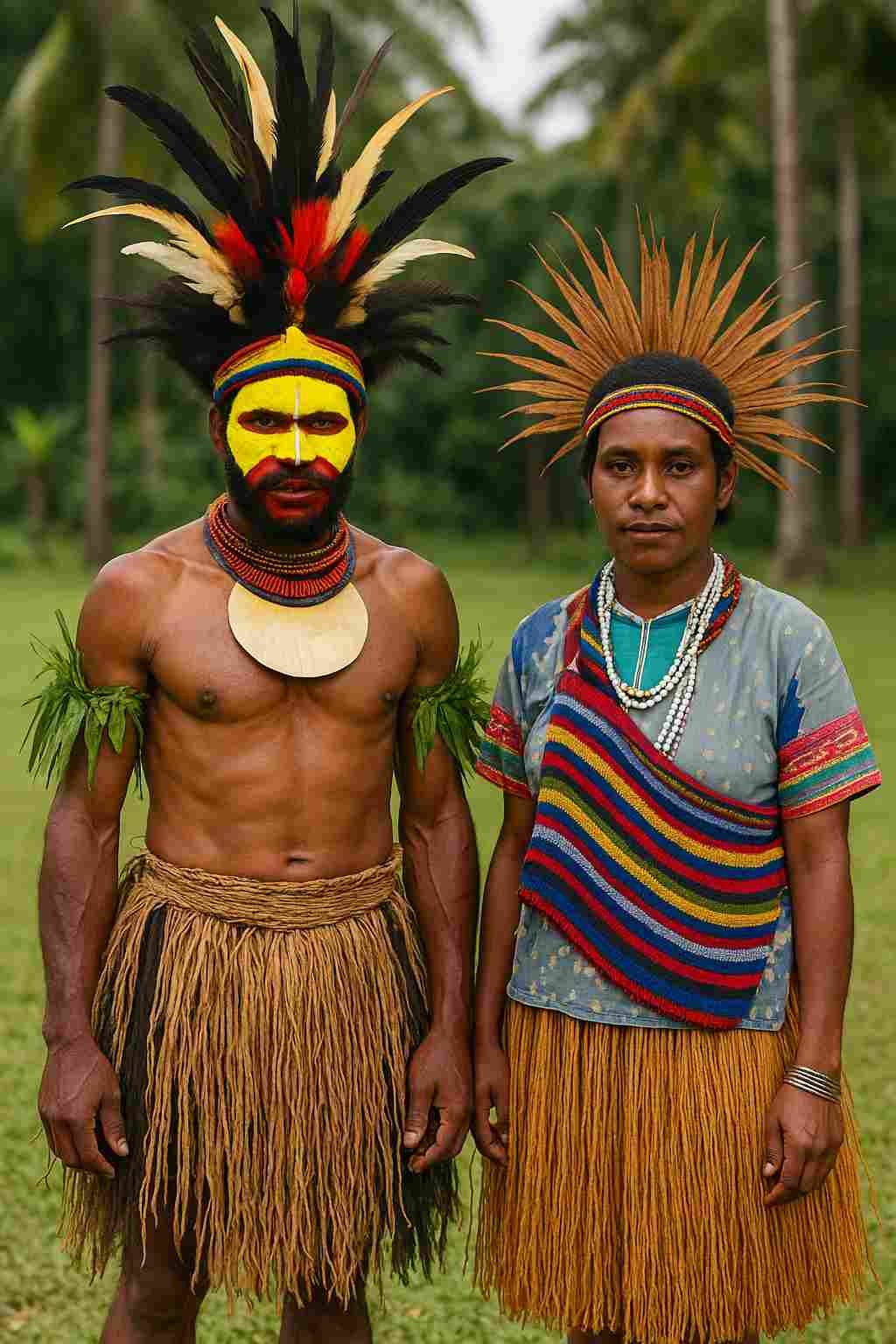
Traditional clothing is called bilas. Bilas is colorful and meaningful. It is worn for dancing, festivals, weddings, and other special events.
2.1 Traditional Clothing by Region
Highlands Tribes
The Highlands are very famous for bright and bold clothing. Men often wear:
-
Huli wigs (made from human hair)
-
Feathers (especially bird-of-paradise feathers)
-
Grass skirts
-
Colorful face paint
-
Kina shells and big necklaces
Sepik Region
Known for beautiful art and masks:
-
Big clay or wooden masks
-
Woven skirts
-
Shell jewelry
-
Painted bodies
Coastal and Island Tribes
Clothes are made from plants and shells:
-
Tapa cloth wraps
-
Leaf or grass skirts
-
Shell necklaces
-
Simple feather decorations
New Ireland & East New Britain
These places have special ceremonies:
-
Malagan masks
-
Shell money used as decoration
-
Strong and bright body paint
2.2 Materials Used in Traditional Clothing
| Material | How It’s Used |
|---|---|
| Feathers | For headdresses and wigs |
| Bark/Tapa cloth | Skirts and wraps |
| Leaves/Grass | Skirts and belts |
| Shells | Jewelry |
| Pig tusks | Status symbols |
| Natural paint | Face and body art |
2.3 Traditional Clothing for Men
Men usually wear:
-
Grass skirts
-
Tapa cloth around the waist
-
Feathers on the head
-
Shell necklaces
-
Armbands and ankle bands
-
Body paint
What it means:
-
Feathers = beauty and importance
-
Shells = wealth
-
Colors = tribal identity
2.4 Traditional Clothing for Women
Women often wear:
-
Layered grass skirts
-
Tapa cloth wraps
-
Bilums (woven bags) over the shoulder
-
Shell jewelry
-
Light face paint for ceremonies
3. Modern Clothing in PNG
Today, many people in PNG wear modern clothes, especially in cities.
3.1 Everyday Clothing in Cities
Common clothes include:
-
T-shirts
-
Jeans or trousers
-
Cotton dresses
-
Blouses
-
School or work uniforms
3.2 Clothing in Rural Areas
Rural villages prefer modest and respectful clothing.
For Visitors:
-
Wear clothes that cover your shoulders.
-
Women should wear long skirts or long pants.
-
Men should not wear very short shorts.
-
Tight or revealing clothing is not acceptable in many areas.
4. Festival and Sing-Sing Clothing
PNG is famous for its cultural shows called sing-sings. These are big gatherings where tribes dance, sing, and show their traditional clothing.
People wear:
-
Very tall feather headdresses
-
Bright face and body paint
-
Grass skirts
-
Shell necklaces
-
Pig tusks and bones
-
Drums or spears
What Festival Clothing Shows
-
Pride in tribe
-
History of warriors
-
Connection to nature
-
Role in the ceremony
Read also: Complete Guide to Mongolian Clothing
5. What Travelers Should Wear in Papua New Guinea
Travelers should dress for both the weather and the culture.
5.1 Clothing for the Climate
Lowlands (hot and humid)
-
Light shirts
-
Loose pants or knee-length skirts
-
Breathable fabrics like cotton
Highlands (cool)
-
Light jacket
-
Long pants
-
Comfortable closed shoes
Rainy Weather
-
Raincoat or poncho
-
Quick-dry clothes
-
Waterproof shoes if hiking
5.2 Cultural Rules and Respect
Women Should:
-
Wear long skirts or loose pants
-
Cover shoulders
-
Avoid mini-skirts and short shorts
Men Should:
-
Wear long pants or knee-length shorts
-
Avoid very short sports shorts in villages
General Rules
-
Dress modestly, especially in villages and churches
-
Do not try to copy traditional bilas unless invited
5.3 Best Footwear for PNG
| Activity | Best Footwear |
|---|---|
| Village visits | Closed shoes or walking shoes |
| Highlands | Hiking shoes or boots |
| Festivals | Closed-toe shoes (ground may be muddy) |
| Hotels/Beaches | Sandals or flip-flops |
5.4 Useful Accessories
-
Sun hat
-
Sunglasses
-
Insect repellent
-
Light scarf for modesty
-
Rain jacket
-
Quick-dry clothing
-
Local bilum bag (helps carry items and supports local women)
6. Packing Lists for Travelers
6.1 Women’s Packing List
-
3–5 light shirts
-
2–3 long skirts or loose trousers
-
1–2 modest dresses
-
Light jacket or fleece
-
Closed walking shoes
-
Sandals
-
Rain jacket
-
Scarf or shawl
-
Swimwear (for hotels or beaches only)
6.2 Men’s Packing List
-
3–5 T-shirts
-
2–3 long pants
-
1–2 pairs of longer shorts
-
Light jacket
-
Walking shoes or boots
-
Sandals
-
Hat and sunglasses
-
Raincoat
7. Buying Clothing and Souvenirs in PNG
Visitors can buy beautiful handmade items.
Popular Souvenirs
-
Bilums
-
Shell necklaces
-
Woven skirts
-
Tapa cloth paintings
-
Feather-free headdresses (ethical versions)
Tips for Buying
-
Buy directly from local artisans
-
Avoid items made with protected birds
-
Support women’s craft groups
8. Keeping PNG Clothing Traditions Alive
PNG communities continue to protect traditional clothing.
How They Pass Down Knowledge
-
Elders teach the meaning of bilas
-
Young people learn weaving, mask making, and painting
-
Festivals show traditional clothing to the world
Modern Changes
-
Designers use tapa patterns in new clothing
-
Bilum-inspired fashion is growing
-
Young people mix modern and traditional looks with pride
Conclusion
Papua New Guinea’s clothing is full of life, history, and meaning. Traditional bilas shows the beauty and strength of the tribes. Modern clothing is simple and practical. For visitors, dressing modestly and comfortably makes travel safer and more respectful.
When you understand PNG clothing, you understand a big part of PNG culture. Whether you are watching a sing-sing festival, visiting a highland village, or shopping at a market, clothing helps connect you to the people and their stories.