Polish clothing is colorful, traditional, and full of meaning. It comes from many regions, each with its own style. Today, people in Poland wear modern clothes, but traditional outfits are still used during festivals and celebrations.
This guide explains the history of Polish clothing, the different folk costumes, and what people wear in Poland today. The language is simple and easy to follow.
1. Short History of Polish Clothing
Polish clothing has changed over hundreds of years. At first, people wore simple clothes made from wool, linen, and leather. As time passed, Poland was influenced by neighbors like Germany, Hungary, Russia, and Lithuania. These influences shaped the clothing styles.
Important points
-
Early clothing: simple, natural materials
-
Middle Ages: more embroidery, coats, cloaks, and decorated shirts
-
18th–19th century: each region developed its own folk costume
-
20th century: folk clothing used mostly for special events, not everyday life
Even today, folk costumes are an important part of Polish culture.
2. Features of Polish Folk Clothing
Polish traditional clothing is known for:
Common features
-
Bright colors (red, blue, green, gold)
-
Beautiful floral and geometric embroidery
-
Clothes made from wool, velvet, leather, and linen
-
Many layers
-
Special jewelry and headdresses
Traditional clothing is handmade, and every region has its own patterns and style.
3. Basic Garments Used in Folk Clothing
Table 1 – Main Clothing Items
| Polish Name | English Name | Description | Who Wears It? |
|---|---|---|---|
| Gorset | Corset | Velvet, embroidered, worn over the blouse | Women |
| Spódnica | Skirt | Full, colorful, often floral | Women |
| Fartuch | Apron | Embroidered, worn on top of the skirt | Women |
| Koszula | Shirt/Blouse | White linen, sometimes lace or embroidery | Men & Women |
| Chusta | Shawl | Worn around shoulders | Women |
| Wianek | Flower wreath | Headpiece for unmarried women | Women |
| Kierpce | Leather shoes | Simple mountain-region shoes | Men & Women |
| Pas | Belt | Wide, decorated | Men |
| Kapelusz | Hat | Styles vary by region | Men |
4. Folk Costumes From Different Regions
Poland has many regions, and each one has its own traditional costume. Here are the main ones:
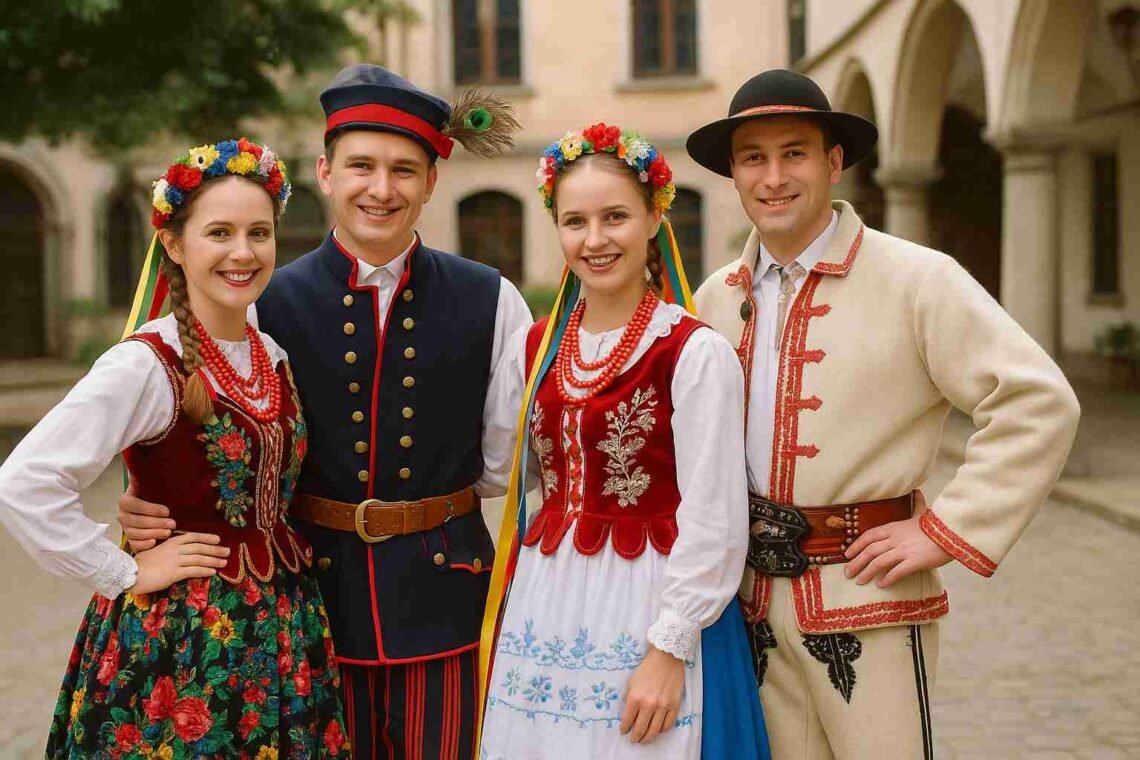
4.1 Kraków (Małopolska)
This is the most famous Polish folk costume.
Women
-
Embroidered corset
-
Floral skirt
-
Lace blouse
-
Colorful apron
-
Flower wreath with ribbons
-
Red bead necklace
Men
-
Striped trousers
-
Embroidered vest
-
Boots
-
Hat with a peacock feather
Read also: Complete Guide to Romanian Clothing
4.2 Mazowsze (Central Poland)
Simple and elegant clothing.
Features
-
Mostly white linen
-
Red and black embroidery
-
Clean geometric designs
-
Long wool coats for men
4.3 Podhale (Góral Highlands)
Folk clothing from the mountains.
Key parts
-
White wool trousers with special ram-horn designs
-
Colorful embroidered vests
-
Kierpce shoes
-
Small round hats
-
Women wear bright skirts and corsets
4.4 Silesia (Śląsk)
Rich, heavy, and elegant outfits.
Features
-
Gold and black fabrics
-
Large lace collars
-
Fancy headpieces
-
Decorative vests
4.5 Kashubia (Kaszuby)
Known for blue and gold embroidery.
Look
-
Blue floral patterns
-
Simple white blouses
-
Light, clean styles
-
Flowers like tulips and lilies used in designs
4.6 Lublin / Biłgoraj Region
Characteristics
-
Mostly plain linen clothing
-
Very old-fashioned styles
-
Special women’s cap called chamełka
-
Simple but traditional look
5. Comparison of Regional Costumes
Table 2 – Differences Between Regions
| Region | Colors | Special Features | Style |
|---|---|---|---|
| Kraków | Red, multicolor | Embroidered corset, flower wreath | Festive & bright |
| Mazowsze | White, red, black | Geometric embroidery | Clean & simple |
| Podhale | White, black, red | Leather shoes, ram-horn patterns | Strong & mountain-style |
| Silesia | Black, gold | Heavy fabric, tall headpieces | Fancy & elegant |
| Kashubia | Blue, gold | Unique embroidery | Artistic |
| Lublin/Biłgoraj | Natural linen | Old-style headdress | Rustic |
6. When Poles Wear Traditional Clothing Today
Traditional clothing is used during:
Holidays & National Events
-
Constitution Day (May 3)
-
Independence Day
Religious Events
-
Church processions
-
First Communion ceremonies (in some areas)
Festivals
-
Harvest festivals (Dożynki)
-
Folk music and dance festivals
Weddings and Family Events
-
Special performances
-
Photos and celebrations
Tourist Areas
-
Folk restaurants
-
Mountain towns like Zakopane
7. Modern Clothing in Poland
Today, Polish people usually wear modern European-style clothing. The style is clean, simple, and neat.
7.1 Everyday Style
-
Neutral colors like black, beige, grey
-
Long coats in winter
-
Jeans, sweaters, shirts
-
Stylish but comfortable shoes
7.2 Clothing by Season
Winter
-
Thick coats
-
Warm boots
-
Scarves, gloves, hats
Spring / Autumn
-
Layers
-
Light jackets
-
Comfortable boots
Summer
-
Linen shirts
-
Cotton dresses
-
Sandals or sneakers
7.3 Dress Codes
-
Church: modest, respectful
-
Work: smart casual or business wear
-
Nightlife: stylish clothing, often dressier than in some countries
-
Mountains/outdoors: hiking clothes, waterproof jackets
8. Traditional Clothing in Modern Fashion (Ethno-Fashion)
Many designers in Poland use folk patterns in modern clothes. This is called ethno-fashion.
Examples
-
Dresses with Kashubian embroidery
-
Leather jackets with Góral designs
-
Bags and scarves with floral patterns
-
Modern corsets inspired by the traditional gorset
This keeps old traditions alive while creating new, stylish clothing.
9. How to Buy Polish Folk Clothing
Where to Buy
-
Folk museums
-
Artisan shops
-
Online folk stores
-
Markets and festivals
Tips
-
Choose hand embroidery if possible
-
Look for good-quality fabric
-
Check if the patterns match the real regional style
Modern Options
-
Folk-inspired dresses
-
Embroidered scarves
-
Jewelry with traditional designs
10. Simple Glossary of Polish Clothing Words
Table 3 – Glossary
| Polish Word | English Meaning |
|---|---|
| Gorset | Corset |
| Spódnica | Skirt |
| Fartuch | Apron |
| Koszula | Shirt / blouse |
| Chusta | Shawl |
| Wianek | Flower wreath |
| Kierpce | Leather shoes |
| Portki | Highlander trousers |
| Kapelusz | Hat |
| Pas | Belt |
Conclusion
Polish clothing is full of beauty, history, and culture. Every region has its own style, colors, and patterns. Today, people usually wear modern clothing, but traditional costumes are still very important during holidays, festivals, and family celebrations. Folk designs also inspire many modern fashion trends in Poland. Polish clothing shows the pride, creativity, and spirit of the Polish people. It is a wonderful way to learn about the country’s past and present.