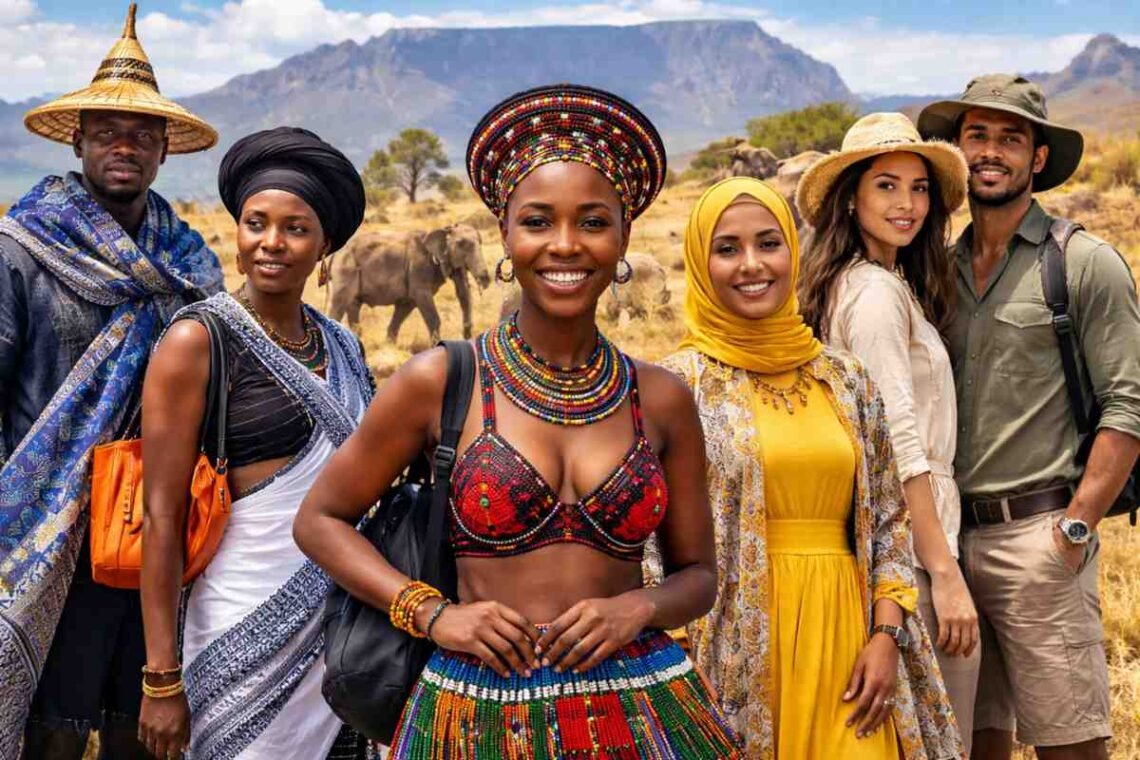
South African clothing shows the country’s rich culture, history, and way of life. What people wear in South Africa is shaped by weather, traditions, daily life, and modern fashion. Clothing can be very different depending on the place, the season, and the occasion.
This guide explains traditional clothing, fabrics, modern fashion, travel clothing, and practical tips to help you understand South African clothing easily.
1. Climate and Clothing in South Africa
South Africa has different types of weather. This strongly affects how people dress.
Important Climate Facts
-
Summers can be very hot
-
Winters are mild but mornings and nights can be cold
-
Weather can change during the day
-
Safari areas are dusty and dry
Because of this, people often wear layers.
Seasons and Clothing Needs
| Season | Months | Weather | What to Wear |
|---|---|---|---|
| Summer | Nov–Mar | Hot, sunny | Light clothes |
| Autumn | Apr–May | Mild | Light layers |
| Winter | Jun–Aug | Cold mornings | Jackets, sweaters |
| Spring | Sep–Oct | Warm days, cool nights | Layered clothing |
2. Traditional South African Clothing
Traditional clothing is very important in South Africa. It is often worn for ceremonies, weddings, and cultural events.
Zulu Clothing
-
Beaded necklaces and skirts
-
Animal skins for special events
-
Bead colors show age and marriage status
Xhosa Clothing
-
Colors: black, white, and red
-
Shawls and headscarves
-
Worn during important life stages
Sotho and Tswana Clothing
-
Famous Basotho blanket
-
Straw hat called mokorotlo
-
Used for warmth and identity
Ndebele Clothing
-
Bright colors and bold patterns
-
Heavy beadwork
-
Neck rings show life stages
Cape Malay and Muslim Clothing
-
Modest clothing styles
-
Long dresses and head coverings
-
Influenced by religion
Traditional Clothing Summary
| Culture | Main Clothing | Meaning |
|---|---|---|
| Zulu | Beaded skirts, skins | Status |
| Xhosa | Shawls, headscarves | Tradition |
| Sotho | Basotho blanket | Identity |
| Ndebele | Beaded jewelry | Life stages |
| Cape Malay | Modest dress | Religion |
3. Traditional Fabrics and Materials
South African clothing uses special fabrics and handmade items.
Common Materials
-
Shweshwe fabric – printed cotton
-
Beads – used to send messages
-
Animal skins – used in ceremonies
-
Embroidery – decoration
Shweshwe Fabric Table
| Feature | Description |
|---|---|
| Fabric | Cotton |
| Patterns | Repeating designs |
| Use | Dresses, skirts |
| Care | Gentle washing |
4. Modern Fashion in South Africa
Modern South African fashion mixes traditional styles and global trends.
Fashion Features
-
Streetwear and casual styles
-
Afro-inspired designs
-
Eco-friendly and ethical brands
City Fashion Styles
-
Johannesburg: Bold and modern
-
Cape Town: Relaxed and simple
-
Durban: Bright and warm-weather styles
5. What to Wear in South Africa
5.1 Clothing by Season
Summer
-
T-shirts
-
Dresses
-
Shorts
-
Sandals
-
Sun hats
Winter
-
Jeans
-
Long-sleeve shirts
-
Sweaters
-
Jackets
-
Closed shoes
Spring and Autumn
-
Light jackets
-
Cardigans
-
Scarves
5.2 What to Wear on Safari
Safari clothing should be comfortable and practical.
Best Safari Clothing
-
Neutral colors (beige, brown, green)
-
Long sleeves and pants
-
Comfortable shoes
-
Hat and sunglasses
Avoid Wearing
-
Bright colors
-
White clothing
-
Camouflage
-
Strong perfume
Safari Clothing Table
| Item | Why It Helps |
|---|---|
| Long sleeves | Sun and insect protection |
| Neutral colors | Do not scare animals |
| Hat | Protects from sun |
| Boots | Good for walking |
5.3 What to Wear in Cities
South African cities are stylish but relaxed.
Daytime
-
Jeans and t-shirts
-
Dresses
-
Sneakers
Evening
-
Smart-casual outfits
-
Dresses or nice shirts
-
Comfortable shoes
Work Clothing
-
Similar to international business wear
5.4 What to Wear at the Beach
-
Swimwear is normal
-
Flip-flops or sandals
-
Light cover-ups
-
Sun protection
5.5 Modesty and Culture
In rural areas and religious places:
-
Cover shoulders and knees
-
Avoid very revealing clothes
-
Dress respectfully
6. Accessories and Essentials
Useful Accessories
-
Hats and caps
-
Sunglasses
-
Scarves
-
Jewelry
-
Small backpacks or handbags
Footwear Guide
| Activity | Shoes |
|---|---|
| City | Sneakers |
| Safari | Walking boots |
| Beach | Sandals |
| Formal events | Dress shoes |
7. Clothing Colors and Meanings
Some colors have special meanings.
| Color | Meaning |
|---|---|
| White | Purity |
| Red | Strong feelings |
| Black | Respect |
| Bright colors | Celebration |
For safaris, neutral colors are best.
8. Clothing Care and Packing Tips
Care Tips
-
Wash delicate fabrics gently
-
Do not use strong chemicals
-
Air-dry clothes
Packing Tips
-
Pack clothes you can mix and match
-
Bring layers instead of heavy clothes
-
Laundry services are easy to find
-
Buy local clothing for souvenirs
9. Where to Buy South African Clothing
Best Places
-
Local markets
-
Craft stalls
-
Designer shops
-
Cultural villages
Buying local helps support artists and communities.
10. Sustainable and Ethical Fashion
Many South African brands focus on:
-
Fair pay for workers
-
Eco-friendly materials
-
Keeping traditional skills alive
11. Common Questions
Can visitors wear traditional clothing?
Yes, if worn with respect.
Is camouflage allowed?
It is not recommended, especially on safari.
Is South Africa strict about clothing?
Mostly relaxed, but modest dress is better in some places.
Conclusion
South African clothing is shaped by culture, weather, and modern life. From traditional garments to everyday fashion and travel clothing, what people wear tells an important story. Understanding South African clothing helps you dress comfortably, show respect, and enjoy the culture more deeply—whether you are visiting, studying, or simply learning.