Taiwanese clothing is full of color and meaning. It mixes old traditions with modern fashion. From beautiful tribal weaving to stylish city outfits, Taiwan’s clothes tell the story of its people and culture.
This guide explains how Taiwanese clothing has changed over time, what people wear today, and how you can dress comfortably and respectfully when visiting Taiwan.
2. History and Culture
2.1 Indigenous Traditions
Before Chinese people came to Taiwan, Indigenous tribes lived on the island. Each tribe had its own way of dressing and making clothes.
Common features of Indigenous clothing:
-
Made from natural fibers like ramie or banana fiber
-
Bright colors and strong patterns
-
Handmade weaving and bead decorations
| Tribe | Clothing Style | Meaning |
|---|---|---|
| Atayal | Red, white, and black woven cloth | Bravery and family history |
| Paiwan | Beaded and embroidered dresses | Social status and blessing |
| Amis | Red striped dresses | Joy and celebration |
| Rukai | Shells and woven designs | Respect for ancestors |
Each tribe’s clothing shows its unique identity and culture.
2.2 Han Chinese Influence
Later, Han Chinese settlers arrived from Fujian and Guangdong. They brought two main clothing styles — Minnan (Hoklo) and Hakka.
| Feature | Minnan (Hoklo) | Hakka |
|---|---|---|
| Fabrics | Light cotton | Dark blue cotton |
| Colors | Light and simple | Deep blue or purple |
| Purpose | Everyday comfort | Practical for farm work |
| Symbol | Simplicity | Hard work and honesty |
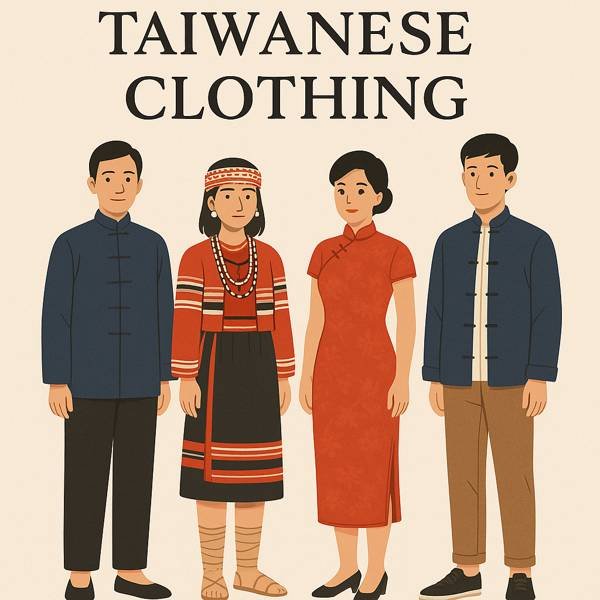
Men often wore long gowns (changshan) and short jackets (Tangzhuang). Women wore blouses and skirts or dresses like the qipao.
2.3 Japanese and Modern Influence
During Japanese rule (1895–1945), Western clothes became more common. Taiwan began using new fabrics and sewing methods.
After that, modern Taiwanese fashion started to mix traditional Chinese, Indigenous, and Western styles. Today, Taiwan’s fashion scene celebrates both tradition and creativity.
Read also: Complete Guide to Brazilian Clothing
3. Traditional and Modern Clothing
3.1 Traditional Men’s Clothing
-
Changshan: Long robe with a high collar
-
Tangzhuang: Short jacket with frog buttons
-
Casual wear: Cotton shirts and trousers
These are worn for festivals or formal events.
3.2 Traditional Women’s Clothing
-
Qipao (Cheongsam): Fitted dress with side slits and high collar
-
Hakka Apron: Embroidered apron with floral designs
-
Loose tops and skirts for daily wear
Modern qipaos use soft fabrics and colorful prints, making them comfortable for Taiwan’s warm weather.
3.3 Indigenous Clothing
Traditional tribal clothes are bright and handmade. Common items include:
-
Woven belts
-
Colorful headbands
-
Shell or bead jewelry
These are worn during special festivals and celebrations.
3.4 Modern Fashion in Taiwan
Taiwan’s young people love mixing old and new styles.
You’ll often see:
-
Streetwear with traditional prints
-
Eco-friendly fabrics like bamboo or linen
-
Designers who mix tradition with modern fashion
Popular Taiwanese designers:
| Name | Style | Description |
|---|---|---|
| Shiatzy Chen | Elegant, modern qipao designs | Known as the “Chanel of Taiwan” |
| Just In XX | Cool street-style Hanfu | Mixes tradition and youth culture |
| Sun Yunxiu | Indigenous-inspired designs | Uses local weaving techniques |
4. When and Where to Wear Traditional Clothing
| Occasion | Clothing Type | Note |
|---|---|---|
| Festivals | Hanfu or tribal clothes | During cultural celebrations |
| Weddings | Qipao or Tang jacket | Red symbolizes happiness |
| Cultural Shows | Traditional attire | For performances and parades |
| Tourist Photos | Rented Hanfu/Qipao | Available in Taipei, Jiufen, and Taichung |
If you wear traditional clothing for photos, be respectful of its meaning.
5. Shopping and Rentals
Where to Shop
-
Wufenpu Market (Taipei): Big clothing market
-
Yongle Fabric Market: Good for fabrics and tailoring
-
Boutiques: Try local designer stores in Taipei or Taichung
Rental Shops
| City | Clothes Offered | Extras |
|---|---|---|
| Jiufen | Qipao, Hanfu | Hair styling and photos |
| Tamsui | Hanfu, Indigenous | Cultural photoshoot options |
| Taichung | Hanfu, Kimono | Group discounts |
Online Options
-
Shop on Shopee Taiwan or Etsy
-
Buy from Indigenous artists or ethical stores
6. How to Wear Taiwanese Clothing
Tips
-
Choose comfort: Light and breathable fabrics work best.
-
Color meanings:
-
Red → Joy and luck
-
Black → Formal or serious occasions
-
Blue → Peace and balance
-
-
Mix and match: A Tang-style top with jeans looks modern and stylish.
-
Respect the culture: Don’t use religious or sacred symbols as fashion accessories.
| Do’s ✅ | Don’ts ❌ |
|---|---|
| Respect traditions | Make fun of cultural clothing |
| Support local makers | Buy fake or disrespectful versions |
| Learn what patterns mean | Wear tribal items as costumes |
7. Travel and Weather Tips
Weather in Taiwan
Taiwan has warm, humid weather most of the year.
| Season | Temperature | What to Wear |
|---|---|---|
| Spring (Mar–May) | 18–26°C | Light shirts, cotton pants |
| Summer (Jun–Sep) | 25–35°C | Shorts, breathable fabrics |
| Autumn (Oct–Nov) | 20–28°C | Layers, thin jacket |
| Winter (Dec–Feb) | 10–20°C | Sweaters, windbreaker |
Packing List
-
Lightweight jacket or raincoat
-
Comfortable shoes
-
Foldable umbrella
-
Scarf or shawl for temples
-
Quick-dry clothes
Temple Etiquette
-
Cover shoulders and knees
-
Take off hats inside
-
Avoid loud colors or flashy prints
8. Modern Street Style and Designers
In Taipei’s shopping areas like Ximending and Zhongxiao Dunhua, you’ll see people wearing:
-
Qipao-inspired shirts
-
Hanfu-style jackets
-
Bold Indigenous patterns
Trendy fashion ideas:
-
Mix traditional patterns with jeans
-
Wear embroidered sneakers
-
Add Indigenous-style accessories
Designers to follow:
| Designer | Focus | Highlight |
|---|---|---|
| Shiatzy Chen | Luxury modern qipao | “New Tang Dynasty” collection |
| Just In XX | Youth streetwear | NY Fashion Week shows |
| Sun Yunxiu | Indigenous craft | Eco-friendly fabrics |
9. Common Questions
Q1. Can foreigners wear traditional Taiwanese clothes?
Yes. It’s fine if you wear them with respect and understanding. Many stores rent traditional clothes for tourists.
Q2. How much do they cost?
-
Simple qipao: around NT$2,000–3,000
-
Hand-embroidered dress: NT$10,000 or more
-
Hanfu rental: NT$500–1,500 per day
Q3. Where can I see traditional clothing?
-
National Museum of Prehistory (Taitung)
-
Indigenous Peoples Cultural Park (Pingtung)
-
Local cultural festivals and parades
10. Conclusion
Taiwanese clothing shows the island’s heart — strong traditions and open creativity. It tells stories of Indigenous roots, Chinese heritage, Japanese influence, and modern pride.
If you visit Taiwan:
-
Try local clothing respectfully
-
Support local designers
-
Learn what colors and patterns mean
Taiwan’s fashion is proof that culture can stay alive and exciting through every stitch and design.