Vietnam has a rich and beautiful clothing culture. Many outfits show the history, lifestyle, and traditions of the Vietnamese people. From the elegant áo dài to the simple áo bà ba, Vietnamese clothing continues to change while keeping old traditions alive.
This guide explains the main clothing styles in Vietnam using clear and simple English. You will also find helpful lists and tables to make everything easy to understand.
1. History of Vietnamese Clothing
Vietnamese clothing has changed over thousands of years. It has been shaped by local traditions, the environment, and other cultures.
A. Early Clothing
In ancient times, people wore simple clothes because:
-
They used natural materials like bark and hemp.
-
The weather was hot, so clothes needed to be light.
-
Most people worked on farms, so outfits had to be practical.
B. Influence From Chinese Dynasties
For a long time, China had a strong influence on Vietnamese fashion. This brought:
-
Long tunics
-
Robes with wide sleeves
-
Mandarin-style collars
-
Silk clothing
C. Clothing During Vietnam’s Empires
Some important outfits from this time include:
| Garment | Meaning / Use | Worn By |
|---|---|---|
| Áo Tứ Thân | Four-panel dress with sash | Women in northern villages |
| Áo Ngũ Thân | Five-piece tunic showing family values | The upper class |
| Khăn Vấn / Khăn Đóng | Traditional headwrap | Both men and women |
D. French Colonial Period
In the 1800s–1900s, clothing began to look more modern:
-
Western tailoring became popular
-
Artists redesigned the áo dài
-
Clothes became more fitted and stylish
E. Modern Clothing
Today, Vietnam mixes traditional and modern clothing:
-
Designers use new fabrics
-
Styles are simpler and lighter
-
Clothing is influenced by global fashion
-
Sustainable materials are becoming popular
2. The Áo Dài – Vietnam’s Most Famous Outfit
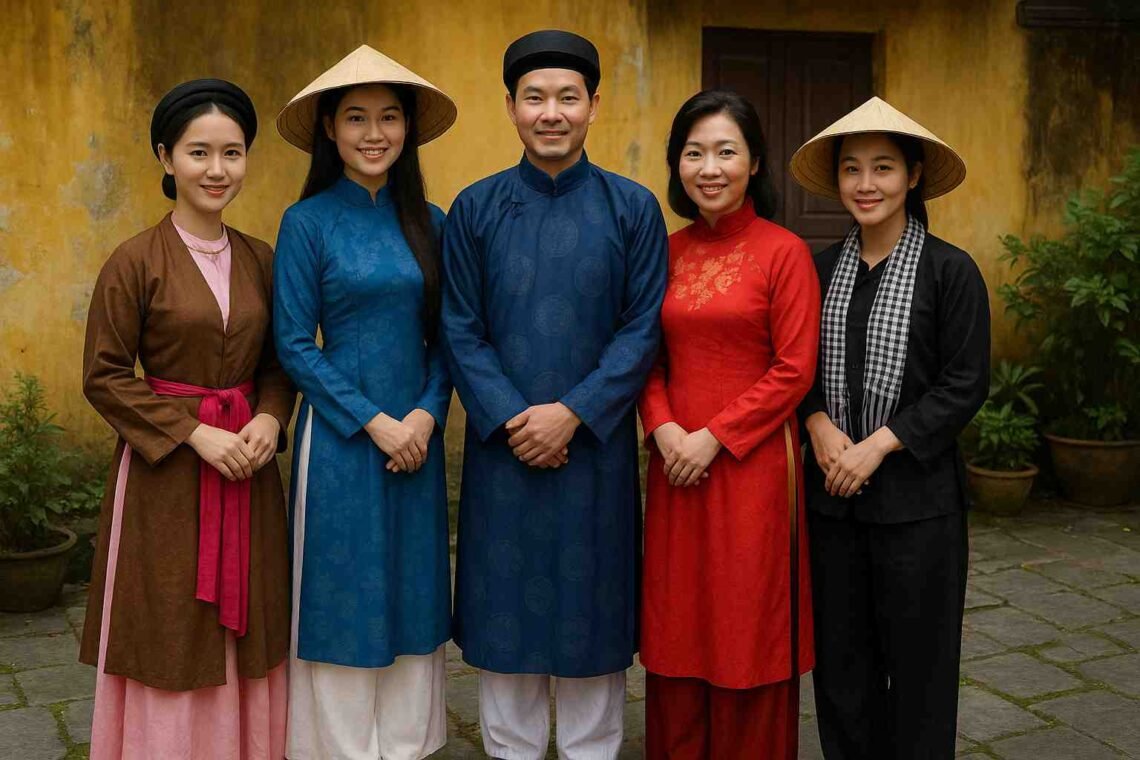
The áo dài is the national dress of Vietnam. It is known for being elegant, simple, and beautiful.
A. What the Áo Dài Looks Like
-
Long, fitted tunic
-
High collar
-
Long sleeves
-
Two long panels (front and back)
-
Slits on both sides
-
Worn with long trousers
B. Different Types of Áo Dài
| Type | Main Features | When It Is Worn |
|---|---|---|
| Traditional Áo Dài | Plain colours, long sleeves | Ceremonies and festivals |
| Modern Áo Dài | Light fabrics, bright prints | Daily wear or photo shoots |
| Wedding Áo Dài | Red or gold, heavy embroidery | Weddings |
| Men’s Áo Dài | Looser fit, simple style | Holidays and special events |
C. Meaning of Colours
-
Red: Luck and joy
-
Yellow/Gold: Royalty and wealth
-
White: Purity, used for school uniforms
-
Blue: Peace and calm
-
Black: Traditional or formal events
D. When People Wear Áo Dài
People wear áo dài for:
-
Weddings
-
Lunar New Year (Tết)
-
Graduation ceremonies
-
School uniforms (girls)
-
Workplace uniforms (hotel staff, flight attendants)
-
Family photos
Read also: Complete Guide to British Clothing
3. Other Traditional Vietnamese Clothing
Vietnam has many traditional outfits from different regions and time periods.
A. Áo Tứ Thân
-
Worn in the North
-
Has four long panels
-
Tied with a colourful sash
-
Used for folk dances and festivals today
B. Áo Bà Ba
-
Common in Southern Vietnam
-
Includes a long-sleeved top and loose trousers
-
Made for comfort and movement
-
Popular in farming communities
C. Yếm (Bodice)
-
An ancient piece worn under the áo tứ thân
-
Triangle-shaped front with ties
-
Seen today in cultural performances
D. Men’s Traditional Clothing
Men often wore:
-
Áo Gấm: Brocade tunic for special events
-
Áo The: Simple black or brown tunic
-
Khăn Đóng: Turban-like headwear
E. Accessories
| Accessory | Description |
|---|---|
| Nón Lá | Conical hat used by farmers and women |
| Khăn Rằn | Checkered scarf from the Mekong Delta |
| Jewelry | Silver, beads, or handmade pieces |
4. Clothing Differences by Region
Vietnam has three main regions: North, Central, and South. Each area has its own clothing style.
A. Northern Vietnam
-
Colours are simple and calm
-
Outfits are more traditional
-
Folk clothing is still used in festivals
B. Central Vietnam
-
Huế, the old capital, influenced fashion
-
Pastel áo dài were very popular
-
Clothing was soft and elegant, like royalty
C. Southern Vietnam
-
Clothes are light and airy
-
Áo bà ba is the most common traditional outfit
-
Bright and lively colours reflect the warm climate
Regional Clothing Table
| Region | Main Outfit | Special Features |
|---|---|---|
| North | Áo Tứ Thân | Traditional, layered |
| Central | Áo Dài (pastel colours) | Soft, royal-style embroidery |
| South | Áo Bà Ba | Simple, cool, comfortable |
5. Clothing of Vietnam’s Ethnic Groups
Vietnam has 54 ethnic minority groups, each with unique clothing.
Examples of Ethnic Outfits
-
H’Mong: Colourful skirts, batik patterns, indigo dyes
-
Red Dao: Red scarves, embroidered jackets
-
Thai People: Bright skirts with woven belts
-
Cham: Brocade fabrics inspired by ancient Champa culture
Common Features
Many ethnic groups use:
-
Natural dyes (indigo, tree roots)
-
Hand weaving
-
Silver jewelry
-
Geometric patterns
-
Bright colours
6. Fabrics and Craft Skills in Vietnam
A. Traditional Fabrics
Vietnamese clothing often uses:
-
Silk
-
Hemp
-
Linen
-
Cotton
-
Brocade
B. Craft Techniques
| Technique | How It Is Used |
|---|---|
| Embroidery | Designs stitched by hand |
| Batik | Wax is used to create patterns before dyeing |
| Weaving | Clothes are woven on wooden looms |
| Natural Dyeing | Plants and roots used to colour fabric |
C. Modern Clothing Trends
-
Eco-friendly fabrics
-
Simple, minimalist designs
-
Digital printed áo dài
-
Modern cuts and styles
7. Buying or Tailoring Vietnamese Clothing
Vietnam is known for excellent tailoring and handmade fashion.
A. Best Places to Buy Clothing
-
Hanoi: Old Quarter, silk shops, Van Phuc Silk Village
-
Hoi An: Famous for quick tailoring
-
Ho Chi Minh City: Designer stores and markets
B. What Tailor Shops Offer
Most tailors provide:
-
Many fabric choices
-
Full body measurements
-
One or more fitting sessions
-
Custom embroidery
-
Shipping options
C. Estimated Prices
| Item | Price Range |
|---|---|
| Ready-made Áo Dài | $20–$60 |
| Custom Áo Dài | $50–$200+ |
| Men’s Áo Dài | $60–$150 |
| Ethnic Clothing | $30–$100+ |
D. Tips for Travellers
-
Plan 1–3 days if you want a custom áo dài
-
Choose breathable fabric in hot weather
-
Fold with care and use tissue paper for silk
-
Hand-wash delicate fabrics
8. Wearing Vietnamese Clothing With Respect
Do’s
-
Choose colours based on the event
-
Wear áo dài in a modest way
-
Treat ethnic attire with respect
-
Follow cleaning instructions
Don’ts
-
Do not wear revealing versions of áo dài at temples
-
Do not use ethnic clothing as a costume
-
Do not damage embroidery or handmade pieces
9. Conclusion
Vietnamese clothing is simple, graceful, and full of meaning. From the famous áo dài to the comfortable áo bà ba and the colourful outfits of ethnic minority groups, each piece shows the history and culture of the country. Whether you are traveling in Vietnam, buying clothing from local shops, or learning about Asian fashion, understanding these traditional outfits will help you appreciate Vietnam even more.
Vietnamese clothing is not only about style—it is a living story passed down through generations.