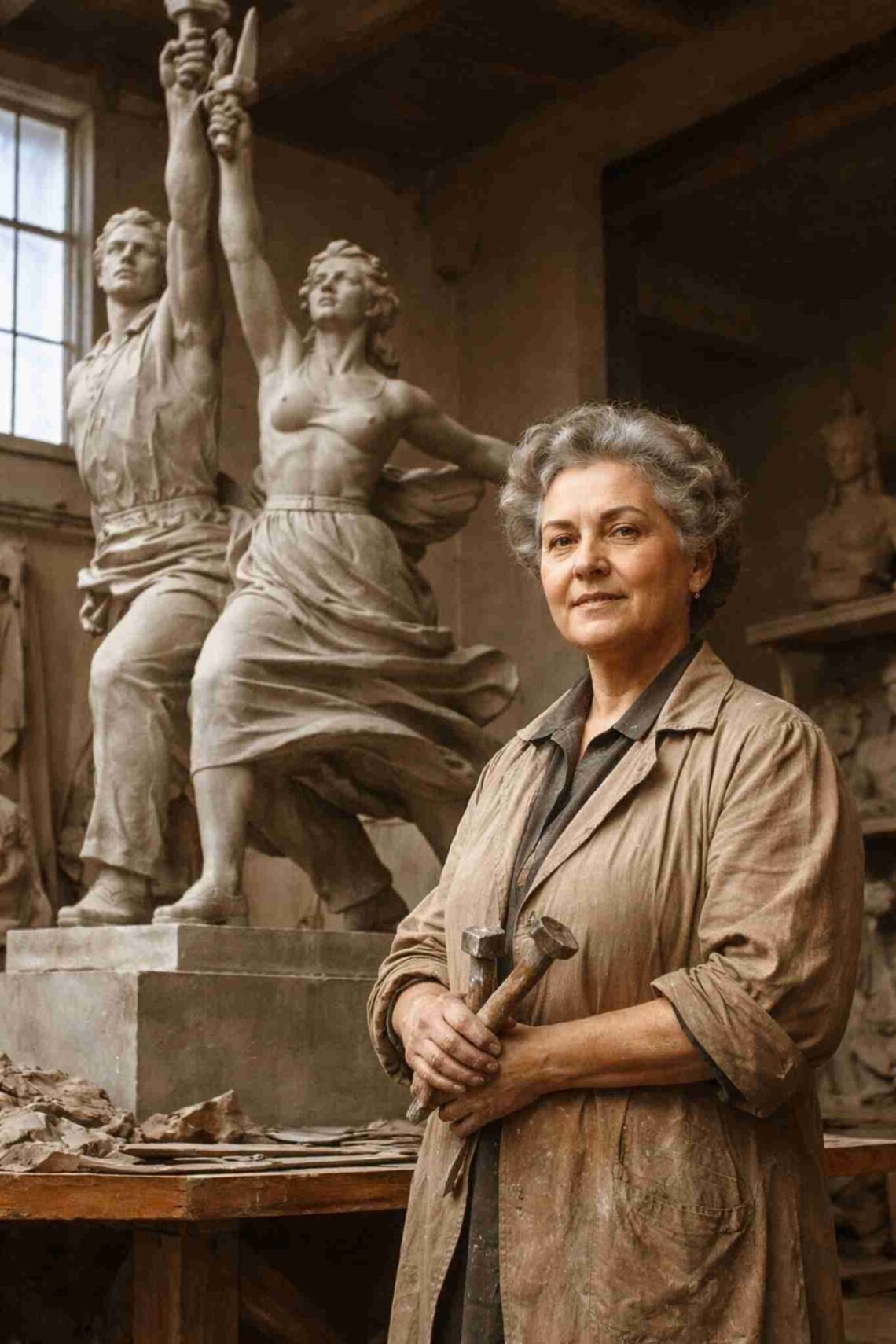
Vera Mukhina was a famous Russian sculptor from the 20th century. She is best known for creating very large public statues that showed the strength of workers and the spirit of the Soviet Union. Her most famous work is the statue called Worker and Kolkhoz Woman. This sculpture became one of the main symbols of Soviet art.
But Vera Mukhina was not only a sculptor of big monuments. She also worked in other areas of art, such as glass design, clothing design, and theater decoration. Her life story shows how an artist worked in a time when art was closely connected to politics and the government.
This article explains her life, work, and legacy in simple English, using clear lists and tables.
Early Life and Education
Vera Mukhina was born in 1889 in the Russian Empire. She lost her parents when she was young and was raised by family members. From a young age, she showed interest in art and drawing.
Even though she had personal problems and was badly injured in an accident when she was young, she did not give up on becoming an artist.
Important points about her early life:
-
Born in 1889
-
Lost her parents at a young age
-
Grew up with support from relatives
-
Showed talent in drawing and art
-
Had a serious accident that changed her face
-
Continued her studies despite difficulties
Her education:
These studies helped her learn both traditional and modern ways of making art.
Her Artistic Career
When Vera Mukhina returned to Russia, the country was going through big political changes. The Soviet Union was formed, and the government wanted artists to create art that supported new social ideas.
Art was expected to:
Mukhina became one of the main artists who created large public statues for the government. She learned how to work within these rules and still create strong and powerful artworks.
Read also: William J. Riley
Her Most Famous Work: Worker and Kolkhoz Woman
Vera Mukhina’s most famous sculpture is called Worker and Kolkhoz Woman. She made it in 1937 for a big world exhibition in Paris.
The sculpture shows:
-
A man worker holding a hammer
-
A woman farm worker holding a sickle
-
Both moving forward together
-
The hammer and sickle crossed in the air
This statue was made of stainless steel, which was new and modern at that time. The shining metal made the sculpture look strong and powerful.
Why this sculpture is important:
Table 1: Key Facts About Worker and Kolkhoz Woman
| Feature |
Details |
| Year made |
1937 |
| Material |
Stainless steel |
| Shows |
A worker and a farm woman |
| Main idea |
Unity, strength, progress |
| Why famous |
Became a symbol of Soviet art |
Style and Main Ideas in Her Art
Vera Mukhina’s sculptures are easy to recognize. They often show strong people in motion, moving forward with confidence.
Main features of her style:
Main ideas in her art:
-
Work is important and honorable
-
Men and women are equal
-
People should work together
-
The future will be better
Table 2: Themes in Vera Mukhina’s Art
| Theme |
Simple Meaning |
| Labor |
Work is shown as heroic |
| Equality |
Women are shown as strong as men |
| Unity |
People work together |
| Progress |
Moving forward to a better future |
Other Types of Art She Made
Vera Mukhina did not only make big statues. She also believed that art should be part of daily life.
Areas she worked in:
She helped design everyday objects so that normal people could enjoy good design at home.
Table 3: Mukhina’s Work Beyond Sculpture
| Art Field |
What She Did |
| Glass |
Designed simple and modern glassware |
| Porcelain |
Worked on decorative objects |
| Fashion |
Helped design practical clothing |
| Theater |
Created stage designs |
Working With the Government
Vera Mukhina worked closely with the Soviet government. The government supported her work and gave her many large projects.
Benefits of working with the state:
-
She got big public commissions
-
She had access to materials and tools
-
Her work was shown to many people
Difficult parts of working in this system:
-
She had to follow government rules
-
Art had to match official ideas
-
Personal freedom in art was limited
This means her art was shaped by both her own talent and the political system of her time.
Her Legacy and Why She Is Still Important
Today, Vera Mukhina is remembered as one of the most important Soviet sculptors. Her works are still studied in art history, and her most famous statue is still widely known.
Why she is still important today:
-
Her sculptures are strong and memorable
-
She showed women as powerful figures
-
She helped shape the look of Soviet public art
-
Her designs influenced later artists and designers
Table 4: Lasting Impact of Vera Mukhina
| Area |
Impact |
| Public art |
Set an example for large monuments |
| Women in art |
Became a role model for women artists |
| Design |
Brought art into everyday objects |
| Culture |
Her work remains a symbol of an era |
Conclusion
Vera Mukhina was more than just the creator of one famous statue. She was a skilled and creative artist who worked in a difficult time when art and politics were closely connected. Through her large sculptures, she showed ideas about work, unity, and the future. Through her designs for everyday objects, she helped bring art into people’s daily lives.
Even today, her work helps us understand how art can shape public ideas and how artists try to express themselves within the limits of their society. Vera Mukhina’s legacy lives on in her powerful sculptures and in the lasting image of the worker and the farm woman moving forward together.