Bolivia is one of the most colorful and culturally rich countries in South America. You can see this clearly in the clothing people wear. Traditional clothes in Bolivia are not only beautiful—they also show a person’s history, community, and beliefs. From warm alpaca ponchos in the mountains to bright skirts in the cities, every piece of clothing has meaning.
This guide explains Bolivian clothing in simple English using lists and tables so it’s easy to understand.
1. History of Bolivian Clothing
Bolivian clothing comes from two main influences: Indigenous traditions and Spanish colonization.
Indigenous Influence
-
People used to weave their own clothes using looms.
-
Designs and colors had special meanings.
-
Alpaca, llama, and vicuña wool were used to stay warm in the mountains.
-
Clothing showed a person’s village, family, and social role.
Spanish Influence
-
The Spanish arrived in the 1500s and changed many clothing styles.
-
They introduced new clothes, like the pollera skirt.
-
Indigenous people mixed Spanish clothes with their own traditions.
Today, Bolivian clothing is a mix of both cultures, creating unique styles found nowhere else in the world.
2. Bolivian Textiles: Materials and Techniques
Bolivia is famous for its high-quality textiles. People still use natural wool and old weaving methods.
Main Materials
-
Alpaca wool: soft, warm, and light
-
Llama wool: strong and great for cold weather
-
Vicuña wool: very fine and valuable
-
Cotton: used in lower, warmer regions
Traditional Weaving Methods
-
Backstrap looms (tied around the waist)
-
Four-stake looms for bigger pieces
-
Natural dyes made from plants, insects, and minerals
-
Symbolic designs that tell stories
Textile Table
| Feature | Simple Explanation |
|---|---|
| Fiber | Alpaca, llama, vicuña, cotton |
| Tools | Backstrap or ground looms |
| Colors | Natural dyes or modern ones |
| Patterns | Show identity and tradition |
| Strength | Warm, long-lasting |
3. Women’s Traditional Clothing
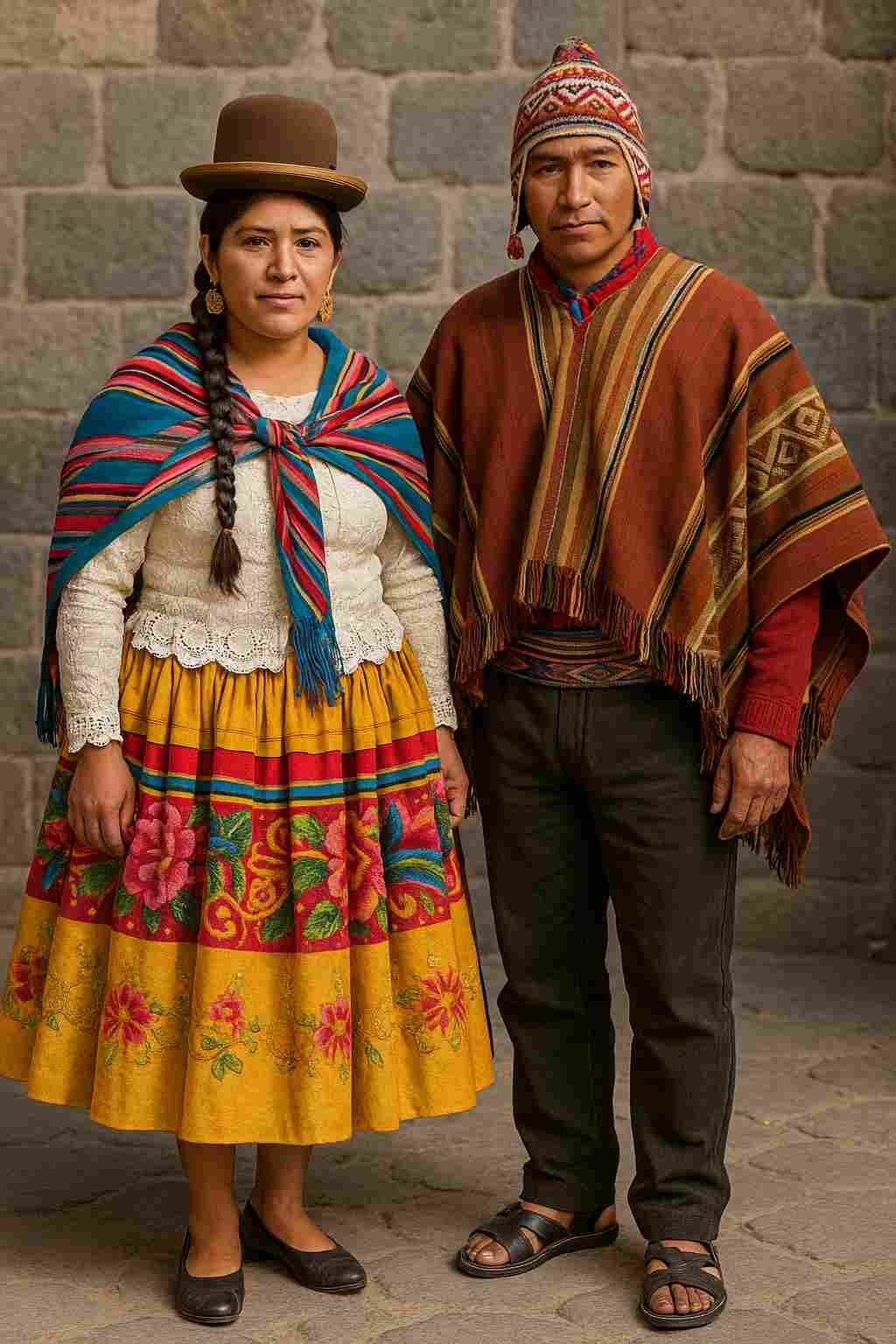
Women’s clothing in Bolivia is very colorful and detailed. The most famous style is worn by cholitas, Indigenous women known for their beautiful and elegant clothing.
Main Parts of Women’s Clothing
-
Pollera (wide skirt)
-
Manta or Aguayo (shawl or carrying cloth)
-
Bowler hat
-
Ojotas (sandals)
-
Jewelry
-
Braided hair
Pollera
-
A big, pleated skirt
-
Sometimes several layers
-
Each region has its own style
Manta / Aguayo
-
Woven cloth worn on the shoulders
-
Used to carry babies, foods, or other items
-
Designs show community identity
Bowler Hat
-
A round, small hat worn by cholitas
-
Different positions may show relationship status
-
A strong symbol of pride
Read also: Complete Guide to Lesotho Clothing
Women’s Clothing Table
| Item | Use | Notes |
|---|---|---|
| Pollera | Daily wear, festivals | Long, colorful, layered |
| Aguayo | Carrying | Strong, bright patterns |
| Bowler Hat | Identity | Very popular in La Paz |
| Ojotas | Shoes | Made from leather or rubber |
| Jewelry | Decoration | Gold chains, silver pins |
4. Men’s Traditional Clothing
Men in Bolivia also wear clothing with deep cultural meaning. These clothes are especially common in the mountains and rural areas.
Main Parts of Men’s Clothing
-
Poncho
-
Chullo (earflap hat)
-
Wool or cotton pants
-
Chumpi belt
-
Sandals or boots
Poncho
-
Thick wool garment
-
Worn for warmth
-
Patterns show where the man is from
Chullo
-
Wool hat with ear flaps
-
Protects from cold wind
-
Each village has its own color or pattern
Men’s Clothing Table
| Item | Region | Description |
|---|---|---|
| Poncho | Highlands | Heavy wool, bright designs |
| Chullo | Andes | Warm, earflaps, handmade |
| Pants | All regions | Wool or cotton |
| Chumpi | Nationwide | Woven belt |
| Footwear | Rural/Urban | Sandals or sturdy boots |
5. Clothing by Region
Bolivia has many landscapes, so clothing changes depending on the area.
Regional Clothing Table
| Region | Style Summary |
|---|---|
| La Paz & El Alto | Iconic cholita look with polleras and hats |
| Cochabamba | Lighter skirts and shawls |
| Sucre / Chuquisaca | Bright woven designs |
| Potosí / Oruro | Festival costumes; warm wool clothes |
| Tarabuco | Warrior-style hats; red ponchos |
| Santa Cruz & Beni | Light cotton clothes for hot weather |
| Afro-Bolivian Areas | Polleras with Afro-Andean style |
6. Clothing in Festivals and Ceremonies
Bolivian festivals are full of color, music, and bright costumes. Many outfits take months to make.
Famous Festival Clothing
-
Carnaval de Oruro costumes: masks, sequins, embroidered outfits
-
Tinku outfits: inspired by ancient warrior traditions
-
Diablada costumes: devil masks and dramatic capes
-
Saya costumes: linked to Afro-Bolivian culture
-
Pachamama ceremony outfits: garments with natural colors and symbols
Festival clothing is one of the most beautiful parts of Bolivian culture.
7. Modern Clothing in Bolivia
Not everyone in Bolivia wears traditional clothes every day. In big cities, people often dress in modern, Western-style clothing.
Common Modern Trends
-
Jeans, jackets, sweaters
-
Young people mixing modern clothes with alpaca items
-
Cholita models and designers bringing traditional clothes into fashion shows
-
Skateboarding cholitas wearing polleras while skating
-
Designers mixing modern cuts with Indigenous fabrics
Modern Bolivian fashion celebrates the past and the future at the same time.
8. Clothing & Climate: What People Wear Now
Bolivia has different climates. Clothing depends on the weather and altitude.
Highlands (Cold)
-
Heavy jackets
-
Ponchos
-
Wool hats
-
Thermal layers
Valleys (Mild)
-
Light sweaters
-
Cotton shirts
-
Comfortable pants
Lowlands (Hot)
-
Short sleeves
-
Light cotton
-
Sandals
-
Breathable fabrics
9. What Visitors Should Wear in Bolivia
If you travel to Bolivia, you do not need to wear traditional clothing, but you should dress for comfort and respect.
Packing List for Travelers
-
Warm jacket
-
Layered clothes
-
Rain jacket
-
Comfortable shoes
-
Light clothes for the jungle
-
Hat and sunscreen
-
Modest clothing when visiting Indigenous communities
10. Shopping for Bolivian Clothing (Ethically)
Bolivia sells many beautiful textiles, but some are fake. Here is how to buy real, high-quality items.
How to Spot Real Alpaca Wool
-
Soft and warm, not scratchy
-
More expensive than acrylic
-
Natural shine
-
Feels warm when you touch it
Where to Buy
-
Handmade markets
-
Fair-trade and community cooperatives
-
Indigenous weaving centers
Shopping Tips Table
| Tip | Why It Matters |
|---|---|
| Buy from artisans | Supports Bolivian families |
| Check labels | Avoid fake “alpaca” blends |
| Look at weaving | Real items have tight, clean patterns |
| Avoid cheap stalls | Often sell machine-made items |
Conclusion
Bolivian clothing is colorful, meaningful, and full of history. Every hat, shawl, and poncho carries stories from the past. Today, traditional clothing continues to change and grow, showing the strength and pride of Bolivian people. Whether in festivals, daily life, or modern fashion shows, Bolivia’s clothing remains a powerful symbol of culture and identity.