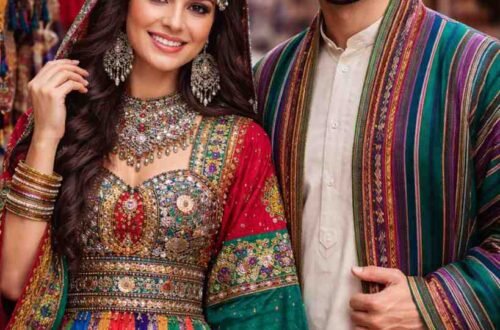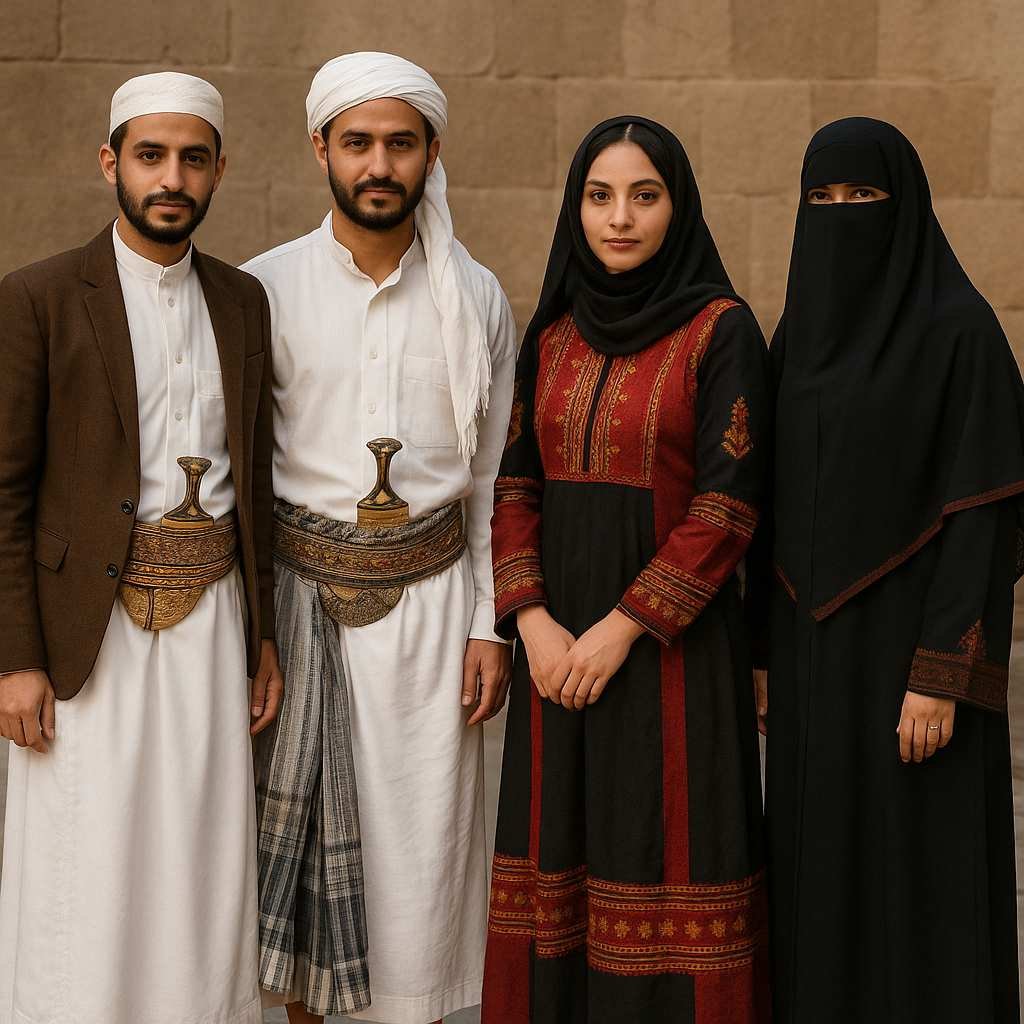
Yemeni clothing is more than what people wear — it shows their culture, history, and identity. Every piece of cloth, every color, and every design has a story behind it. From the men’s curved dagger to the colorful women’s dresses, Yemeni clothes are full of meaning and beauty.
1. Why Yemeni Clothing Is Important
People in Yemen wear clothes that show who they are.
Here’s why these clothes matter:
-
Cultural identity: They tell which tribe, area, or family someone belongs to.
-
Weather-friendly: Light for hot coastlands, warm for cold highlands.
-
Modesty: Many clothes follow Islamic traditions.
-
Art and craft: Embroidery, weaving, and silver jewelry are made by hand.
-
Heritage: Even with modern life and war, people keep their clothing traditions alive.
2. Overview of Yemeni Clothes
| Clothing Item | Who Wears It | What It Looks Like | Material / Color | When Used |
|---|---|---|---|---|
| Thobe / Dishdasha | Men | Long robe | Cotton or wool, white/beige | Daily and formal |
| Futa / Izār | Men | Wrap-around skirt | Striped cotton | Hot weather, casual |
| Jambiya (Dagger) | Men | Curved dagger with belt | Metal, silver, horn | Ceremonial |
| Hizam (Belt) | Men | Wide embroidered belt | Leather, threadwork | Holds jambiya |
| Sitārah (Dress) | Women | Long embroidered gown | Cotton, velvet, silk | Everyday / festive |
| Abaya / Balto | Women | Outer cloak | Usually black | Modesty in public |
| Hijab / Niqab | Women | Head or face cover | Cotton or chiffon | Religious use |
| Jewelry | Women | Necklaces, bracelets, belts | Silver, coral, beads | Weddings, Eid |
3. Men’s Traditional Clothing
The Thobe (Dishdasha or Jalabiya)
-
A long robe that covers the body down to the ankles.
-
Made from cotton (for heat) or wool (for cold).
-
Usually white or cream, sometimes with small embroidery.
-
Worn for both everyday and special events.
The Futa (Izār)
-
A piece of cloth wrapped around the waist like a skirt.
-
Very common in Aden and coastal areas.
-
Has bright stripes or check patterns.
-
Comfortable and easy to wear in hot weather.
The Jambiya and Belt (Hizam)
| Item | Meaning / Use |
|---|---|
| Jambiya | Curved dagger worn on the front of the waist. It shows manhood, honor, and pride. |
| Hizam (Belt) | A decorated belt that holds the jambiya. It shows skill and social status. |
| Occasions | Worn at weddings, tribal meetings, or cultural events. |
Headwear and Shoes
-
Taqiyah: Small white cap.
-
Turban / Keffiyeh: Cloth wrapped around the head for sun protection.
-
Sandals: Made of leather, used daily in most regions.
4. Women’s Traditional Clothing
The Sitārah (Dress)
-
A long, loose dress often covered in colorful embroidery.
-
Highland dresses: dark with bright red, yellow, or green threads.
-
Coastal dresses: lighter cotton and floral prints.
-
Each design has its own local meaning and symbol.
The Abaya and Balto
-
Black outer cloaks worn in public.
-
Different from Gulf abayas — Yemeni ones often have embroidery or color edges.
-
In cities like Sana’a and Aden, women wear decorated abayas with pride.
Read also: Complete Guide to Kenyan Clothing
Head and Face Coverings
| Type | What It Covers | Common In | Notes |
|---|---|---|---|
| Hijab | Hair and neck | All regions | Most common style |
| Niqab | Face (leaves eyes open) | Hadhramaut, Sana’a | Usually black |
| Burqa | Full face and body | Rural South | Indigo or dark blue cloth |
Jewelry and Accessories
-
Yemeni women love silver jewelry.
-
Popular items:
-
Big necklaces and bracelets
-
Silver belts
-
Beaded anklets and earrings
-
-
Flowers like jasmine are also used for weddings or holidays.
5. Fabrics and Crafts
Yemen has a long history of handmade fabric and embroidery.
Main materials:
-
Cotton – cool and soft.
-
Wool – warm for mountains.
-
Silk – used for fancy clothes.
-
Natural dyes – from plants like indigo and henna.
Regional craft styles:
| Region | Craft Specialty | Style Details |
|---|---|---|
| Sana’a | Belt embroidery | Silver thread, strong shapes |
| Hadhramaut | Abaya making | Simple and elegant |
| Tihama | Futa weaving | Bright, striped cotton |
| Aden | Mixed fabrics | Indian and African influence |
6. Regional Styles Across Yemen
Highlands (Sana’a and Central Yemen)
-
Cold weather → thick fabrics and layers.
-
Men: thobes with jackets and decorative jambiyas.
-
Women: velvet dresses with metallic embroidery.
Tihama Coast
-
Hot and humid → light and thin clothes.
-
Men: futa and shirt.
-
Women: airy cotton dresses with colorful scarves.
Hadhramaut
-
Simple and modest clothing.
-
Men: plain white thobes.
-
Women: dark abayas and veils.
Aden and South
-
Port city influences from India and Africa.
-
Men: striped futas.
-
Women: abayas with bright designs.
Socotra Island
-
Bright and mixed fabrics.
-
Both men and women wear light wraps.
-
African and South Asian style mix.
7. Clothes for Special Times
Yemenis dress differently for each event:
| Event | Men Wear | Women Wear |
|---|---|---|
| Wedding | Embroidered thobe with jambiya belt | Silk or velvet dress with jewelry |
| Eid (Festival) | New thobe or futa | Colorful dress, flowers in hair |
| Tribal Meeting | Traditional clothes and dagger | Local festive dress |
| Market Day | Simple futa and shirt | Light cotton wrap |
Symbolism:
-
The jambiya means honor and courage.
-
Embroidery patterns can show region or family.
-
Bright colors mean happiness; dark colors mean modesty or mourning.
8. Modern and Changing Styles
Yemeni clothing is changing but still keeps tradition alive.
Today’s trends:
-
Men mix jeans with futas or wear short modern thobes.
-
Women design abayas with color and lace.
-
Young Yemenis share traditional looks online with pride.
-
Designers in other countries use Yemeni embroidery and fabrics in new ways.
New directions:
-
Return to handmade belts and jewelry.
-
Use of eco-friendly dyes and fabrics.
-
Mixing modern cuts with traditional patterns.
-
Diaspora pride — Yemenis abroad wearing traditional clothes at weddings.
9. Buying and Caring for Yemeni Clothes
Where to Buy:
-
Markets like Bab al-Yemen (Sana’a).
-
Craft groups and fair-trade stores.
-
Online Yemeni handmade shops.
How to Check Real Quality:
-
Look for hand stitching (not machine-made).
-
Feel for natural fabric like cotton or wool.
-
Check that embroidery colors look deep and natural.
-
Avoid clothes that smell of chemicals or cheap dye.
Care Tips:
-
Wash by hand in cold water.
-
Dry in shade (not direct sun).
-
Store silver belts separately to avoid rust.
-
Fold embroidered parts inside to protect threadwork.
10. Protecting Yemeni Heritage
Even during hard times, Yemenis hold on to their clothing traditions.
-
Local groups record old styles before they disappear.
-
Craftspeople teach younger generations how to weave and sew.
-
Fashion designers mix tradition with modern design.
Wearing Yemeni clothing today is a way of saying:
“We are proud of who we are, and we will keep our culture alive.”
11. Quick Glossary
| Word | Meaning |
|---|---|
| Thobe / Dishdasha | Long robe for men |
| Futa / Izār | Wrap skirt for men |
| Jambiya | Curved dagger |
| Hizam | Belt for jambiya |
| Sitārah | Traditional women’s dress |
| Abaya / Balto | Black outer cloak |
| Hijab / Niqab | Head or face cover |
| Taqiyah | Small cap for men |
| Tatreez | Embroidery |
| Tihama / Hadhramaut | Major regions of Yemen |
12. Final Thoughts
Yemeni clothing is a piece of living art. It shows history, family, and faith — all sewn into beautiful fabric. From the bright futas of the south to the gold-thread dresses of the highlands, every stitch tells a story. By wearing or supporting traditional Yemeni clothes, we help protect a culture that has survived for hundreds of years — and will continue to shine for generations to come.