A scarf can add warmth, colour or texture without requiring a full outfit change. The right choice depends on the weather, the clothes you wear most often and how much care you want to give the fabric. Before buying, look beyond the colour in the photograph and check the material, size and care label.
Choose a Scarf for Your Climate
For cold and windy days, a thicker scarf with enough length to wrap comfortably may be more useful than a lightweight decorative style. In mild weather, a lighter scarf can add colour without making an outfit feel too heavy. If you travel between different climates, consider whether the scarf is easy to pack and comfortable indoors as well as outside.
Read the Fabric Composition
Scarves may be made from wool, cotton, silk, viscose, acrylic or blended fibres. Each has different characteristics, and the exact feel depends on the yarn and construction as well as the fibre itself.
- Wool blends: Often chosen for warmth, but care requirements vary by blend and construction.
- Cotton blends: Can be practical for everyday use; check the label for washing and drying instructions.
- Silk: Usually lightweight and smooth, but may require delicate handling or professional cleaning.
- Acrylic and mixed fibres: Can be soft and easy to style, though pilling and heat sensitivity depend on the specific fabric.
- Viscose or rayon: Can drape well, but may need careful washing to help maintain its shape.
Do not assume a scarf is cashmere, wool or silk based on its appearance. Confirm the listed composition before you buy.
Check Length, Width and Weight
A long scarf gives you more options for wrapping and draping, while a shorter design may be easier to wear under a coat. A wider scarf can provide more coverage, but it may feel bulky with a high-collar jacket. Product dimensions are more useful than vague labels such as oversized or regular.
If you want to wear the scarf in several ways, look for enough length to wrap once around the neck without pulling tightly. For a compact travel accessory, consider a lighter fabric that folds neatly into a bag.
Choose Texture and Colour for Your Wardrobe
Texture can add interest to a simple outfit. Ribbed, brushed, smooth and woven finishes all create a different effect. If your coat or sweater already has a strong texture or pattern, a plain scarf may be easier to combine. If most of your clothes are neutral, a patterned or brighter scarf can become the main accent.
Before buying a new colour, think of at least three pieces you already own that it could work with. This helps you choose an accessory that gets worn often rather than one that only matches a single outfit.
Easy Ways to Wear a Scarf
- Simple drape: Let both ends fall evenly over a coat or jacket.
- Single wrap: Loop the scarf once around your neck and adjust it so it feels comfortable.
- Compact knot: Tie a loose knot near the ends for a neat casual look.
- Shoulder layer: A wider scarf can be draped over the shoulders when the weather is mild.
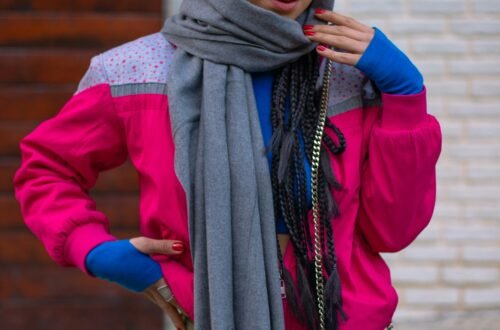
- Colour accent: Use the scarf to introduce one colour that appears elsewhere in your outfit.
A scarf should not restrict breathing, movement or vision. Adjust it before walking, cycling or getting into a vehicle, and keep loose ends clear of moving equipment.
Care for the Scarf Without Guesswork
Always follow the care label for the exact item. Some scarves can be machine washed on a gentle cold cycle; others may need hand washing or dry cleaning. Use a mild detergent only when the label permits it, avoid twisting delicate fibres, and dry the scarf as directed. Heat can damage or shrink some materials, so do not assume that tumble drying is safe.
Store a clean, completely dry scarf in a cool place. Fold heavier knits rather than hanging them for long periods if the weight could stretch the fabric. Keep delicate scarves away from rough fasteners and jewellery that may snag them.
What to Check Before Ordering Online
Confirm the fibre composition, dimensions, colour name, care instructions, stock status, shipping cost and return terms. Product images can be edited or lit differently, so read the written details and check customer photos when available. If the retailer lists several colours, verify that the selected colour and product code match the item in your basket.
Frequently Asked Questions
Which scarf fabric is best?
There is no single best fabric for everyone. Choose according to the climate, softness, warmth, budget and care routine you prefer, then confirm the exact fibre composition on the label.
How can I stop a scarf from pilling?
Follow the care label, avoid rough friction where possible and do not rub the fabric aggressively. If small pills appear, use a fabric tool only if it is suitable for that scarf’s construction.
Can I wear a scarf with a patterned coat?
Yes. Try a scarf that shares one colour with the coat or choose a simpler pattern to keep the overall outfit balanced.